
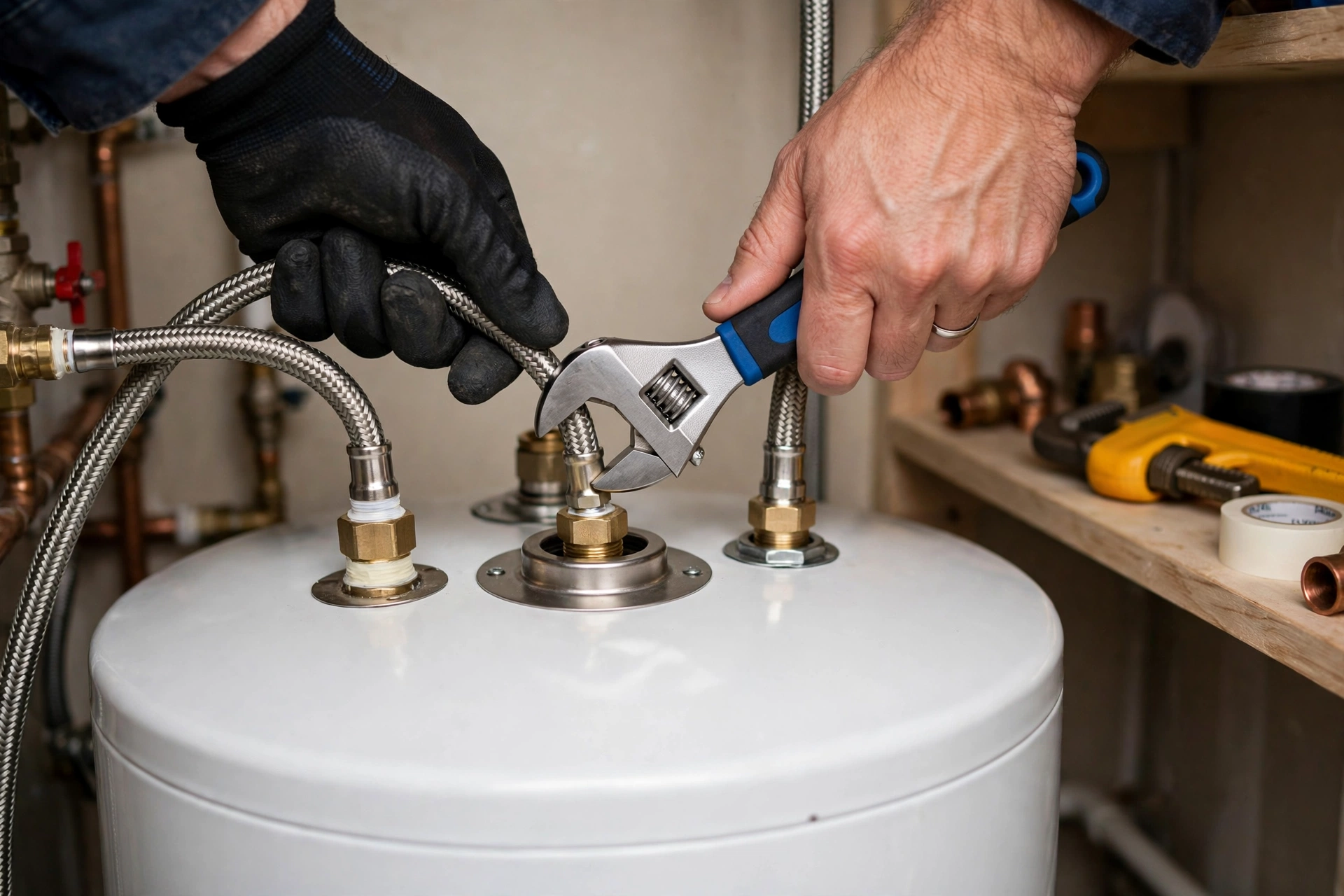
Water Heater Installation Cost Labor Only in 2026
The water heater installation cost labor only — meaning you buy the unit yourself and a plumber does nothing but the work — typically runs $300–$800 in the US in 2026, with a straightforward like-for-like tank swap often falling between $150 and $450. Tankless replacements run higher, $600–$1,900 in labor, because they take longer and usually need venting or gas-line changes. At plumber hourly rates of $45–$150 per hour, most tank installs take 2–4 hours of billed time; tankless installs commonly take 4–8.
Quick-answer table (typical 2026 labor-only costs):
| Job | Typical labor cost | Typical job time |
|---|---|---|
| Standard tank-for-tank replacement | $150–$450 | 2–4 hours |
| Tank replacement, all labor (avg. national) | $300–$800 | 2–5 hours |
| Tankless-for-tankless replacement | $600–$1,200 | 4–6 hours |
| Tank-to-tankless conversion | $1,000–$1,900 | 6–10 hours |
| Hybrid heat-pump install (tank-style) | $400–$900 | 3–6 hours |
| Plumber hourly rate | $45–$150/hr | — |
Why split the labor out at all? Because plenty of homeowners buy the water heater themselves — a big-box sale, a specific brand, or a warranty replacement — and only need hands to set it. Understanding what labor alone should cost stops you from overpaying and helps you judge whether a combined “unit + install” quote is actually a good deal.
What “Labor Only” Actually Means
A labor-only install means the plumber supplies the work, the skills, and the small trade materials — but not the water heater itself. You buy the unit (usually from a home-improvement store, a plumbing supplier, or directly from a warranty claim) and have it on site, still boxed, when the plumber arrives.
The labor quote generally covers: draining and disconnecting the old unit, hauling it out, setting and leveling the new one, making the water connections, connecting the fuel or power, installing the venting (gas), wiring the thermostat controls, filling, testing, and checking for leaks. The plumber typically supplies consumables out of the service van — pipe dope, Teflon tape, flex connectors, dielectric unions, and minor fittings.
What it does not cover: the heater itself (obviously), the permit fee (often billed separately), and any code-required upgrades the inspector may demand — expansion tanks, drip pans, earthquake straps, larger gas lines, or new venting. Those get discovered during the job and added to the bill, which is the single biggest reason labor quotes come with “plus code upgrades if needed” language.
Labor-only makes the most sense when you’ve already sourced the unit at a good price, or when the old unit was replaced under manufacturer warranty and only the labor is your problem. It makes less sense if the plumber gets trade pricing on units — in that case the combined quote can actually beat your retail price plus separate labor.
Labor Cost by Heater Type
Labor varies more by the kind of heater than by brand. This is the going range for a licensed plumber’s labor in 2026, unit not included:
| Heater type | Typical labor-only cost | Why it costs that |
|---|---|---|
| Standard 40–50 gal gas tank (like-for-like) | $150–$450 | 2–4 hour swap; existing gas, vent, and water lines reuse |
| Standard 40–50 gal electric tank (like-for-like) | $150–$400 | Slightly simpler than gas — no combustion venting |
| Tank-to-tank upgrade (same fuel) | $200–$550 | Minor repositioning or pan/drain adjustments common |
| Tankless-for-tankless (same fuel) | $600–$1,200 | Wall-mounting, dedicated venting, condensate drain |
| Tank-to-tankless conversion | $1,000–$1,900 | New vent routing, often larger gas line, possibly 120V outlet |
| Hybrid heat-pump (tank-style) | $400–$900 | Heavier unit, condensate drain, needs large air space |
| Electric tankless (point-of-use or whole-home) | $500–$1,200 | Heavy electrical work — often a panel upgrade is separate |
A like-for-like gas tank swap is the cheapest and most common labor-only job: everything already exists, so it’s essentially unplug-and-replace. The moment the job changes infrastructure — different fuel, different venting, different electrical load — labor climbs fast, and the “labor only” savings shrink relative to a full-service quote from a shop that does tankless conversions all day. The U.S. Department of Energy’s water heating guide is worth a read before you buy the unit yourself, since the right heater type matters more than the brand.
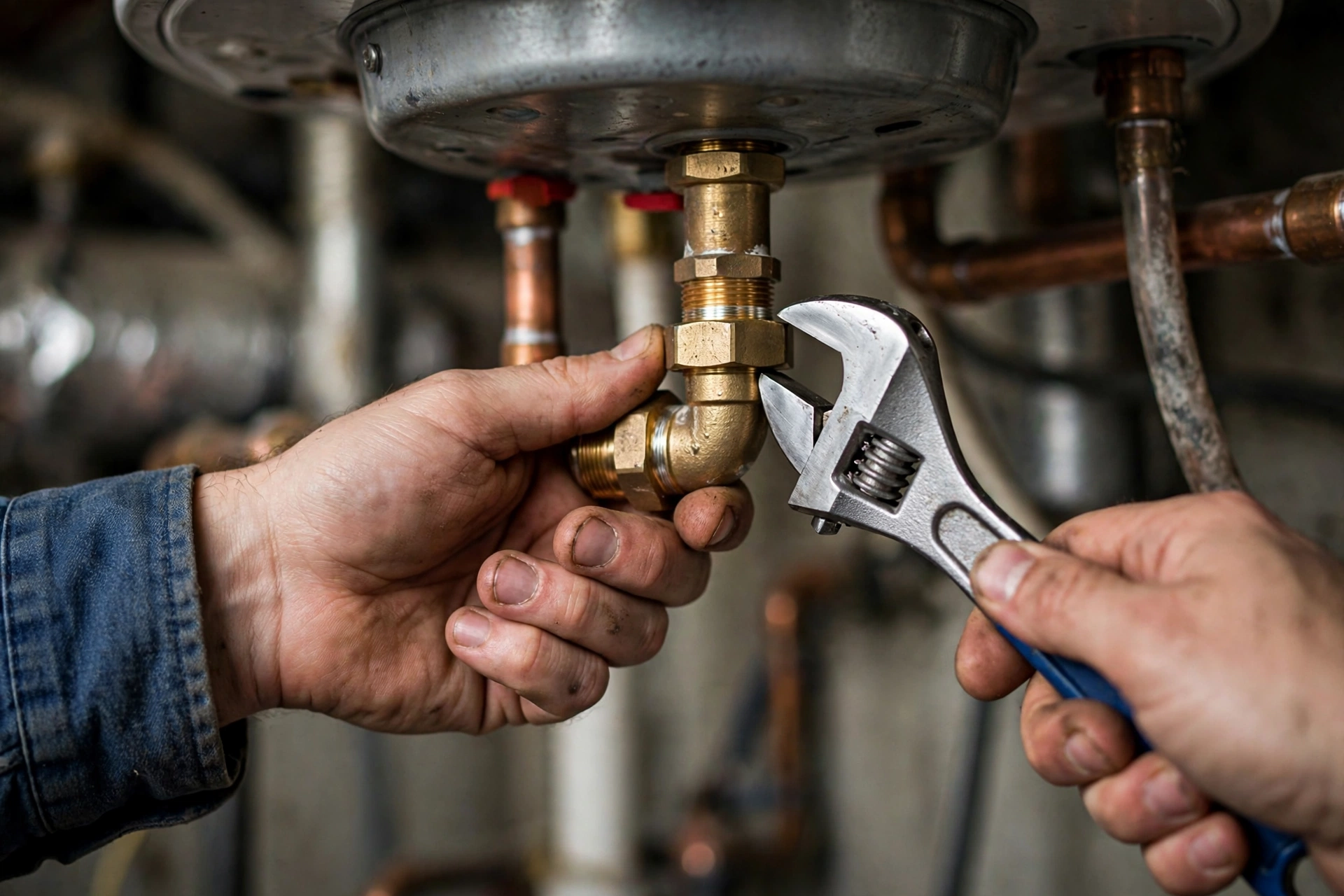
What’s Included in a Labor-Only Install (and What Isn’t)
Before accepting a quote, confirm line by line. Assumptions are where labor-only jobs go over budget:
| Usually included in the labor price | Usually NOT included (billed extra or your cost) |
|---|---|
| Draining, disconnecting, and removing the old unit | The water heater itself |
| Setting and leveling the new unit | Permit fee ($50–$200 in most jurisdictions) |
| Water line hookups (flex connectors, shutoff valve if present) | Expansion tank ($150–$300 installed, where code requires) |
| Gas reconnection to the existing line | Gas line upsizing or rerouting ($200–$600 labor) |
| Venting reconnection to the existing flue | New or rerouted venting ($300–$700 labor) |
| Electrical reconnection to the existing circuit | New dedicated circuit or panel work ($200–$500 labor) |
| Fill, purge, test-fire, and leak check | Drip pan with drain line ($75–$150) |
| Small fittings, tape, and pipe dope from the van | Old-unit disposal fee ($50–$150) in some markets |
The most common surprise charges are the expansion tank and the permit. Many municipalities adopted expansion-tank requirements in the last decade, so a swap that was a $300 job in 2015 can legitimately be a $500+ job today — the code changed, not the plumber’s greed. Ask every bidder: “What code upgrades will my city require, and what’s the labor for each?”
What Drives Water Heater Labor Cost
Fuel switching. Gas-to-electric or electric-to-gas conversions are the costliest labor jobs because the entire energy infrastructure changes — gas line or 240V circuit, venting, combustion air. Expect labor at the top of every range, plus permit inspection.
Venting and combustion changes. Gas tankless units can’t reuse a standard tank flue; they need dedicated direct-vent or concentric venting routed to an exterior wall or roof. New vent runs are among the priciest labor line items.
Electrical upgrades. Electric tankless and hybrid units draw serious amperage. Running a new dedicated circuit is usually $200–$500 in labor alone; a panel upgrade is a separate job entirely and is never in a water-heater labor quote.
Permits and inspections ($50–$200). Most cities require a permit for water-heater replacement. Some plumbers roll the fee into the labor quote, others bill it through. Either way, confirm who’s pulling it — an unpermitted install can void the manufacturer’s warranty.
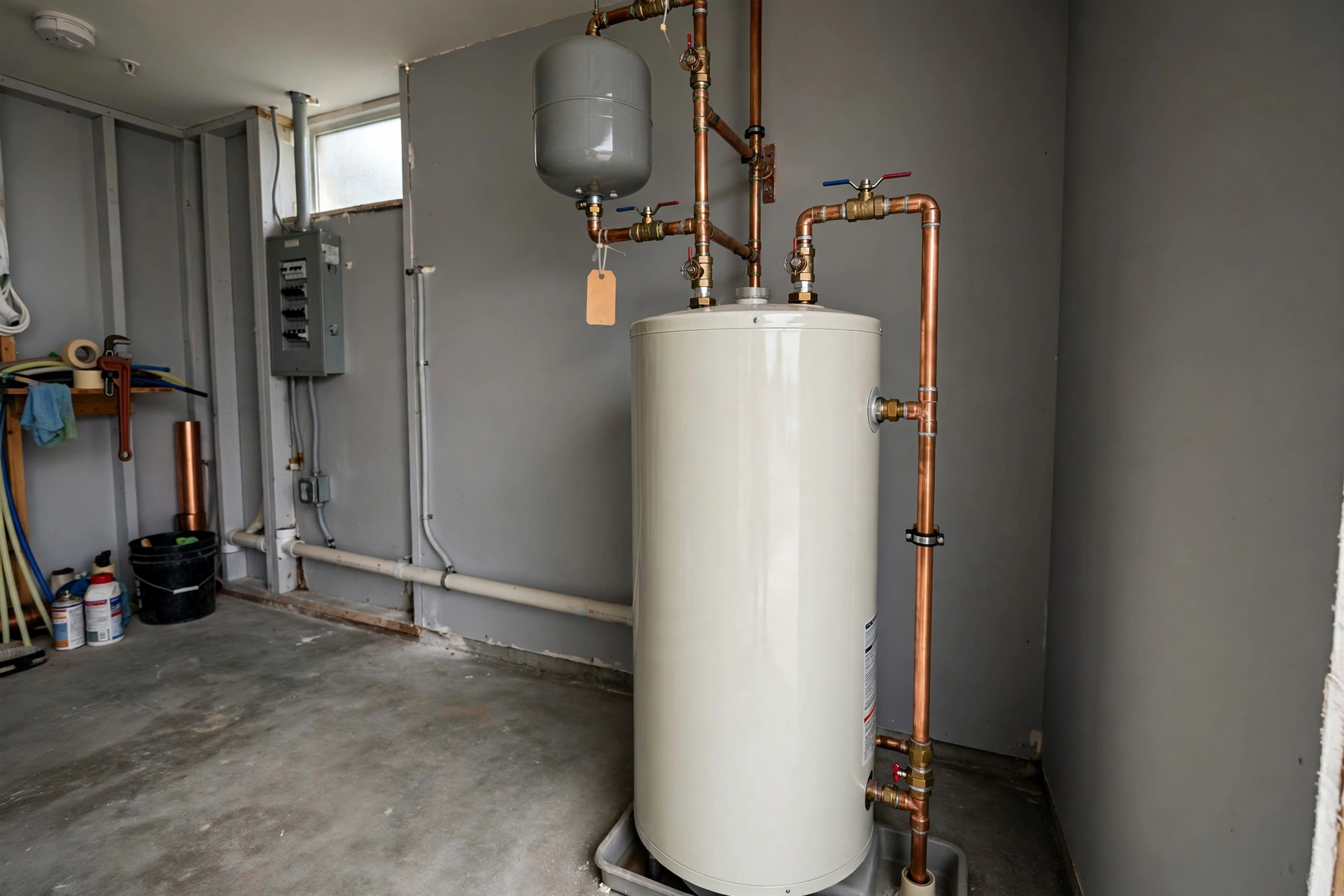
Expansion tanks and code catch-up. Closed plumbing systems need an expansion tank; seismic zones need strapping; many codes now demand a drain pan in finished spaces. Each adds parts plus 30–90 minutes of labor.
Accessibility. A garage install on a flat slab is the cheapest job in plumbing. A water heater in a cramped crawlspace, a third-floor closet, or a basement with no walk-out access adds real hours — and sometimes a second set of hands.
Old-unit disposal. Hauling a 150-pound sediment-filled tank to the curb or the recycler takes time and a truck. Many plumbers charge $50–$150; a few include it. Ask.
Time of year and urgency. Emergency same-day swaps command premium rates; a scheduled weekday install in the off-season (spring and fall are slowest for plumbers) can come in 10–20% under peak pricing.
Labor-Only vs Full-Service (Unit + Install)
| Factor | Labor-only (you buy the unit) | Full-service (plumber supplies unit) |
|---|---|---|
| Typical total outlay | Unit retail ($400–$1,200 tank; $800–$2,500 tankless) + $300–$800 labor | $900–$2,000 tank installed; $2,000–$4,500 tankless installed |
| Who picks the unit | You — full control over brand and features | The plumber — usually a pro-grade line with longer warranty |
| Warranty handling | You register the unit; some brands limit labor warranties on owner-supplied units | Single point of contact for unit + labor warranty issues |
| Price advantage | Wins if you catch a genuine sale ($100–$300 under trade pricing) | Wins when plumber’s trade pricing beats your retail price |
| Hidden risk | You might buy the wrong fuel type, size, or venting class | Contractor markup on the unit (typically 20–50%) |
| Best for | Warranty replacements, confident DIY shoppers, specific brand wants | Hassle-free installs, tankless conversions, code-tricky jobs |
The honest math: if a plumber quotes $1,400 all-in for a 50-gallon gas unit and you can buy the same unit for $650, their implied labor is $750 — near the top of the labor-only range. Get two labor-only quotes for comparison and you’ll know instantly whether the full-service price is fair. But if the full-service quote comes in at $1,000 with the same unit, the plumber’s trade discount is doing you a favor — take it. If you’re weighing a big-box route, see how much Home Depot charges to install a hot water heater.
DIY vs Hiring a Pro
| Factor | DIY | Licensed plumber (labor-only) |
|---|---|---|
| Cost | Your time + $30–$80 in fittings | $300–$800 for a tank swap |
| Skill required | Moderate for electric tank; high for gas | Their daily work |
| Time | Half to a full day, first time | 2–4 hours for a standard swap |
| Permit & inspection | You pull it and schedule it yourself | Usually handled by the plumber |
| Gas safety | Leak-testing and combustion venting are genuinely dangerous if done wrong | Gas work is routine for them |
| Warranty | Most manufacturers require professional installation for full warranty coverage | Pro install satisfies warranty terms |
| Mistake cost | A leaking tank or bad gas connection can flood a home or worse | Their insurance covers it |
| Best for | Electric tank swaps by experienced DIYers with 240V know-how | Gas units, tankless, and anything with new venting |
Electric tank-for-tank swaps are the one water-heater job a skilled DIYer can reasonably take on — the wiring is straightforward 240V and there’s no combustion to get wrong. Gas and tankless are different: A.O. Smith’s official tankless installation guide states tankless units should be installed by qualified professionals for safety and code compliance, and improper installation can void the warranty. If you’re paying for labor at all, the peace of mind is the product.
How to Save on Water Heater Installation Labor
- Buy the unit on a real sale. Labor-only shines when the unit is discounted: holiday-weekend appliance sales routinely knock $100–$300 off tank prices, which is exactly the spread you need to beat a plumber’s trade pricing.
- Get three labor-only quotes with the same specs. Tell every bidder the exact model, fuel type, and location, and ask for an itemized labor quote plus likely code extras. Apples-to-apples comparison exposes the outliers.
- Ask for the “swap, same fuel, same spot” price. Many plumbers have a flat rate for a standard like-for-like swap ($150–$450) — but only if you ask for it. Itemized hourly billing on a simple swap usually costs you more.
- Schedule off-season. Plumbers are slowest in spring and fall. A non-emergency swap booked in October instead of during January’s freeze-burst rush can save 10–20%.
- Prep the work area. Clear a 3-foot path, move stored items, and make sure the old unit’s shutoffs work. Plumbers bill for the time they spend being movers.
- Ask about disposal and permit separately. Some plumbers waive the $50–$150 disposal fee if you’ll handle the curb; some cities let homeowners pull their own permit. Small asks, real savings.
- Don’t buy the wrong unit. A gas unit bought for an electric-only house (or vice versa) turns a $300 swap into a $1,500 conversion. Confirm fuel type, venting class, and dimensions against the old unit’s label before you buy.
Frequently Asked Questions
How much is labor to install a water heater?
Labor-only water heater installation typically costs $300–$800 in 2026, with a standard like-for-like tank swap commonly falling between $150 and $450. Tankless replacements run $600–$1,900 in labor. These figures cover the plumber’s work only — the unit itself, permit fees ($50–$200), and code-required upgrades like expansion tanks are extra.
Does the labor price include the permit?
Usually not as a line item, though many plumbers will pull the permit for you and pass the $50–$200 municipal fee through at cost. Always ask explicitly who is responsible for the permit and whether the fee is included — an unpermitted install can void the manufacturer’s warranty.
Can I buy my own water heater and hire a plumber to install it?
Yes — that’s exactly what a labor-only install is, and most plumbers are happy to do it. Just confirm the unit is the right fuel type, size, and venting class for your home before you buy, and ask whether the manufacturer’s warranty has any professional-installation requirements (most do, and a licensed install satisfies them).
Why do labor quotes vary so much for the same job?
Because “the same job” often isn’t. One quote may assume a clean like-for-like swap while another includes likely code upgrades — an expansion tank, drip pan, or new shutoff valve. Accessibility, permit handling, old-unit disposal, and regional labor rates ($45–$150/hr) all move the number. Itemized quotes reveal the differences instantly.
Is labor-only actually cheaper overall than a full-service install?
Sometimes, but not always. Labor-only wins when you’ve bought the unit at a genuine discount ($100–$300 under what the plumber would charge). Full-service wins when the plumber’s trade pricing on the unit beats your retail price, or when the job involves conversions where an experienced shop’s bundled price undercuts piecemeal labor. Get both kinds of quotes and compare the totals, not just the labor lines.
The Bottom Line
Labor-only water heater installation costs $300–$800 for most US homes in 2026 — $150–$450 for a standard like-for-like tank swap, $600–$1,900 for tankless. The model works when you’ve sourced the unit cheaply or it’s a warranty replacement; just budget separately for the permit ($50–$200) and likely code upgrades like an expansion tank. Get three itemized labor quotes, confirm exactly what’s included, and compare the all-in totals against full-service bids before you decide.
Prices are typical 2026 US ranges gathered from contractor pricing data and industry sources; your actual cost depends on heater type and fuel, job complexity, code requirements, region, and the plumber’s hourly rate ($45–$150/hr). Always get at least three written, itemized quotes from licensed, insured plumbers.
4 thoughts on “Water Heater Installation Cost Labor Only: 2026 Plumber Rates”