
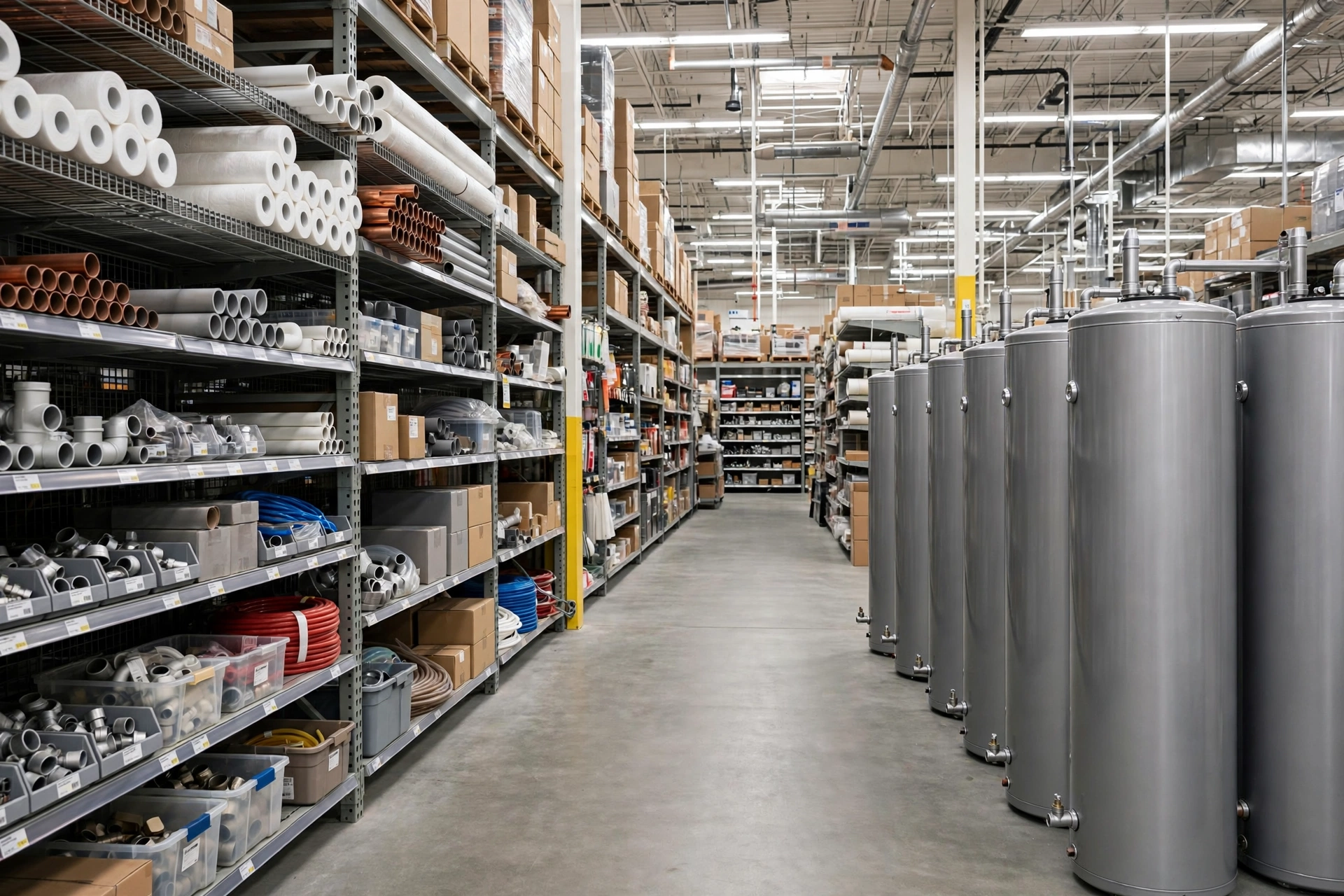
If you’re asking how much is the Home Depot charge to install a hot water heater, the short answer is this: the basic installation charge is typically $300–$400 (labor only, you supply the unit or buy it from them separately), and a typical all-in job — a new water heater plus installation — runs $1,000–$3,000 in 2026. Your final bill depends on the heater you buy, a handful of common add-ons (delivery, old-unit disposal, permits, code upgrades), and which local contractor your store assigns to the job — Home Depot doesn’t do the work itself, it brokers licensed local installers.
Quick-answer table (typical 2026 Home Depot charges):
| Charge | Typical cost |
|---|---|
| Basic install labor (standard tank swap) | $300–$400 |
| All-in: new unit + installation | $1,000–$3,000 |
| Delivery of the new unit | ~$75 |
| Old-unit haul-away/disposal | ~$50 |
| In-home inspection/quote visit | ~$40 (often credited toward the job) |
| Permit (municipal fee) | $50–$200 |
| Code upgrades (expansion tank, pan, straps) | Varies by store/contractor — confirm locally |
This guide breaks down exactly what you’re paying for, how Home Depot’s process works from purchase to final inspection, and how to keep the bill down. For the wider picture — prices by heater type, energy costs, and DIY-vs-pro math — see our full Home Depot water heater installation cost guide, the broader companion to this charge-focused breakdown.
How Much Is the Home Depot Charge to Install a Hot Water Heater?
Home Depot sells two things at once: the water heater itself and an installation service. The two are priced separately, which is the source of most confusion.
The installation charge: ~$300–$400 for labor alone. This covers a licensed local contractor doing a standard like-for-like tank swap — draining and removing the old unit, setting the new one, making water, gas/electrical, and vent connections, and testing. It assumes you already have the unit (bought from Home Depot or elsewhere) and that no code upgrades are required. Most US homeowners in 2026 pay in this range for a basic swap; complex jobs (tank-to-tankless conversions, fuel changes, vent rerouting) are quoted higher.
The unit: roughly $600–$2,100 for gas tanks in the common 40–50-gallon sizes. Home Depot’s shelves carry everything from budget 40-gallon electrics to high-efficiency tankless models, so the unit line item swings widely. A widely-quoted benchmark: a 50-gallon gas water heater installed typically totals $1,000–$2,500 for the complete job.
The all-in typical: $1,000–$3,000. Unit + basic install + a modest bundle of extras (delivery ~$75, disposal ~$50, permit $50–$200) lands most households in this band. Tankless installs push toward the top and beyond.
For comparison, hiring an independent plumber for a labor-only water heater installation generally costs $300–$800, at plumber hourly rates of $45–$150 per hour — Home Depot’s $300–$400 basic charge sits at the low end of that range because a like-for-like swap is the installer’s bread-and-butter job. The U.S. Department of Energy’s water heating guide is worth reading before you pick the unit itself, since fuel type and efficiency affect your energy bills for years.
What’s Included in Home Depot’s Installation Charge
Home Depot’s installation is performed by licensed, insured local contractors in its pro network — not by store employees. The basic installation charge is meant to cover a clean, code-compliant standard swap:
- Disconnecting and draining the old unit, then removing it from the work area
- Setting and leveling the new water heater on the existing platform
- Water line connections — reconnecting to existing supply lines with new flex connectors where appropriate
- Gas reconnection to the existing gas line, or electrical reconnection to the existing circuit
- Venting reconnection to the existing flue (gas units)
- Filling, testing, and leak checking, including firing the burner or energizing the elements
- A final walkthrough/inspection so the installer confirms the work before leaving
What the basic charge typically does not include: the permit fee, code-required upgrades (expansion tank, drip pan, earthquake straps, vent changes), old-unit disposal, delivery of the new unit, drywall or carpentry work, and electrical panel upgrades. Those are either separate line items or quoted extras — which is why the quote visit matters so much.
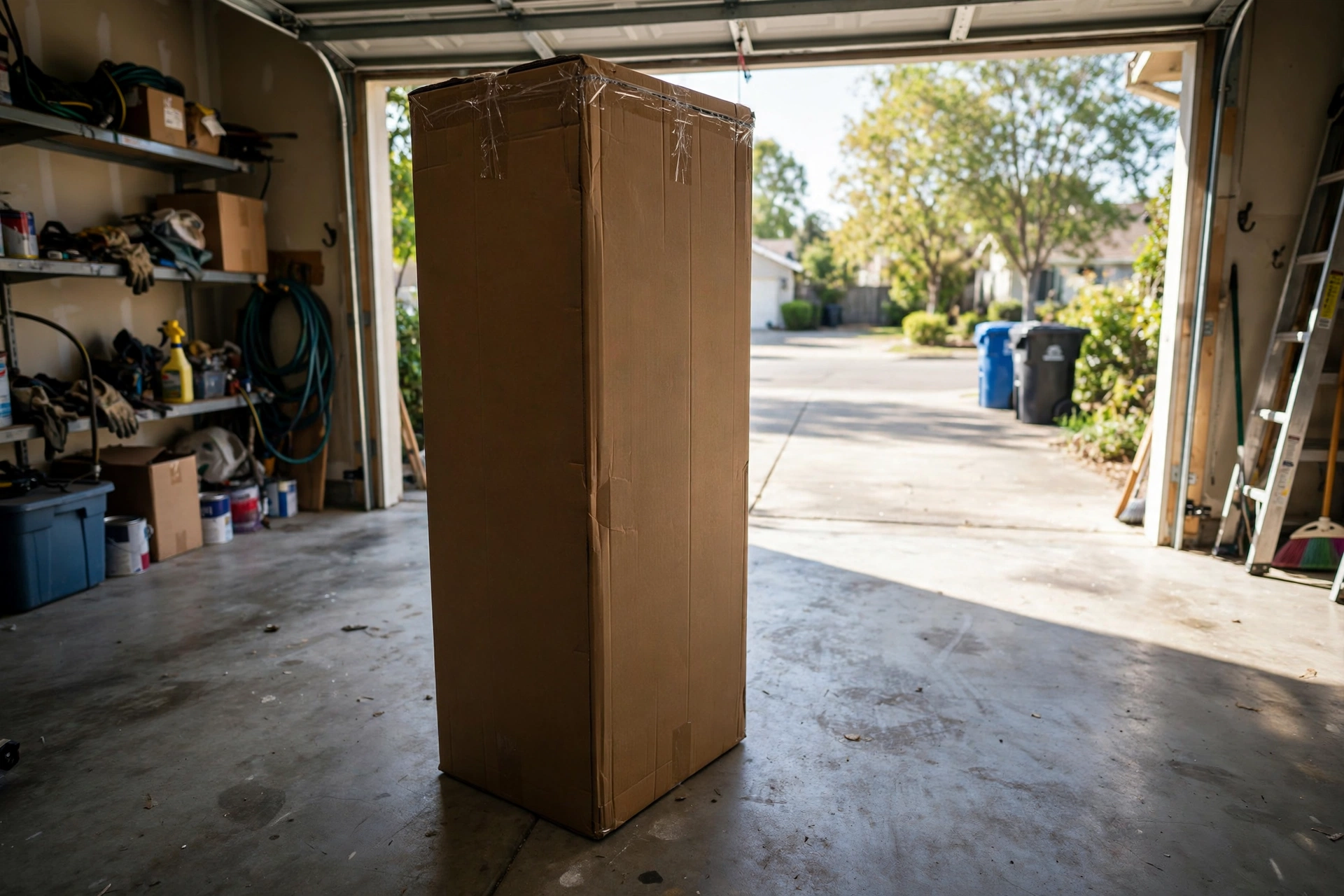
Common Extras Home Depot Charges For
The $300–$400 charge assumes a perfect swap. In real homes, extras show up. Typical ones:
| Extra | Typical charge | Notes |
|---|---|---|
| Appliance delivery | ~$75 | New-unit delivery to your home; varies by store/contractor — confirm locally |
| Old-unit haul-away/disposal | ~$50 | Removing the old tank; varies by store/contractor — confirm locally |
| In-home inspection/quote visit | ~$40 | Often credited toward the job if you book the install |
| Municipal permit | $50–$200 | Most cities require one; the installer usually pulls it |
| Expansion tank (where code requires) | Varies — confirm locally | Very common surprise add-on on closed plumbing systems |
| Drain pan with drain line | Varies — confirm locally | Often required in finished spaces |
| Gas line upsizing/rerouting | Varies — confirm locally | Common in tank-to-tankless conversions |
| Venting changes | Varies — confirm locally | Tankless units can’t reuse a standard tank flue |
| Earthquake straps | Varies — confirm locally | Required in seismic zones |
The honest framing: Home Depot’s installers quote the base charge, then itemize anything beyond it after the in-home inspection. If your home is newer and the old heater is like-for-like, you may pay nothing beyond the base charge plus the unit. If your install predates current code, the extras can add several hundred dollars — which is still usually cheaper than an unpermitted job failing inspection later.
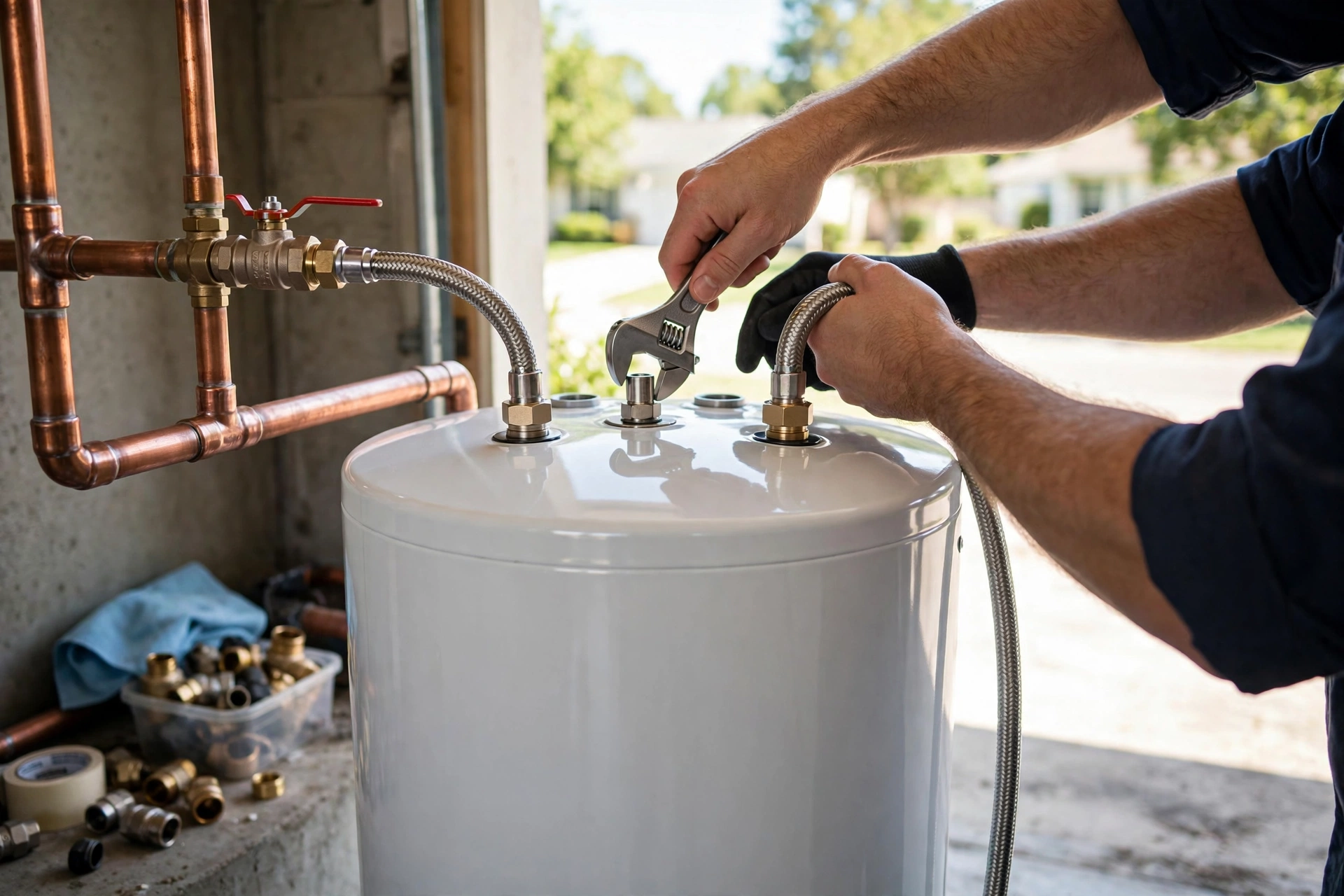
How the Home Depot Installation Process Works
The process is straightforward and is the same pattern at most locations:
- Buy (or pick) the water heater. Purchase in-store, online, or bring a unit you already own. A store associate can confirm sizing and fuel type against your old unit’s label — get this right, because the wrong unit turns a $300–$400 swap into a far bigger job.
- Book the in-home inspection. Home Depot schedules a quote visit (typically ~$40, often credited toward the job). The contractor looks at your current setup, confirms the scope, and flags code requirements and extras.
- Receive the itemized quote. You get a written quote: base installation charge plus any extras (delivery, disposal, permit, code upgrades). No surprises is the point — ask questions now.
- Schedule the install. You pick a date. Many stores offer same-day or next-day installation for standard swaps, which is one of Home Depot’s real advantages over a booked-up independent plumber.
- Delivery and installation. The new unit arrives (delivery ~$75 if you don’t haul it yourself), the licensed local contractor does the swap — typically 2–4 hours for a standard tank.
- Final inspection and walkthrough. The installer tests everything and walks you through it. Home Depot backs its installations with a workmanship guarantee, and the unit itself carries the manufacturer’s warranty (register it promptly — most brands require professional installation for full coverage).
Note that you’re dealing with a local contractor doing the work under Home Depot’s name. Quality is consistent on paper — licensed, insured, background-checked — but the actual technician, scheduling, and quote details vary by store and market. The broad companion piece, our full Home Depot water heater installation cost guide, goes deeper on what to watch for with big-box installs.
How to Get an Accurate Quote from Home Depot
Home Depot’s website gives ranges, but your quote is what you’ll actually pay. Get an accurate one with these steps:
- Start online or in-store, but finish in person. Online estimates are ballparks; the in-home inspection (~$40, often credited) is where the real number is set.
- Bring the old unit’s specs. Brand, model, gallon capacity, fuel type, and a photo of the setup. This lets the contractor quote accurately in one visit.
- Ask for a written, itemized quote. Base install charge on one line; every extra (delivery, disposal, permit, code upgrades) on its own line. Itemization is how you compare against independent quotes.
- Ask specifically about code upgrades. “What will my city require — expansion tank, pan, straps, permit?” Get each one’s price. This is the number-one source of bill shock.
- Confirm who’s pulling the permit. Most Home Depot installers handle it, but confirm the $50–$200 fee and who files it. An unpermitted install can void the unit’s warranty.
- Get one independent quote to cross-check. Even one bid from a local plumber — whose labor for the same swap runs $300–$800 — tells you instantly whether Home Depot’s number is competitive. If you’re comparing brands, also glance at Lowe’s water heater installation pricing; the two big-box offers are structurally similar, and the differences are mostly in the contractor network and current promotions.
- Ask about current promotions. Home Depot runs periodic appliance/install bundles — delivery discounts, install credits, or manufacturer rebates. The list price is rarely the final word.
Home Depot vs Independent Plumber
| Factor | Home Depot install | Independent licensed plumber |
|---|---|---|
| Basic install charge | ~$300–$400 (standard tank swap) | $300–$800 labor-only for the same swap |
| Who does the work | Licensed local contractor in Home Depot’s network | The plumber (or their crew) directly |
| Unit pricing | Home Depot retail; you choose from their stock | Retail, trade pricing, or owner-supplied |
| Scheduling | Often same-day/next-day for standard swaps | Depends on the plumber’s backlog |
| Quote process | In-home inspection (~$40, often credited) | Free estimates are common |
| Warranty handling | Workmanship guarantee + manufacturer warranty; you coordinate both | Single point of contact for unit + labor issues |
| Price edge | Competitive on straightforward swaps; promotions common | Often wins on complex/conversion work where bundled expertise matters |
| Accountability | Home Depot’s brand behind the job; installer quality varies by market | You vet the individual plumber’s reputation |
| Best for | Fast, standardized tank swaps with retail unit convenience | Conversions, tricky venting, and jobs where you want one accountable pro |
The ENERGY STAR water heaters page is a useful pre-purchase stop for both routes — a certified unit’s efficiency savings are the same regardless of who installs it.
Ways to Keep the Home Depot Bill Down
- Take the in-home quote — and make it count. It’s ~$40 and often credited, and it’s the only way to get extras itemized instead of discovered. Never approve a job without it.
- Buy the unit during a sale. Appliance sales (holiday weekends, spring Black Friday) routinely knock hundreds off; the unit is the biggest line item, so a 15–25% discount beats any install-charge haggling.
- Handle disposal and delivery yourself if you can. A $75 delivery and $50 haul-away are easy wins if you have a truck and a friend — or a municipal bulk-pickup day for the old tank.
- Ask for the base-charge price explicitly. Confirm the $300–$400 figure applies to your like-for-like swap and get the “same fuel, same spot” scope in writing before extras are added.
- Clear the work area. Move stored items and make sure there’s a clear 3-foot path. Installers bill time, not just tasks.
- Skip the extras you don’t need. Ask the contractor to mark which extras are code-required versus recommended. Pay for the required ones; decide on the rest.
- Compare against an independent quote. Home Depot’s charge is competitive for simple swaps, but a local plumber with trade pricing on units sometimes beats the all-in total — especially on tankless. Compare totals, not single lines.
- Register the warranty immediately. Full manufacturer coverage (most brands require professional installation, which you have) protects you from paying labor twice if the unit fails early.
Frequently Asked Questions
How much does Home Depot charge to install a hot water heater?
Home Depot’s basic installation charge for a standard tank-for-tank hot water heater swap is typically $300–$400 in 2026 (labor only, unit not included). All-in — a new unit plus installation plus typical extras — most households pay $1,000–$3,000. Delivery (~$75), old-unit disposal (~$50), the permit ($50–$200), and any code upgrades are extra.
Does Home Depot install water heaters themselves?
No — Home Depot doesn’t send store employees. Installation is done by licensed, insured local contractors in Home Depot’s pro network. You book and pay through Home Depot, and Home Depot backs the work with its installation guarantee, but the technician, scheduling, and quote details vary by store and market.
What’s not included in Home Depot’s installation charge?
The basic $300–$400 charge typically excludes the water heater itself, delivery (~$75), old-unit disposal (~$50), the permit fee ($50–$200), and code-required upgrades like expansion tanks, drain pans, earthquake straps, vent changes, or gas-line work. These are quoted as separate line items after the in-home inspection.
Is the in-home quote from Home Depot free?
Usually not free — expect around $40 for the inspection visit, though it’s often credited toward the job if you book the installation. It’s worth it: the visit is where the contractor flags code requirements and itemizes extras, so it’s the step that prevents bill shock.
Is Home Depot cheaper than a plumber for water heater installation?
For a straightforward like-for-like tank swap, Home Depot’s $300–$400 charge is competitive — independent plumbers typically charge $300–$800 for the same labor-only water heater installation. For complex jobs (tankless conversions, fuel changes), an independent plumber’s bundled expertise often prices better. Get both quotes and compare the all-in totals.
The Bottom Line
Home Depot charges roughly $300–$400 for the basic install labor on a standard hot water heater swap in 2026 — the licensed contractor, the connections, the testing — and $1,000–$3,000 all-in with a new unit, delivery, and typical extras. The in-home inspection (~$40, often credited) is the key step: it turns a ballpark into an itemized quote with every extra priced. For simple swaps booked fast, Home Depot is competitive with independent plumbers; for conversions and code-tricky jobs, get a local quote too, and always compare the full totals.
Prices are typical 2026 US ranges — Home Depot’s base installation charge ($300–$400) plus common extras: delivery ~$75, disposal ~$50, in-home quote ~$40 (often credited), permits $50–$200; actual figures vary by store, market, and the assigned local contractor. Get the itemized written quote from your local contractor before approving any work.
2 thoughts on “How Much Does Home Depot Charge to Install a Hot Water Heater? (2026)”