
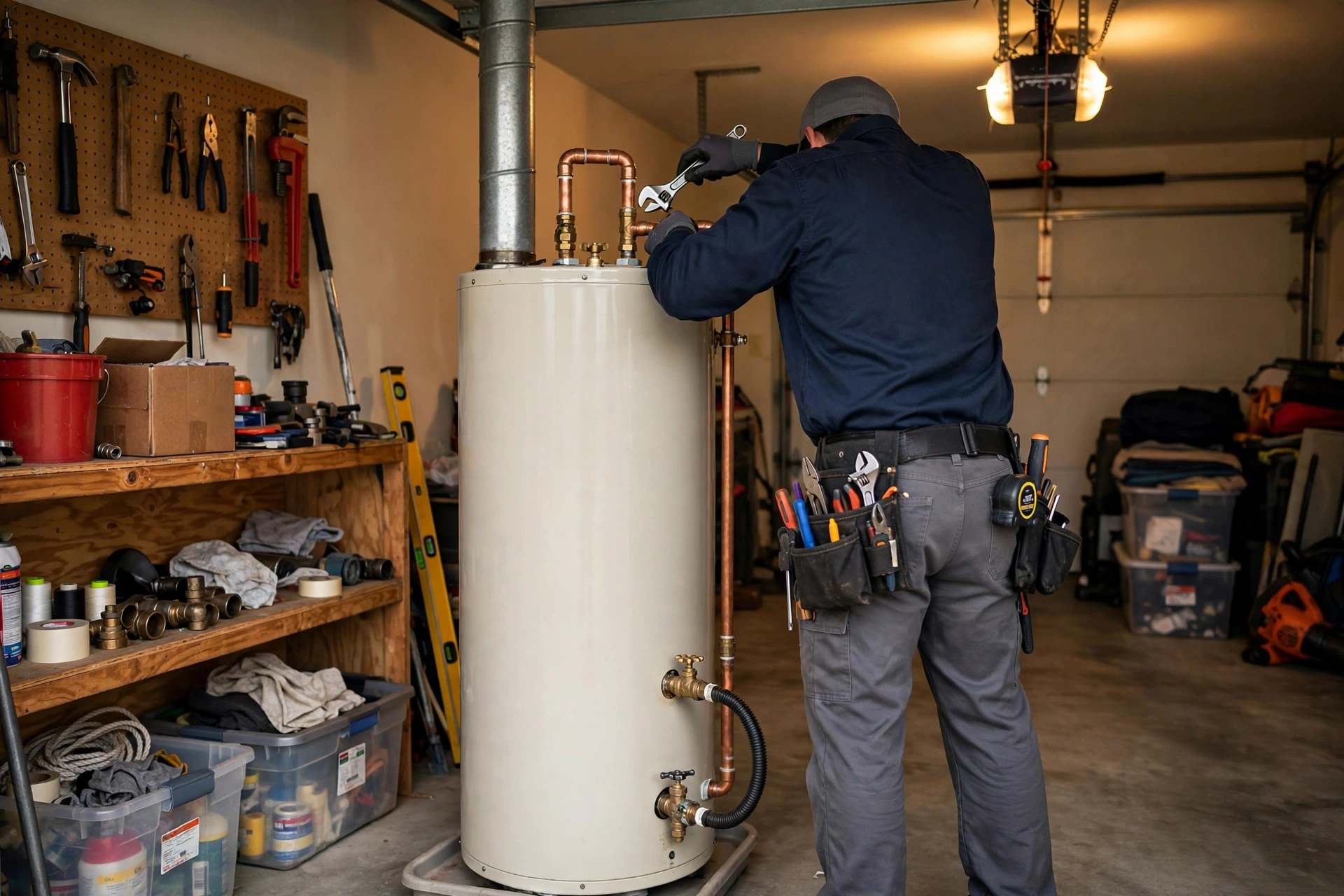
The average labor cost to install a 50 gallon gas water heater is $300–$800 across the United States in 2026, with a straightforward like-for-like tank swap often falling between $150 and $450 in labor alone. At typical plumber hourly rates of $45–$150 per hour, a standard 50-gallon gas install takes about 2–4 hours of billed time. That labor figure covers only the plumber’s work — a 50-gallon gas unit itself typically costs $600–$2,100, so a complete professional installation usually lands between $1,000 and $2,500 all in.
Quick-answer table (typical 2026 costs, 50-gallon gas):
| Scenario | Typical labor cost | Typical job time |
|---|---|---|
| Like-for-like 50-gal gas swap (same spot, same fuel) | $150–$450 | 2–4 hours |
| Average national labor (50-gal gas install) | $300–$800 | 2–5 hours |
| 50-gal gas unit (heater only) | $600–$2,100 | — |
| Total installed, 50-gal gas | $1,000–$2,500 | — |
| Swap plus code upgrades (expansion tank, pan, straps) | $450–$900 | 3–6 hours |
| Electric-to-gas conversion (50-gal tank) | $800–$1,500+ | 6–10 hours |
| Plumber hourly rate | $45–$150/hr | — |
Why break labor out of the total at all? Because many homeowners buy the water heater themselves — a clearance unit at a big-box store, a specific brand, or a warranty replacement where only the work is on you. Knowing what the labor alone should cost keeps you from overpaying, and it gives you the math to judge whether a retailer’s bundled “unit + install” offer is actually a good deal.
What Is the Average Labor Cost to Install a 50 Gallon Gas Water Heater?
The national average — $300 to $800 in labor — is the middle of a wide bell curve. At the low end, a simple same-day swap in a garage with easy access and no code changes can genuinely cost $150–$450; many plumbers have a flat “swap, same fuel, same spot” rate for exactly this job. At the high end, jobs that change venting, reroute the gas line, or bring the installation up to current code run $800 or more in labor before the unit itself.
The hourly math explains most of the range. A licensed plumber’s rate runs $45–$150 per hour depending on market, and a gas tank swap takes 2–4 hours when everything lines up — versus 5–10 hours when venting or gas-line work is involved. Geography moves the number significantly: metro areas with higher labor costs (the Northeast, the West Coast, South Florida) sit toward the top of every range, while rural and lower-cost markets land nearer the bottom.
One important distinction: this is the labor for a gas unit. Gas water heater labor costs slightly more than electric on average because there are more systems to reconnect and verify — the gas supply line, the combustion venting, and the safety controls. The U.S. Department of Energy’s water heating guide explains how fuel type affects both efficiency and installation requirements, which is worth reading before you commit to gas versus electric.
What’s Included in Gas Water Heater Installation Labor (and What Isn’t)
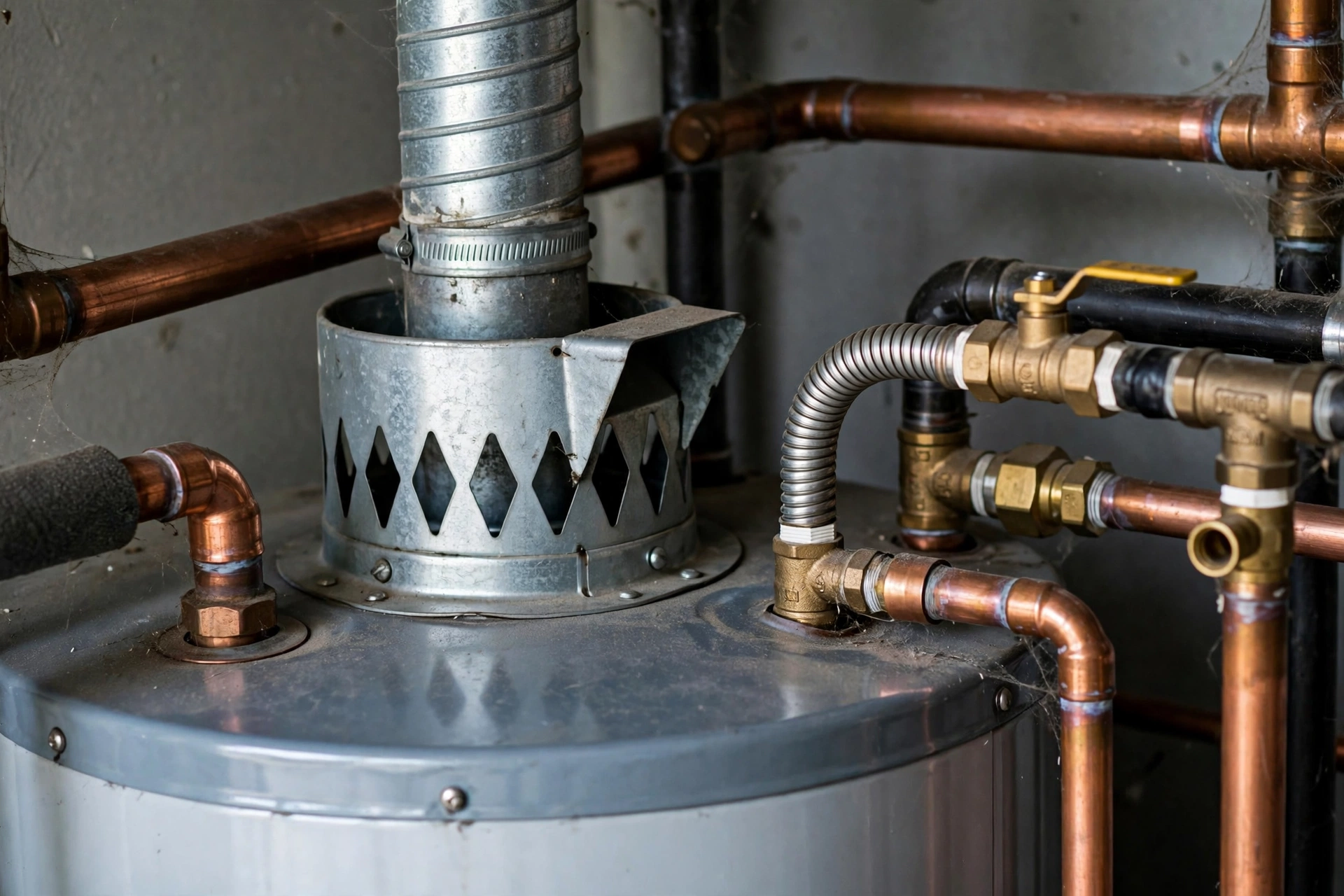
Gas installs have a longer checklist than electric, and the “what’s included” question matters more because gas-specific extras are the priciest add-ons. Before you accept a quote, confirm each line:
| Usually included in the labor price | Usually NOT included (billed extra or your cost) |
|---|---|
| Draining, disconnecting, and removing the old tank | The water heater itself ($600–$2,100 for a 50-gal gas unit) |
| Setting and leveling the new 50-gal unit | Permit fee ($50–$200 in most jurisdictions) |
| Hot and cold water line hookups (flex connectors, fittings) | Expansion tank ($150–$300 installed, where code requires) |
| Gas line reconnection to the existing supply line | Gas line upsizing or rerouting ($200–$600 in labor) |
| Vent/flue reconnection to the existing chimney or vent | New or rerouted venting ($300–$700 in labor) |
| Combustion air check and venting inspection | Drip pan with drain line where code requires |
| TPR (temperature-pressure relief) valve discharge piping | Old-unit disposal (~$50 in most markets) |
| Fill, purge, test-fire, and leak check | Earthquake/strapping kits in seismic zones |
| Small fittings, pipe dope, and thread sealant from the van | New shutoff valves if the old ones don’t hold |
The pattern to notice: reconnecting to existing infrastructure is included; changing infrastructure is extra. Reconnecting the gas line to an existing, correctly sized supply is standard labor. Running a new or larger gas line to a new location is a separate labor charge. The same logic applies to venting — tying into an existing, code-compliant flue is included; building a new vent run is not.
Labor Cost by Installation Scenario
Not all 50-gallon gas installs are the same job. Here’s how the labor number moves by scenario:
| Scenario | Typical labor cost | Why |
|---|---|---|
| Garage swap, same fuel, same spot | $150–$450 | Fastest job: everything exists, easy access, flat slab |
| Basement replacement, same venting | $250–$550 | Extra hauling time for old and new tanks, stair work |
| Swap with expansion tank + drip pan added | $400–$800 | 1–2 extra hours for code upgrades plus parts |
| Relocating the unit (new gas + water routing) | $600–$1,200 | Gas line rerouting ($200–$600 labor) plus water/vent work |
| New vent run to exterior or roof | $700–$1,400 | New venting labor ($300–$700) dominates this job |
| Closet install with combustion-air upgrade | $450–$900 | Louvered door or vent openings added to meet code |
| Electric-to-gas conversion | $800–$1,500+ | Gas line extension, new venting, electrical for ignition |
| Tight attic or crawlspace install | $500–$1,000 | Access penalty: cramped work adds hours and sometimes a second worker |
The two labor line items that most often surprise homeowners are gas line rerouting ($200–$600 in labor) and new venting ($300–$700 in labor). Either one alone can double the labor bill of a simple swap — so if your quote includes either, that’s where the money is going, and it’s worth getting a second bid focused specifically on those items.
Gas-Specific Work That Affects the Labor Bill
Gas units carry work that electric units simply don’t have. Each of these is routine for a licensed plumber, but each adds billed time to the job:
Venting and flue reconnection. The combustion exhaust must draft safely out of the house. Reconnecting the flue to an existing vent is standard labor; the plumber also checks draft and clearances, because a corroded or undersized flue gets red-tagged by the inspector. Where the old vent can’t be reused, building a new vent run is among the priciest labor line items in this trade ($300–$700).
Gas line hookup and leak testing. The gas supply is reconnected to the unit’s control valve, the line is pressure-checked, and every joint is leak-tested with a manometer or soap solution. This is the part of the job where hiring a pro pays for itself — gas leaks are not a DIY learning opportunity. If the existing line is undersized for the unit’s BTU rating, upsizing or rerouting it is a separate labor charge ($200–$600).
Combustion air. Gas burners need air. Units in tight closets or small utility rooms often require louvered doors, added vents, or ducted combustion air to meet code. This is a common add-on for closet installs that were grandfathered in years ago.
Expansion tank. Closed plumbing systems (homes with a check valve or pressure-reducing valve) require an expansion tank, and many municipalities added this requirement in the last decade. Installed cost runs $150–$300, covering the tank and roughly 30–60 minutes of labor.
TPR valve and discharge piping. The temperature-pressure relief valve is a critical safety device, and code dictates where its discharge pipe terminates (near the floor, outside, or to a drain). Running or correcting this piping is usually folded into the labor quote but takes real time in repositioned installs.
Drip pan with drain. Required by code in many areas when a tank sits above finished living space, and cheap insurance everywhere else. The plumber sets the pan under the unit and routes its drain line — straightforward, but a legitimate extra on an otherwise basic swap.
What Drives 50-Gallon Gas Install Labor Up
Beyond the gas-specific line items, several job conditions push labor toward the top of the range:
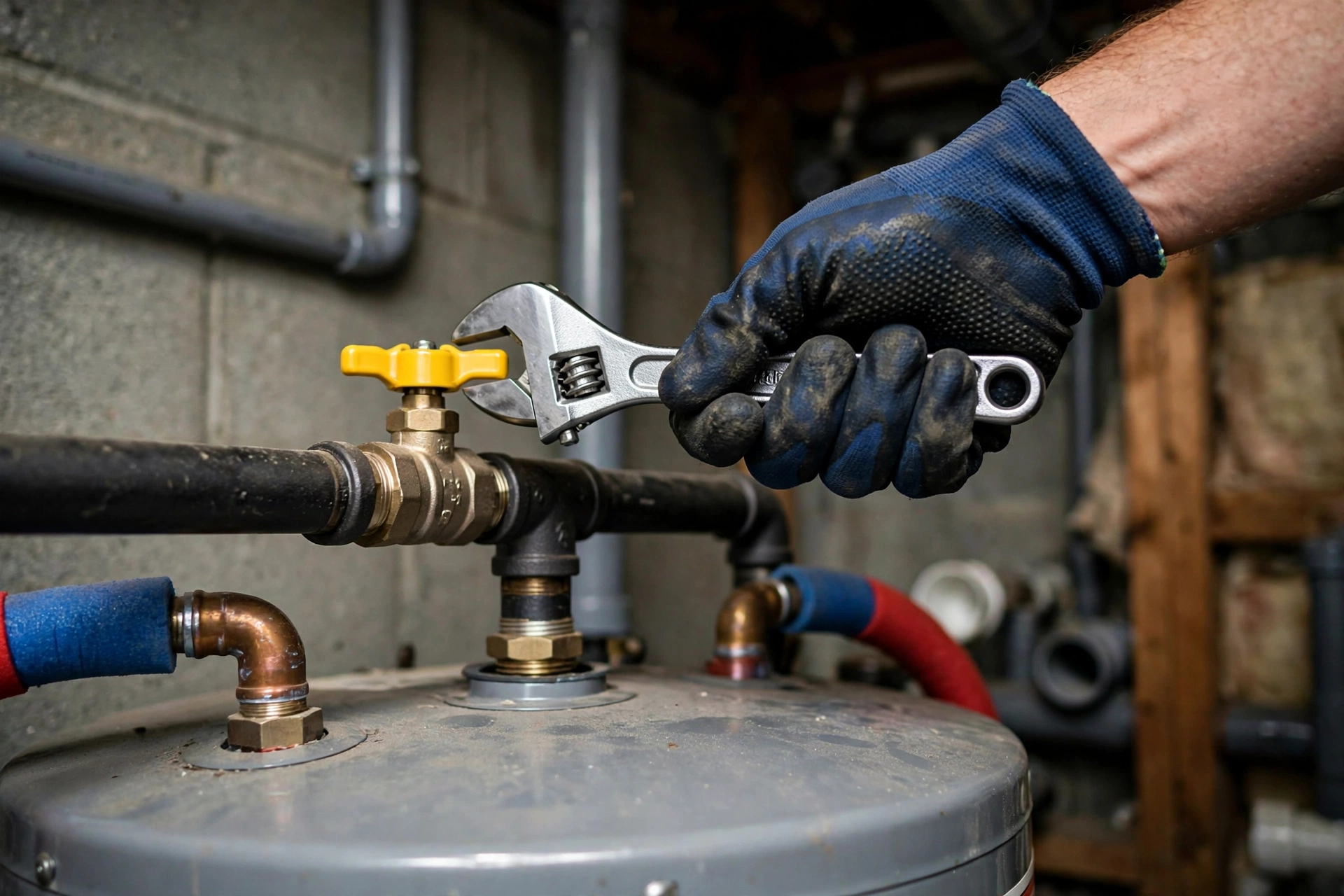
Venting and combustion changes. New vent routing is the single biggest labor multiplier. Cutting a new vent path to the roof or an exterior wall — with proper slope, clearances, and flashing — takes hours that a simple flue reconnection doesn’t.
Gas line upsizing. A 50-gallon gas unit draws roughly 40,000 BTU. If the existing branch line can’t supply it (common when the old unit was smaller or when other appliances were added to the line), the plumber must run a larger line. Expect $200–$600 in labor for rerouting or upsizing.
Permits and inspections ($50–$200). Most jurisdictions require a permit for water-heater replacement, and gas units get closer scrutiny from inspectors. Some plumbers roll the fee into the labor quote; others bill it through. Confirm who’s pulling the permit — an unpermitted gas install can void the manufacturer’s warranty and cause real trouble at resale.
Code catch-up. Expansion tanks, drip pans, seismic strapping, and updated shutoff valves each add parts plus 30–90 minutes of labor. A swap that was a $250 job years ago can legitimately cost $600+ today — the code changed, not the plumber.
Accessibility. A garage install on a flat slab is the cheapest water-heater job in plumbing. A unit in a cramped crawlspace, a tight closet, an attic, or a basement with no walk-out access adds real hours and sometimes a second pair of hands.
Old-unit disposal. Hauling a sediment-filled 50-gallon tank — roughly 150 pounds — takes time and a truck. Many plumbers charge around $50 for disposal; ask whether it’s included.
Emergency and off-hours rates. A same-day emergency swap commands premium pricing, often 25–50% over a scheduled weekday install. If the unit fails but isn’t flooding, scheduling a normal appointment saves real money.
DIY vs Hiring a Pro
| Factor | DIY | Licensed plumber |
|---|---|---|
| Cost | Your time + $50–$150 in fittings and supplies | $300–$800 in labor |
| Skill required | High for gas — venting, combustion air, gas connections | Their daily work |
| Time | A full day or more, first time | 2–4 hours for a standard swap |
| Permit & inspection | You pull it and schedule it yourself | Usually handled by the plumber |
| Gas safety | Leak-testing and venting mistakes are genuinely dangerous | Routine, insured work |
| Code compliance | You must know local venting and combustion-air rules | Built into their process |
| Warranty | Most manufacturers require professional installation for full coverage | Pro install satisfies warranty terms |
| Mistake cost | A bad gas connection or venting can be life-threatening | Their liability insurance covers it |
| Best for | Almost nobody for gas — see below | Gas units, always |
The honest position: a labor-only installation by a licensed plumber is the right answer for virtually every gas water heater. Electric tank swaps are borderline DIY territory for experienced homeowners, but gas adds combustion venting, gas-line work, and leak-testing where mistakes can be catastrophic rather than merely wet. If you’re buying the unit yourself — from Home Depot water heater installation bundles or Lowe’s water heater installation options — you can still source the unit retail and hand the gas work to a pro for the $150–$450 typical swap labor. A.O. Smith’s gas water heater installation guide likewise stresses that gas-line work and proper ventilation require a professional gas fitter to prevent leaks, explosions, and fires.
How to Save on Installation Labor
- Ask for the flat swap rate. Many plumbers quote a flat $150–$450 for a like-for-like 50-gallon gas swap — but only if you ask. Itemized hourly billing on a simple swap usually costs you more than the flat rate.
- Get three itemized quotes with the same specs. Tell every bidder the exact unit size, fuel type, and location, and ask for labor separated from code extras. Apples-to-apples comparison exposes outliers — and reveals whether “code upgrades” are genuine or padded.
- Schedule a weekday, non-emergency install. Emergency same-day swaps carry 25–50% premiums. A planned install during normal hours is the baseline rate; spring and fall tend to be plumbers’ slowest seasons.
- Buy the unit yourself when there’s a real sale. Labor-only works when the unit is discounted $100–$300 under trade pricing — holiday appliance sales are the sweet spot. Compare your total (unit + $150–$450 labor) against the retailer’s bundled price.
- Compare retailer bundle prices. Get the install quote from Home Depot water heater installation and Lowe’s water heater installation services, then compare the all-in total against buying the unit plus a labor-only installation from an independent plumber.
- Prep the work area. Clear a 3-foot path to the unit, move stored items, and make sure the gas and water shutoffs are accessible. Plumbers bill for time spent moving your boxes.
- Ask about disposal and permit separately. Some plumbers waive the ~$50 disposal fee if you haul the old tank to the curb; some cities let homeowners pull their own permit. Small asks, real savings.
- Don’t buy the wrong unit. A 40-gallon unit for a household that needs 50, or an electric unit for a gas rough-in, turns a $300 swap into a $1,000+ redo. Confirm fuel type, venting class, and dimensions against the old unit’s label before you buy.
Frequently Asked Questions
How much is labor to install a 50 gallon gas water heater?
The average labor cost to install a 50 gallon gas water heater is $300–$800 in 2026, with a straightforward like-for-like swap typically $150–$450. These figures cover the plumber’s work only — the 50-gallon gas unit itself ($600–$2,100), the permit ($50–$200), and code-required extras like an expansion tank ($150–$300 installed) are separate.
Why does a gas install cost more in labor than an electric one?
Gas units add venting/flue reconnection, gas-line hookup and leak testing, and combustion-air verification — none of which exist on an electric install. Each adds billed time, and gas-line or venting changes ($200–$700 in labor) have no electric equivalent. That’s why gas labor runs toward the top of the $300–$800 range.
Does the labor price include the permit?
Usually not. Most plumbers will pull the permit for you and pass the $50–$200 municipal fee through at cost, but some quote labor only. Always ask explicitly who’s responsible for the permit — an unpermitted gas install can void the manufacturer’s warranty and cause problems at resale.
Can I buy the 50-gallon gas unit myself and just pay for labor?
Yes — that’s exactly what a labor-only installation is, and most plumbers are happy to do it. Confirm the unit is the right fuel type, capacity, and venting class for your home before you buy, and check that the manufacturer’s warranty allows owner-supplied units with professional installation.
How long does it take a plumber to install a 50 gallon gas water heater?
A standard like-for-like swap takes 2–4 hours. Jobs involving new venting, gas-line rerouting, or code upgrades run 5–8 hours, and a full electric-to-gas conversion can take a day or more. At plumber hourly rates of $45–$150, time on site is the biggest lever on your labor bill.
The Bottom Line
The average labor cost to install a 50 gallon gas water heater is $300–$800 in 2026 — $150–$450 for a simple like-for-like swap in an accessible spot. Gas-specific work — venting, gas-line connections, and leak testing — is what separates this number from cheaper electric installs, and code upgrades like an expansion tank ($150–$300 installed) are the most common reason quotes exceed the range. Get three itemized labor quotes, confirm what’s included line by line, and compare the all-in total against bundled retailer offers before you decide.
Prices are typical 2026 US ranges gathered from contractor pricing data and industry sources; your actual cost depends on job complexity, gas-line and venting conditions, code requirements, region, and the plumber’s hourly rate ($45–$150/hr). Always get at least three written, itemized quotes from licensed, insured plumbers.
3 thoughts on “Average Labor Cost to Install a 50 Gallon Gas Water Heater in 2026”