

Residential Electrician Cost Per Hour in 2026
Residential electrician cost per hour in 2026 runs $50–$130, with most homeowners paying $65–$100 per hour for standard work by a licensed journeyman. On top of the hourly rate, expect a $100–$200 service-call fee covering travel, diagnosis, and usually the first hour. Master electricians bill $100–$150/hr, and emergency or after-hours calls run $100–$250/hr. This guide breaks down what the residential hourly rate actually buys, how it compares to commercial work, and what pushes your bill above — or below — the average.
Quick-answer table (typical residential rates, 2026):
| Service type | Typical hourly rate |
|---|---|
| Standard residential (journeyman) | $65–$100 |
| Apprentice (supervised) | $40–$60 |
| Master electrician | $100–$150 |
| Emergency / after-hours | $100–$250 |
| Service-call fee (first hour) | $100–$200 |
For the license-level rate breakdown behind these numbers, see what the rate for electricians is in 2026.
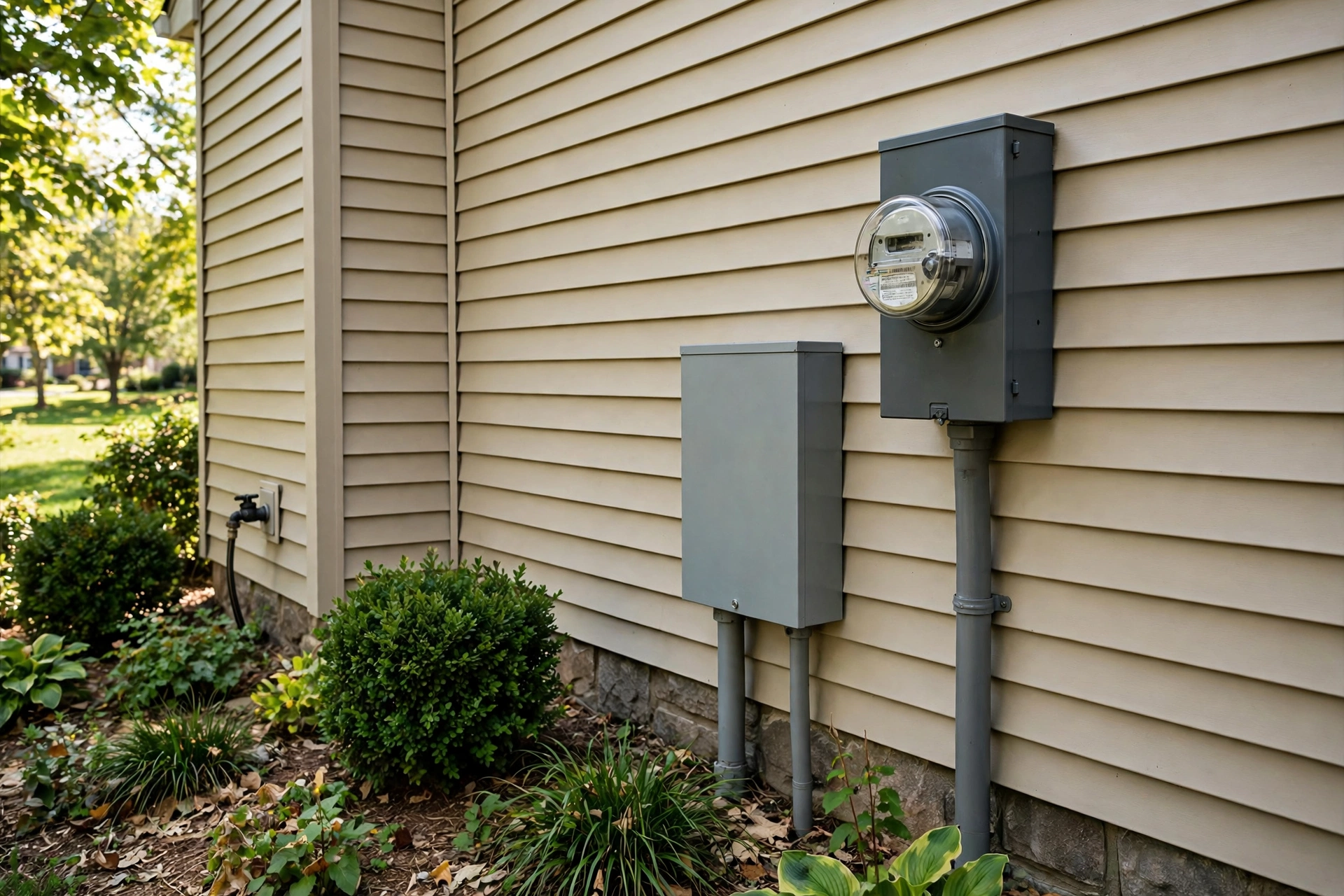
Residential vs. Commercial: Why Home Rates Are Lower
Residential is the cheapest electrical sector to hire in — and the reasons are structural:
| Sector | Typical hourly rate | Why |
|---|---|---|
| Residential | $50–$130 | Lower voltages, simpler systems, standard materials |
| Commercial | $100–$200 | Three-phase power, higher insurance, specialized tooling, stricter licensing |
| Industrial | $120–$250+ | High voltage, shutdowns, controls work, maximum risk and certification |
A home’s 120/240V system is straightforward compared to a commercial build-out. That doesn’t make residential work cheap — the electrician still carries licensing, insurance, a stocked van, and diagnostic skill — but you’re not paying the commercial premium for three-phase systems and shutdown scheduling. Licensed-trade rates cluster together across trades, by the way — compare plumber cost per hour to see how another licensed trade structures its pricing, and see how much a carpenter charges to install a door for the carpentry-trade comparison.
Common Residential Jobs: Hourly or Flat-Rate?
Most residential electricians bill defined jobs flat and reserve hourly billing for troubleshooting. Here’s the 2026 residential menu:
| Job | Typical cost | Usually billed |
|---|---|---|
| Outlet replacement | $80–$200 | |
| GFCI outlet installation | $80–$200 | |
| New outlet (new wiring run) | $150–$350 | |
| Light switch replacement | $80–$150 | |
| Ceiling fan installation | $150–$400 | |
| Light fixture installation | $150–$465 | |
| Circuit breaker replacement | $150–$300 | |
| Troubleshooting a dead circuit | $100–$250 | |
| 200-amp panel upgrade | $1,300–$3,000 | |
| Whole-house rewiring | $8,000–$20,000+ |
The pattern: if the scope is known, it’s flat. If the electrician has to hunt for the fault, the meter runs hourly after the service-call fee.
What Your Region Does to the Hourly Rate
Location moves the residential rate more than any other single factor:
| Region tier | States | Typical residential rate |
|---|---|---|
| High-cost | CA, NY, MA, WA, CT | $100–$150/hr |
| Mid-range | FL, TX, CO, IL, VA | $70–$100/hr |
| Lower-cost | GA, AL, MS, AR, OK | $50–$75/hr |
Coastal metros commonly run 20–40% above the national average; rural areas run 10–20% below but often add a trip fee that eats the savings. When comparing quotes, compare electricians in your own market — a $90/hr quote is expensive in Alabama and cheap in Boston.
Cost Drivers Beyond the Hourly Rate
| Driver | Effect | Notes |
|---|---|---|
| Home age | Older = more | Pre-1960 homes may have knob-and-tube wiring or 60-amp service needing upgrades |
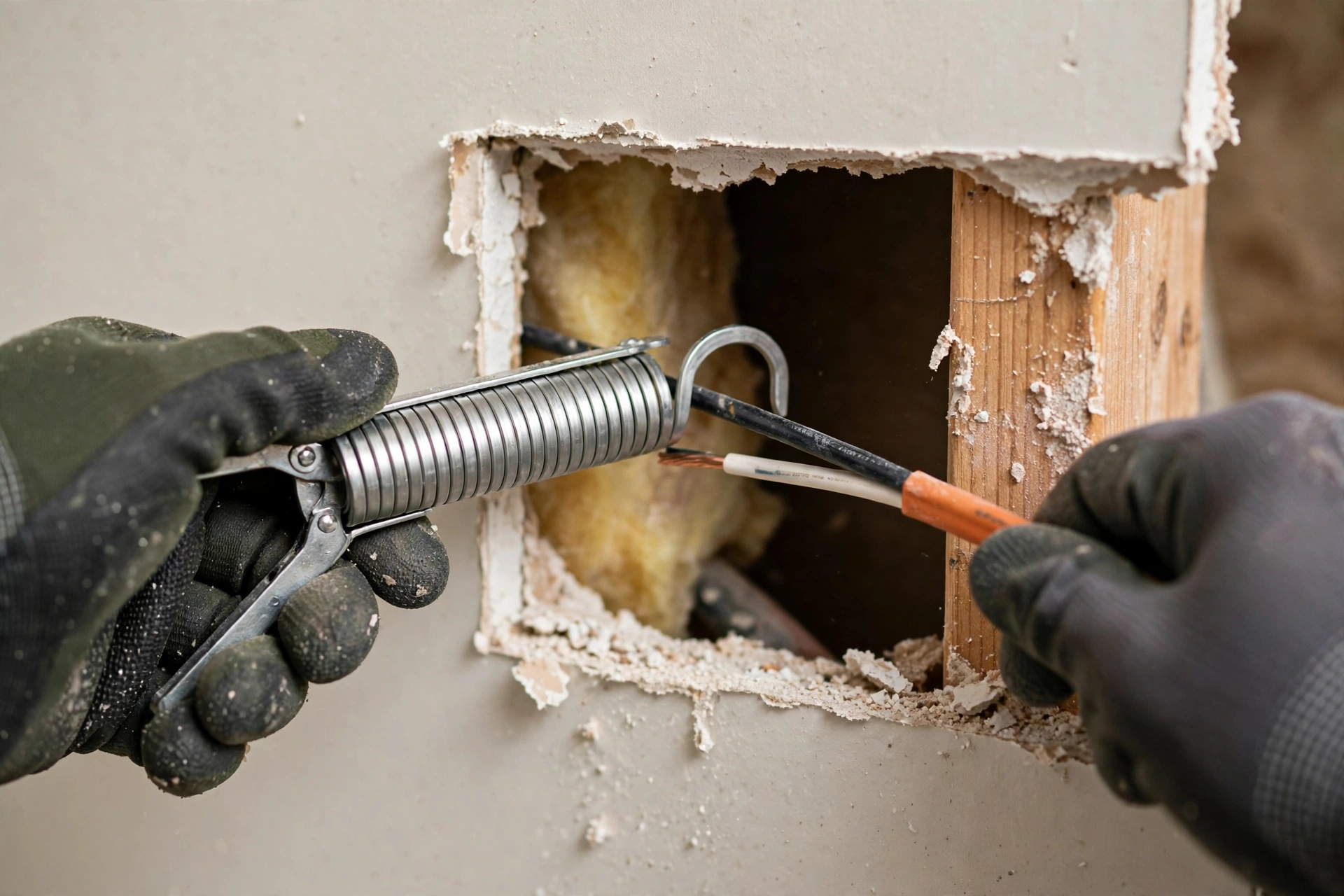
| Fishing wire through finished walls | +50–100% labor vs. open studs | Running cable through finished drywall takes 2–3× longer than open-stud rough-in |
| Access | Tight attics/crawlspaces cost more | Difficult working conditions slow every task |
| Panel capacity | Full panel = bigger job | No spare breaker spaces can turn a small add into a subpanel project |
| Permits and inspection | Added fees + scheduling | Required for new circuits, panel work, and service upgrades |
| GFCI/AFCI requirements | +$30–$80 per device | Code requires protection in kitchens, baths, garages, and outdoor locations |
| Materials | Copper, breakers, devices | Modest on small jobs; significant on rewires and panel upgrades |
Opening finished walls to fish new circuits means drywall patching afterward — budget it with our drywall repair cost per square foot guide. Bathroom work deserves special mention: remodels almost always trigger GFCI upgrades and sometimes a dedicated circuit — fold the electrical into the total with our bathroom remodel cost calculator.
DIY vs. Pro for Residential Electrical Work
| DIY | Pro | |
|---|---|---|
| Resetting a breaker or GFCI | ✅ Homeowner basics | Not needed |
| Replacing an outlet or switch (copper, grounded) | ⚠️ Possible — breaker off, verified dead with a tester | $80–$200 — the safe default |
| Hanging a fixture on an existing box | ⚠️ Doable for careful DIYers | $150–$465 |
| Adding a new circuit or outlet location | ❌ No — permits and code knowledge required | $150–$350+ |
| Panel work of any kind | ❌ No — licensed pro only | $150–$300+ per breaker; $1,300–$3,000 panel upgrade |
| Aluminum wiring or ungrounded boxes | ❌ No — fire-risk scenarios | Yes, always |
The Electrical Safety Foundation International draws the line clearly: anything involving the panel, new circuits, or aluminum wiring belongs to a licensed electrician, full stop.
Money-Saving Tips
- Make a list before you call. One service call covering five small fixes costs barely more than one covering a single fix — the $100–$200 fee is the same either way.
- Ask whether the job is flat-rate. For defined work, flat-rate quotes let you compare totals apples-to-apples instead of gambling on hourly speed.
- Get three written quotes on anything over a few hundred dollars — same job, same town, quotes routinely differ by 30%+.
- Keep it to business hours. After-hours premiums of 1.5–2× are the fastest way to double a small bill.
- Clear the work area. An electrician billing hourly who spends 20 minutes moving your storage boxes is billing you for moving boxes.
- Ask about the diagnostic credit. Many shops apply the service-call fee toward the repair on larger jobs — but only if you ask.
Frequently Asked Questions
What is the average residential electrician cost per hour?
In 2026, $50–$130 per hour nationally, with most homeowners paying $65–$100/hr for standard journeyman work. Add a $100–$200 service-call fee covering the first hour.
Why is there a service-call fee on top of the hourly rate?
It covers travel, diagnosis, and the electrician’s minimum viable visit. Without it, a 20-minute fix wouldn’t cover the cost of rolling the van. Most fees include the first hour of labor.
Is residential electrical work cheaper than commercial?
Yes — residential runs $50–$130/hr versus $100–$200/hr commercial. Homes use simpler 120/240V systems; commercial work involves three-phase power, higher insurance, and stricter requirements.
How much does it cost to have an electrician install an outlet?
Replacing an existing outlet: $80–$200. Installing a brand-new outlet with new wiring: $150–$350. GFCI protection: $80–$200 per outlet.
Can I do my own residential electrical work?
Minor work like resetting breakers is fine; simple swaps are possible with strict safety protocol. New circuits, panel work, and anything with aluminum or ungrounded wiring require a licensed electrician — and usually a permit.
The Bottom Line
Residential electrician cost per hour is $50–$130 in 2026 — $65–$100 for most standard work, $40–$60 for supervised apprentice labor, $100–$150 for a master, and $100–$250 for emergencies, all typically stacked on a $100–$200 service-call fee. Your region moves the number more than anything else, and defined jobs are usually flat-rated so you can compare totals. Bundle every small fix into one visit, keep work to business hours, and leave panels, new circuits, and aluminum wiring to a licensed pro. For the job-by-job breakdown of the most common small call, see how much an electrician costs to fix an outlet.
Prices are typical 2026 US planning benchmarks gathered from contractor pricing data and industry sources; your actual cost depends on region, license level, home age and wiring, job complexity, emergency timing, permits, and materials. Always get at least three written, itemized quotes — including one from a licensed, insured electrician — before committing. For electrical safety guidance, see the Electrical Safety Foundation International; for trade labor data, see the Bureau of Labor Statistics.
3 thoughts on “Residential Electrician Cost Per Hour: 2026 Guide”