
What Is the Rate for Electricians in 2026?
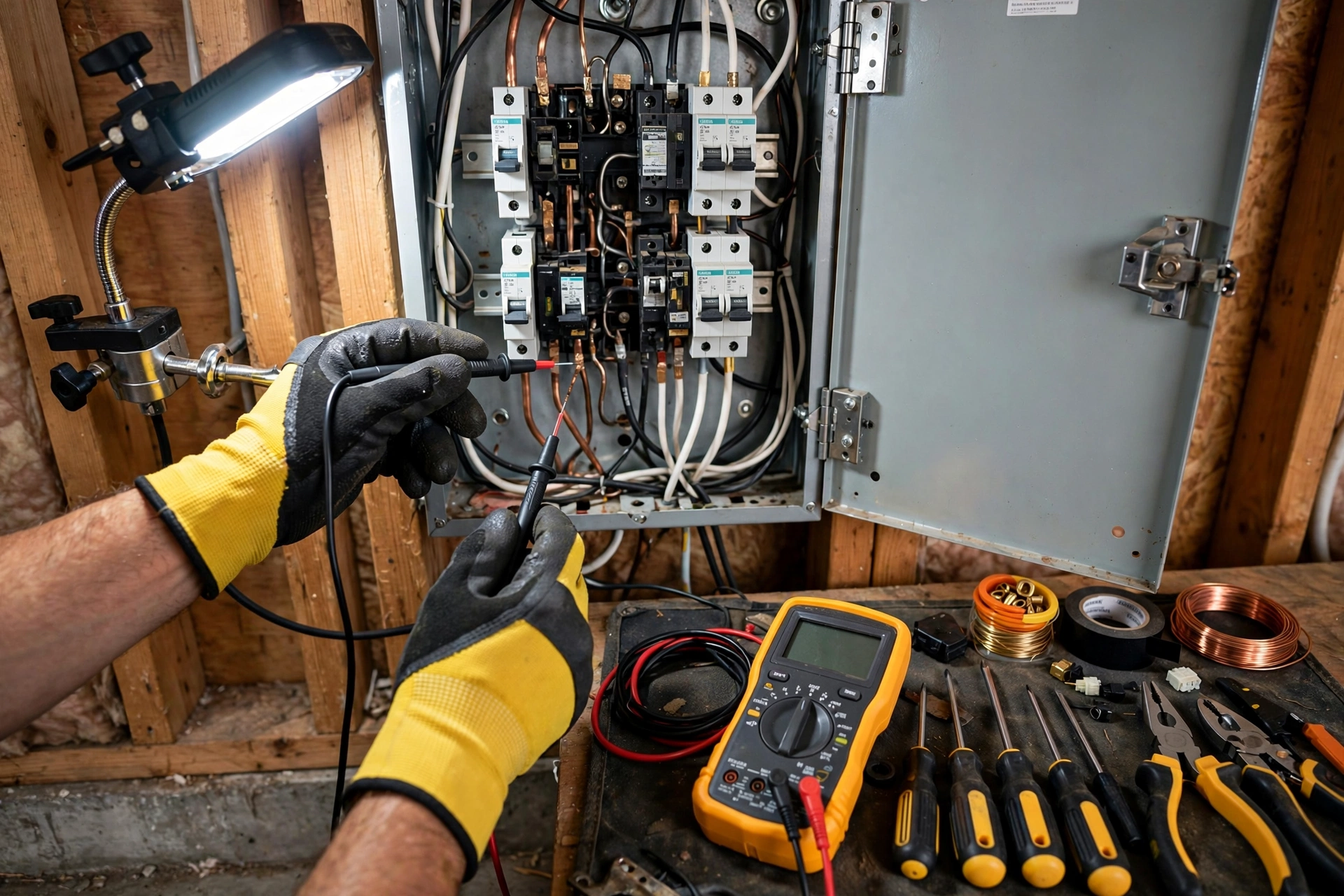
What is the rate for electricians in 2026? For residential work, the national range is $50–$130 per hour, with most homeowners paying $65–$100 per hour for standard service. But the hourly number is only half the story: most electricians also charge a $100–$200 service-call fee that covers travel, diagnosis, and the first hour of labor — and many common jobs are priced flat instead of by the hour. What you actually pay depends on the electrician’s license level, your region, and whether the work is routine or an emergency.
Quick-answer table (typical rates, 2026):
| Electrician level | Typical hourly rate |
|---|---|
| Apprentice (supervised) | $40–$60 |
| Journeyman electrician | $50–$100 |
| Master electrician | $100–$150 |
| Emergency / after-hours | $100–$250 |
What Is the Rate for Electricians in 2026 by License Level?
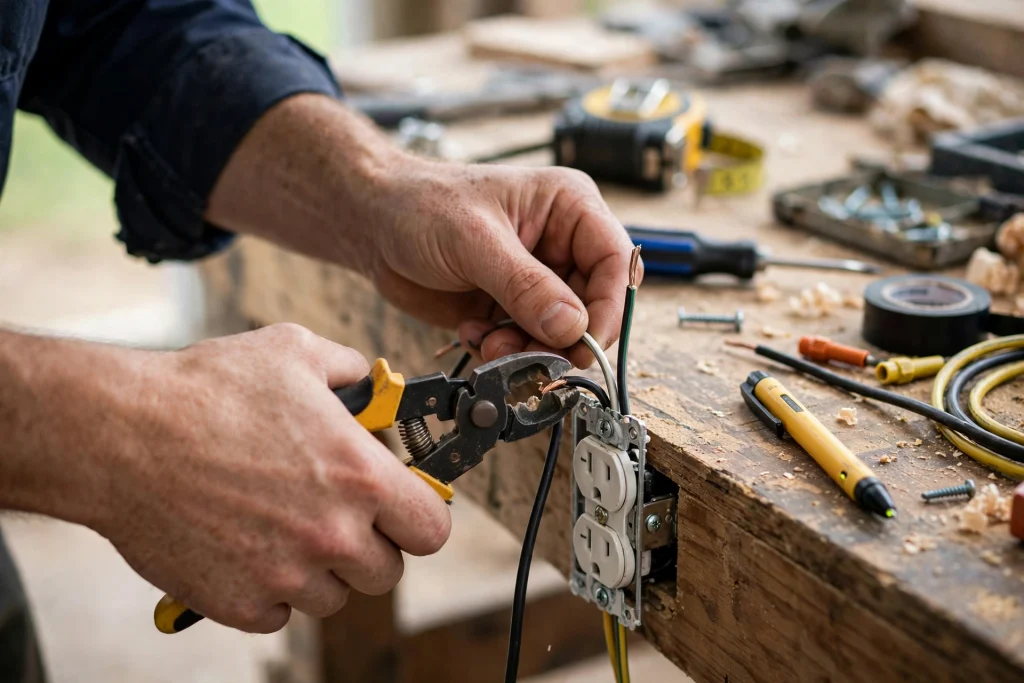
License level is the single biggest lever on the rate. Electrical licensing runs apprentice → journeyman → master, and each step up brings higher skill, more responsibility, and a higher hourly charge:
| License level | Typical rate | What they handle |
|---|---|---|
| Apprentice | $40–$60/hr | Works under supervision; cable pulls, fixture installs, rough-in labor |
| Journeyman | $50–$100/hr | Fully licensed for independent work; handles roughly 90% of residential jobs |
| Master electrician | $100–$150/hr | 7–10+ years experience; pulls permits, designs systems, supervises crews |
A journeyman is the right level for most residential work – outlets, switches, fans, fixtures, and small rewires. You need a master when permits are involved, the panel is being touched, or the system itself is being designed. Apprentices bill less, but they must work under a licensed electrician, so you are really paying for the crew. For the trade-rate comparison with another licensed trade, see plumber cost per hour — and compare carpenter door installation rates for a carpentry benchmark.
The Service-Call Fee: Why the First Hour Costs $100–$200
Almost every residential electrician charges a service-call or dispatch fee of $100–$200. This is not padding — it covers:
- Travel time — the drive to your home and back
- Diagnosis — finding the actual fault, not just the symptom
- The first hour of labor — most fees include it; additional time bills at the standard hourly rate
- Basic safety checks — making sure nothing else in the panel or circuit is a hazard
In high-cost metros the first-hour fee can reach $200–$250; in rural areas it can dip to $75–$100 (sometimes with a separate trip charge). Ask two questions before booking: does the fee include the first hour, and is any of it credited toward the work if you proceed? Some shops credit the diagnostic fee against larger jobs.
Flat-Rate vs. Hourly: How Most Jobs Are Actually Priced
For defined jobs, most electricians quote a flat rate so you know the total before work starts. Hourly billing shows up for troubleshooting, open-ended repairs, and jobs where the scope is unclear until the walls are opened.
| Common job | Typical flat-rate cost (2026) |
|---|---|
| Outlet replacement | $80–$200 |
| New outlet installation (new wiring) | $150–$350 |
| GFCI outlet installation | $80–$200 |
| Light switch replacement | $80–$150 |
| Ceiling fan installation | $150–$400 |
| Light fixture installation | $150–$465 |
| Circuit breaker replacement | $150–$300 |
| 200-amp panel upgrade | $1,300–$3,000 |
| Level 2 EV charger installation | $1,000–$2,500 |
| Whole-house surge protector | $325–$650 |
Flat-rate pricing protects you from a slow job; hourly pricing protects the electrician from a hidden mess. For troubleshooting a dead circuit with no obvious cause, expect the hourly model plus the service-call fee.
What Drives the Rate Up or Down
| Driver | Effect | Notes |
|---|---|---|
| Region | ±20–40% | High-cost states (CA, NY, MA, WA, CT): $100–$150/hr; mid-range (FL, TX, CO, IL, VA): $70–$100/hr; lower-cost (GA, AL, MS, AR, OK): $50–$75/hr |
| License level | Biggest single lever | Master rates run roughly double apprentice rates |
| Emergency / after-hours | 1.5–2× standard | Nights, weekends, holidays: $100–$250/hr |
| Job complexity | Flat vs. hourly swing | Fishing wire through finished walls costs far more than open-stud rough-in |
| Home age | Older = more | Pre-1960 homes may hide knob-and-tube or undersized service |
| Permits and inspection | Added line items | Panel and service work needs permits; inspection scheduling adds time |
| Materials | Modest on small jobs | Breakers, GFCI/AFCI devices, and copper wire add up on bigger jobs |
If the job involves opening finished walls to run new circuits, budget the patch work too — our drywall repair cost per square foot guide covers what the repair side costs. And if you’re adding a heat pump or upgrading HVAC, the new equipment usually needs a dedicated circuit — price the equipment with our HVAC replacement cost calculator.
DIY vs. Hiring an Electrician
| DIY | Pro | |
|---|---|---|
| Replacing a standard outlet or switch (copper wiring, grounded box) | ⚠️ Possible with strict safety protocol — breaker off, tester verified | $80–$200 — cheap insurance against a mistake |
| Installing a new fixture on an existing box | ⚠️ Doable for careful DIYers | $150–$465 |
| Troubleshooting a dead circuit | ⚠️ Basic checks (breaker, GFCI reset) are fine | $100–$250 service call for real diagnostics |
| Aluminum wiring, no ground wire, or multi-wire circuits | ❌ No — call a pro | Yes — these are fire-risk scenarios |
| New circuits, panel work, service upgrades | ❌ No — licensed pro and permits required | Yes |
| Whole-house rewiring | ❌ No | $8,000–$20,000+ |
Electrical mistakes don’t just fail inspections — they start fires. The Electrical Safety Foundation International is the authority on when a pro is required; the Bureau of Labor Statistics tracks what the trade itself looks like from the labor side.
Money-Saving Tips
- Bundle small jobs into one visit. Three outlets, a switch, and a fan on one service call share a single $100–$200 fee — booked separately, each one pays it.
- Ask flat-rate vs. hourly up front — and get the service-call terms in writing before anyone picks up a tool.
- Get three written quotes for anything over a few hundred dollars; rates for the same job routinely vary 30%+ between shops.
- Schedule non-urgent work during normal hours. Emergency premiums of 1.5–2× turn a $150 job into a $300 job.
- Clear access before they arrive. Move furniture, clear the panel area, and know which breaker feeds the work zone — billable time is billable time.
- Ask if the diagnostic fee is credited toward the repair; many shops apply it to larger jobs.
Frequently Asked Questions
What is the average rate for electricians in 2026?
The national average for residential work is $50–$130 per hour, with most homeowners paying $65–$100 per hour for standard service from a journeyman. Apprentices run $40–$60/hr, master electricians $100–$150/hr, and emergency calls $100–$250/hr.
How much does an electrician charge for the first hour?
Expect a $100–$200 service-call fee covering travel, diagnosis, and usually the first hour of labor. High-cost metros run $200–$250; rural areas can be $75–$100 plus a trip charge.
Do electricians charge by the hour or by the job?
Both. Defined jobs (outlets, fans, fixtures, panel upgrades) are usually flat-rate so you know the total upfront. Troubleshooting and open-ended work is hourly plus the service-call fee.
Why do electrician rates vary so much by state?
Local labor markets, licensing requirements, union presence, and cost of living. The gap between the highest-cost and lowest-cost states is roughly $40–$45 per hour — nearly double for the same work.
Is it cheaper to hire an apprentice electrician?
The hourly rate is lower ($40–$60), but apprentices must work under a licensed electrician, so you’re paying for the crew either way. It’s good value for simple labor like running cable — not a shortcut for panel or permit work.
The Bottom Line
The rate for electricians in 2026 is $50–$130 per hour for residential work — $40–$60 for apprentices, $50–$100 for journeymen, and $100–$150 for master electricians, with a $100–$200 service-call fee covering the first hour in most markets. Emergency and after-hours work runs 1.5–2× standard rates. Get the pricing model (flat vs. hourly) and the service-call terms in writing, bundle small jobs into one visit, and never DIY panel work, new circuits, or anything involving aluminum wiring. For what the most common small job actually costs line by line, see our guide to how much an electrician costs to fix an outlet.
Prices are typical 2026 US planning benchmarks gathered from contractor pricing data and industry sources; your actual rate depends on license level, region, job complexity, emergency timing, permits, and materials. Always get at least three written, itemized quotes — including one from a licensed, insured electrician — before committing. For electrical safety guidance, see the Electrical Safety Foundation International; for trade labor data, see the Bureau of Labor Statistics.

2 thoughts on “What Is the Rate for Electricians in 2026?”