
How Much Does a New HVAC System Cost for a 3,000 Sq Ft House in 2026?
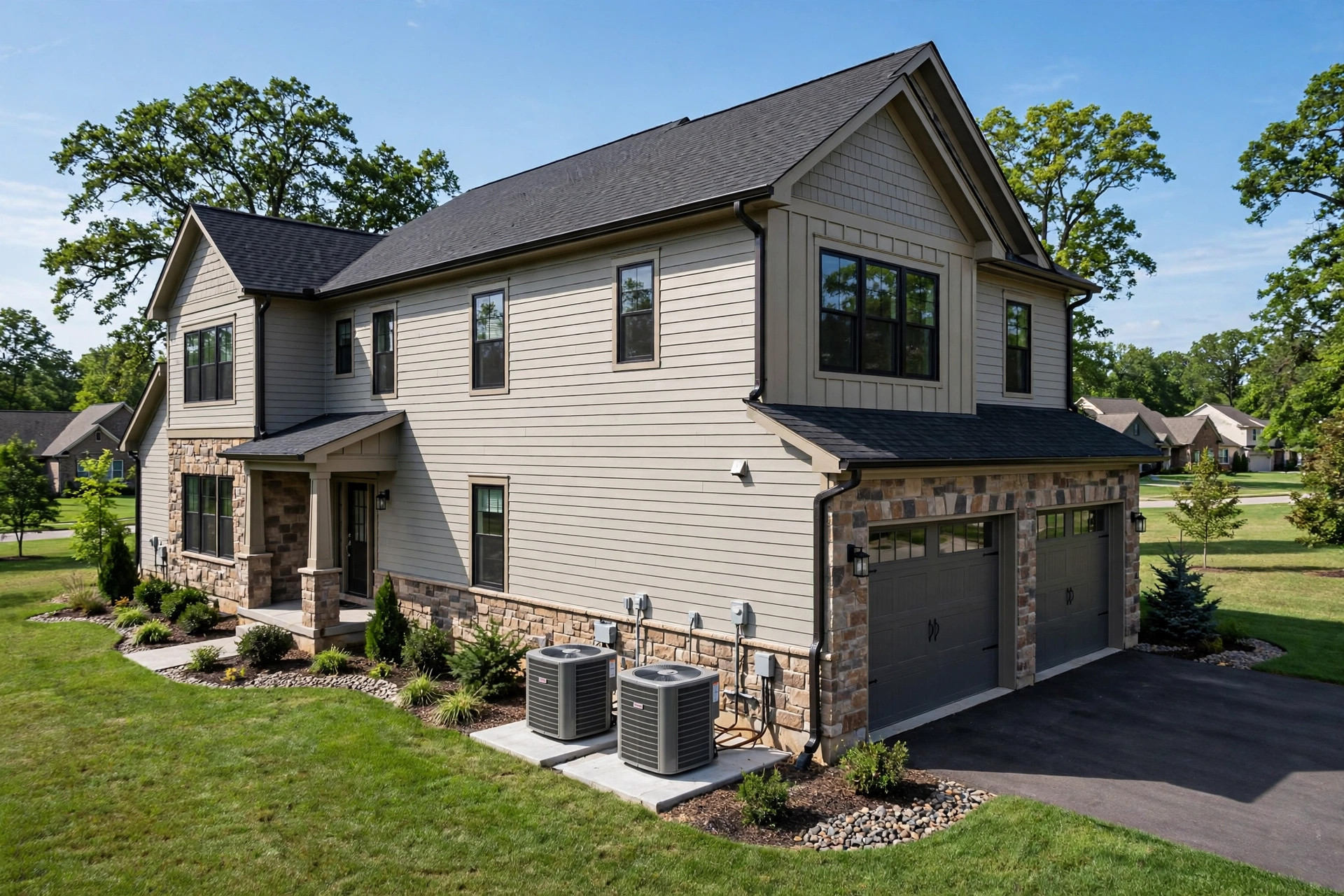
New HVAC system cost for a 3000 sq ft house typically runs $9,000 to $16,000 installed in 2026 for a standard single high-efficiency system. Budget single-stage setups can land around $7,500–$10,000, mid-range two-stage systems run $11,000–$15,000, and premium variable-speed systems — or dual/zoned systems, which many 3,000 sq ft homes genuinely need — reach $16,000–$25,000. At this size, the big cost question isn’t just equipment: it’s whether one large system or two smaller zoned systems will heat and cool the house evenly.
Quick-answer table (installed, equipment + labor, 3,000 sq ft home):
| System setup | Typical cost | Best for |
|---|---|---|
| Single furnace + AC (single-stage) | $7,500–$11,000 | Budget; open floor plans |
| Single furnace + AC (two-stage) | $10,000–$15,000 | Most 3,000 sq ft homes |
| Single system, variable-speed + zoning | $14,000–$20,000 | Multi-story; comfort priorities |
| Dual systems (upstairs + downstairs) | $14,000–$22,000 | Two-story homes; even temperatures |
| Whole-home heat pump(s) | $10,000–$18,000 | All-electric; moderate climates |
Comparing sizes? See our guides to the new HVAC system cost for a 2,000 sq ft house, the hvac replacement cost for a 1200 sq ft house, and the new HVAC system cost for a 1,000 sq ft house. For a quick personalized estimate, try our HVAC replacement cost calculator.
What Size HVAC System Does a 3,000 Sq Ft House Need?
| Home profile (3,000 sq ft) | Cooling size | Heating size |
|---|---|---|
| Well-insulated, moderate climate | 4 tons | 80,000–100,000 BTU |
| Average construction | 4–5 tons | 100,000–120,000 BTU |
| Older/poorly insulated, hot or cold climate | 5–6 tons | 120,000–140,000 BTU |
The old “1 ton per 500 sq ft” rule says 6 tons — and it’s wrong for most modern 3,000 sq ft homes, which usually land at 4–5 tons after a proper Manual J calculation. Oversizing at this scale is expensive twice: bigger equipment costs more upfront, and short-cycling leaves a big house humid and uncomfortable. Always demand the Manual J — at 3,000 sq ft, a one-ton sizing error swings the quote by $1,500–$3,000.
One Big System vs. Two Smaller Systems
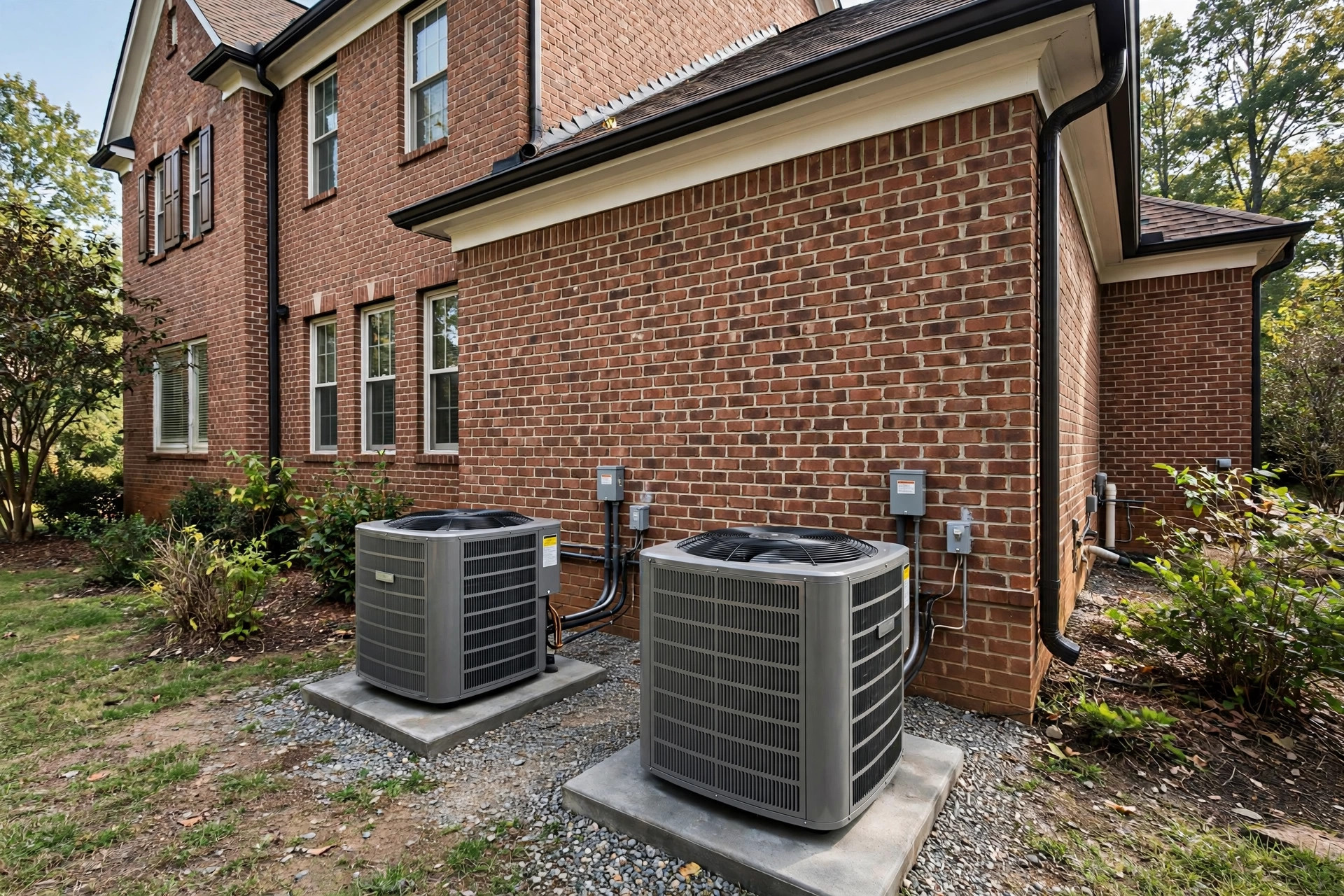
This is the defining decision for a 3,000 sq ft home, especially two-story layouts where heat rises and the upstairs bakes while the downstairs freezes.
| Approach | Typical cost | Pros | Cons |
|---|---|---|---|
| One 5-ton system + zoning dampers | $12,000–$18,000 | One unit to maintain; lower upfront than dual | Zoning retrofits on existing ducts can be finicky |
| Two systems (e.g., 2.5-ton + 2-ton) | $14,000–$22,000 | True independent control; redundancy if one fails | Two of everything to maintain; higher upfront |
| One system, no zoning | $9,000–$14,000 | Cheapest | Uneven temperatures in most two-story homes |
Rule of thumb: single-story 3,000 sq ft with an open plan → one zoned system usually works. Two-story 3,000 sq ft → price both options; dual systems often win on comfort and aren’t much pricier than a zoned single once ductwork modifications are counted.
Full Cost Breakdown: Typical $13,000 Two-Stage Install
Where the money goes on a mid-range two-stage furnace + AC for a 3,000 sq ft home:
| Cost component | Typical range |
|---|---|
| Gas furnace, 100–120K BTU (96% AFUE, two-stage) | $2,800–$5,500 |
| Central AC condenser + coil (4–5 ton, 16–17 SEER2) | $3,500–$7,000 |
| Installation labor (2–3 days) | $2,500–$5,000 |
| Refrigerant lines, electrical, thermostat(s) | $600–$1,800 |
| Duct modifications / balancing | $500–$2,500 |
| Zoning dampers + controls (if added) | $2,000–$4,500 |
| Permits & inspection | $200–$600 |
| Old equipment removal & disposal | $300–$800 |
If full new ductwork is needed, add $5,000–$9,000 for a 3,000 sq ft home — duct runs are longer, and two-story homes need more of them.
8 Cost Drivers for a 3,000 Sq Ft System
- Single vs. dual system. The jump from one system to two is the biggest single cost lever: $9,000–$16,000 vs. $14,000–$22,000.
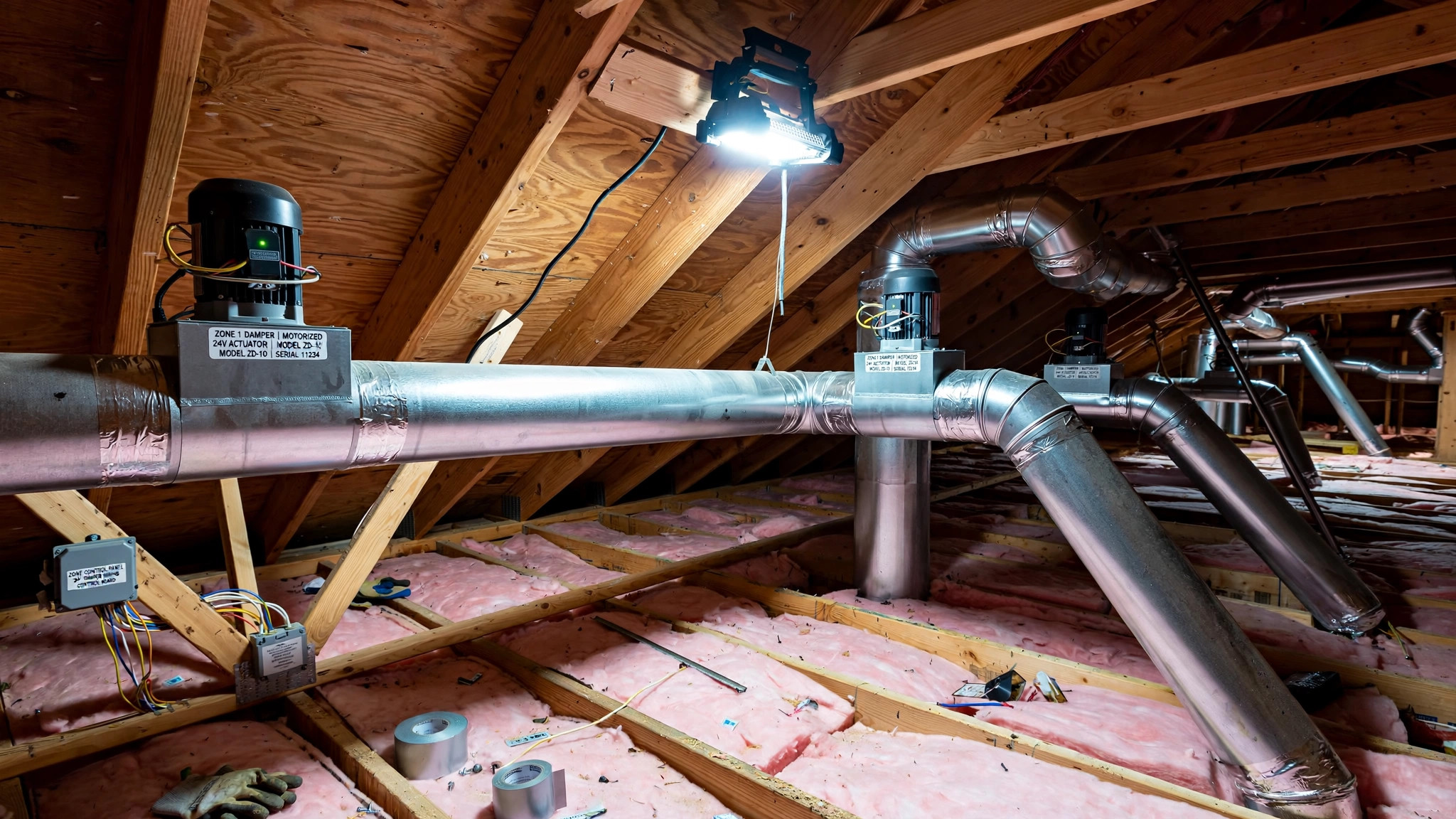
- Zoning. Adding 2–3 zones with motorized dampers and multiple thermostats costs $2,000–$4,500 but fixes the classic hot-upstairs/cold-downstairs problem.
- Efficiency tier. At 3,000 sq ft, efficiency upgrades pay back faster than in small homes — bills are bigger, so a 17 SEER2 two-stage system’s premium can pay for itself in 5–8 years.
- Ductwork scale. More square footage = more ductwork. Undersized or leaky ducts in a large home waste more energy in absolute dollars, making duct testing ($200–$400) especially worthwhile.
- Electrical capacity. A 5-ton AC plus electric backup heat can push older 100-amp panels over the edge; a panel upgrade runs $1,500–$3,000.
- Refrigerant generation. 2026’s low-GWP refrigerants (R-454B/R-32) add roughly 10% to equipment costs versus the old R-410A generation.
- Installation complexity. Two-story line-set runs, attic air handlers, and tight equipment closets add labor days.
- Regional labor. Large-system installs in high-cost metros run 20–40% above national typical pricing.
Heat Pumps for Large Homes: What Changes
Whole-home heat pumps work fine at 3,000 sq ft — but sizing and cold-climate performance matter more. Expect $10,000–$18,000 for a single large cold-climate heat pump, or $16,000–$24,000 for dual smaller units. The federal 25C credit (up to $2,000/year) and the DOE’s heat pump guide are worth reviewing before you decide; their furnace efficiency data helps compare against gas alternatives. In cold climates, a dual-fuel setup — heat pump plus gas furnace backup — gives large-home owners the operating-cost savings without winter anxiety.
DIY vs. Hiring a Pro for a Large-Home HVAC Install
| Factor | DIY | Hire a pro |
|---|---|---|
| Legality | EPA Section 608 certification + gas/electrical licenses required | Licensed, permitted, inspected |
| Equipment cost alone | $5,000–$10,000 (no warranty) | — |
| Installed cost | Not realistic as DIY | $9,000–$16,000 typical |
| Sizing risk | High — Manual J errors are costliest at this scale | Contractor liable for the load calc |
| Warranty | Voided without licensed installation | 10-year parts + 1–2 year labor typical |
| Verdict | Don’t attempt | Get 3–4 quotes; verify Manual J + references |
At 3,000 sq ft, a sizing mistake costs thousands — this is the worst possible project to cut corners on.
8 Ways to Save on a 3,000 Sq Ft HVAC System
- Get 3–4 Manual J-based quotes — large-system quotes vary the most between contractors (25–35% spreads are common).
- Price both single-zoned and dual-system options — the “obvious” choice isn’t always cheaper once ductwork is counted.
- Install in shoulder seasons — spring/fall scheduling saves 10–20% versus emergency replacements.
- Right-size, don’t oversize — each unnecessary ton adds $1,500–$3,000 plus a lifetime of higher bills.
- Test ducts before replacing — at this size, unnecessary duct replacement wastes $5,000–$9,000.
- Consider dual-fuel — a heat pump with gas backup can beat straight gas on operating costs in many climates, plus the $2,000 federal credit.
- Claim utility rebates — large high-efficiency systems often qualify for the biggest rebate tiers ($500–$1,500).
- Zone instead of upsizing — if comfort (not capacity) is the problem, $2,000–$4,500 in zoning beats $6,000+ for a second system.
Frequently Asked Questions
How much does a new HVAC system cost for a 3000 sq ft house?
$9,000–$16,000 installed is the typical 2026 range for a single system. Budget single-stage setups run $7,500–$11,000; two-stage systems $10,000–$15,000; variable-speed or dual/zoned systems $14,000–$25,000. Add $5,000–$9,000 if the home needs all-new ductwork.
What size HVAC system do I need for a 3000 sq ft house?
Most 3,000 sq ft homes need 4–5 tons of cooling and a 100,000–120,000 BTU furnace after a Manual J calculation. Two-story homes often do better with two smaller systems (e.g., 2.5-ton + 2-ton) than one 5-ton unit. Never accept a size based only on square footage.
Is one HVAC unit enough for a 3000 sq ft house?
Often yes for single-story or open-plan homes — one properly sized 4–5 ton system with zoning handles it. For two-story 3,000 sq ft homes, one unit frequently leaves the upstairs hot and the downstairs cold; two systems or a zoned single system solves it. Comfort complaints in big homes are usually a distribution problem, not a capacity problem.
How long does it take to install HVAC in a 3000 sq ft house?
A straightforward single-system replacement takes 2–3 days. Dual systems take 3–4 days; full duct replacement adds 2–3 more days. Conversions (adding zoning, switching system types, panel upgrades) extend the timeline further.
How much can I save with a high-efficiency system in a large home?
More than in a small home — that’s the good news about 3,000 sq ft. Upgrading from 14.3 SEER2 to 17+ SEER2 two-stage equipment typically saves $300–$600/year on cooling in a large home, plus heating savings from a 96% AFUE furnace over an 80% model. Payback on the efficiency premium is often 5–8 years.
The Bottom Line
New HVAC system cost for a 3000 sq ft house centers on $9,000–$16,000 in 2026, with the single-vs.-dual-system decision driving the final number as much as the equipment itself. Get multiple Manual J-based quotes, price both configurations, test your ducts, and remember that at this scale, efficiency upgrades and zoning pay back faster than they do in smaller homes. The right system keeps all 3,000 square feet comfortable for 15+ years.
Prices are 2026 US averages based on contractor quotes and industry data; your project may vary by region, home size, and equipment choice. Get multiple written estimates before committing.
1 thought on “New HVAC System Cost for 3000 Sq Ft House: 2026 Price Guide”