
How Much Does a New HVAC System Cost for a 2,000 Sq Ft House in 2026?
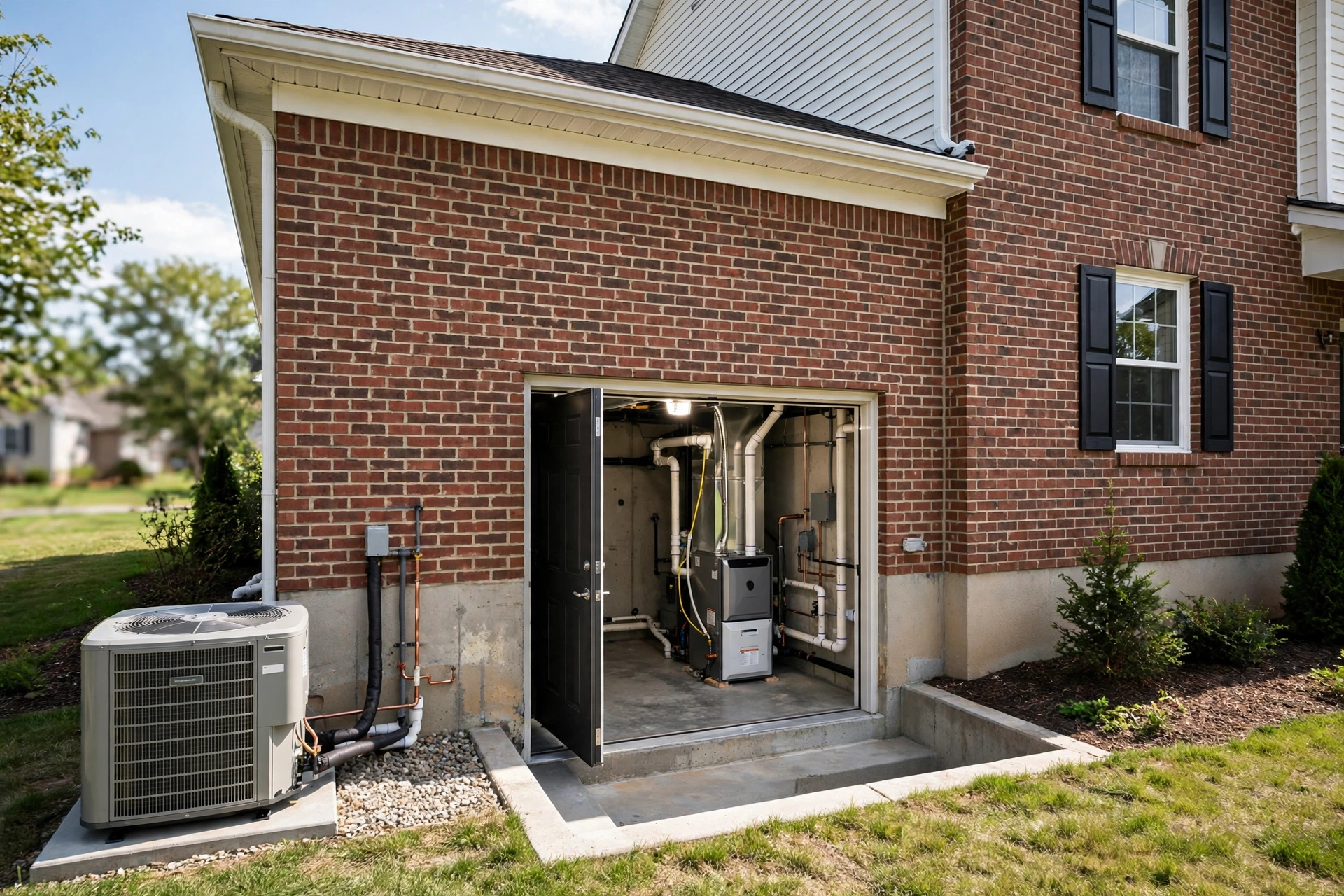
A new HVAC system for a 2,000 sq ft house costs $9,000 to $14,000 installed in 2026 for the most common setup — a gas furnace paired with a central air conditioner at standard efficiency. Budget systems (single-stage, basic SEER2 ratings) land around $7,500–$10,000, mid-range two-stage systems run $10,000–$15,000, and premium variable-speed or high-efficiency heat pump systems reach $15,000–$22,000. Those ranges include equipment, labor, and standard installation — the exact total for your home depends on system type, efficiency, ductwork condition, and your local labor market.
Quick-answer table (installed, equipment + labor, 2,000 sq ft home):
| System type | Typical cost | Best for |
|---|---|---|
| Gas furnace + central AC (standard) | $9,000–$14,000 | Most 2,000 sq ft homes with ducts |
| Air-source heat pump (full home) | $11,000–$18,000 | Moderate climates; heating + cooling in one |
| Ductless mini-split (multi-zone) | $10,000–$16,000 | Homes without usable ductwork |
| Packaged rooftop/unit system | $8,000–$13,000 | Slab or crawl-space homes with no attic/basement |
If your ducts need a full replacement, add $3,000–$7,000. Want a rough estimate for your square footage? Run your numbers through our HVAC replacement cost calculator. Smaller home? See our guides to the new HVAC system cost for a 1,000 sq ft house and the hvac replacement cost for a 1200 sq ft house.
What Size HVAC System Does a 2,000 Sq Ft House Need?
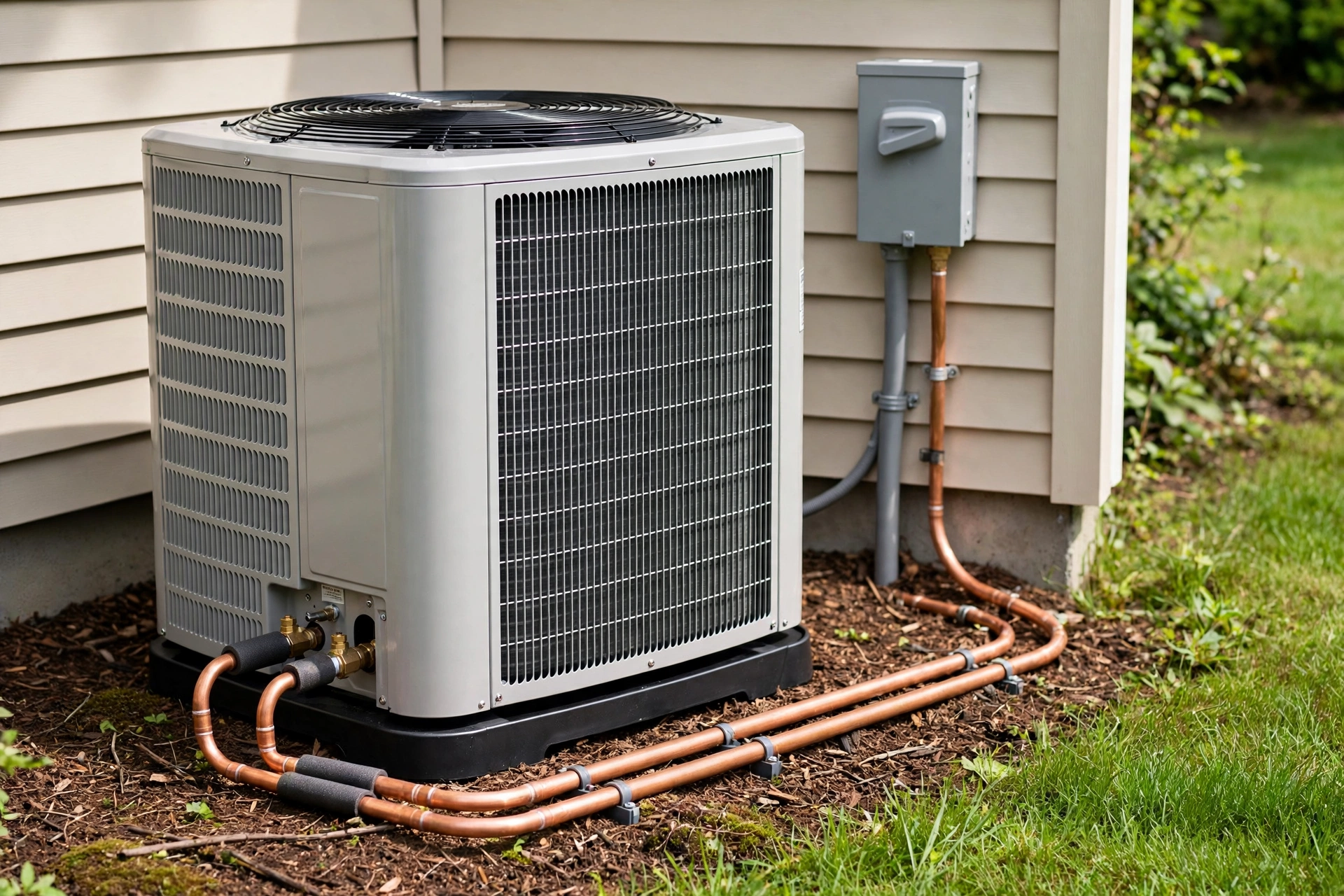
A 2,000 sq ft house typically needs a 3.5- to 4-ton system (42,000–48,000 BTU of cooling) and a 60,000–80,000 BTU furnace — but those are rules of thumb, not quotes. The old “1 ton per 500 sq ft” shortcut breaks down in well-insulated newer homes (which may only need 3 tons) and in older, leaky homes in hot climates (which may need 4.5+ tons). A proper Manual J load calculation — which a good contractor does before quoting — accounts for insulation, windows, ceiling height, and local climate.
| Home profile | Typical cooling size | Heating size |
|---|---|---|
| Well-insulated newer build, moderate climate | 3–3.5 tons | 60,000 BTU |
| Average 2,000 sq ft home, existing ducts | 3.5–4 tons | 60,000–80,000 BTU |
| Older home, poor insulation, hot climate | 4–4.5 tons | 80,000–100,000 BTU |
Oversizing is a common and expensive mistake. A system that’s too big short-cycles — it cools the air fast but shuts off before removing humidity, leaving you clammy in summer and paying for capacity you never use. Undersizing runs constantly and wears out early. Size matters more than brand.
New HVAC System Cost by System Type (2,000 Sq Ft)
Gas furnace + central AC. The default for most US homes with ductwork. Expect $9,000–$14,000 for standard 14.3–15.2 SEER2 / 80–92% AFUE equipment; $13,000–$18,000 for high-efficiency two-stage or variable-speed setups. The U.S. Department of Energy’s residential furnace efficiency data shows premium-efficiency furnaces cost more upfront but cut lifetime fuel costs — the math works best if you heat with gas 4+ months a year.
Air-source heat pump. One unit handles heating and cooling by moving heat instead of making it. Installed cost for a 2,000 sq ft home: $11,000–$18,000, with cold-climate models (effective below 0°F) at the top of the range. In moderate climates, heat pumps usually win on lifetime cost thanks to 200–300% “efficiency.” In very cold regions, a dual-fuel setup (heat pump + gas furnace backup) is often the sweet spot. The DOE’s heat pump guide breaks down the types if you’re comparing options.
Ductless mini-split. Multiple indoor heads connected to one outdoor unit — no ducts needed. A 4-zone system for 2,000 sq ft runs $10,000–$16,000 installed. Excellent for additions or homes with damaged ductwork, and zone control can cut bills 20–30% versus one big system. The downside: several wall-mounted heads in your living space, and total cost climbs fast past 4–5 zones.
Packaged unit. Furnace and AC combined in one outdoor cabinet. $8,000–$13,000 installed for 2,000 sq ft — usually the cheapest full-system option — but efficiency tops out lower than split systems, and repairs can mean replacing the whole box.
Where Your $9,000–$14,000 Goes: Full Cost Breakdown
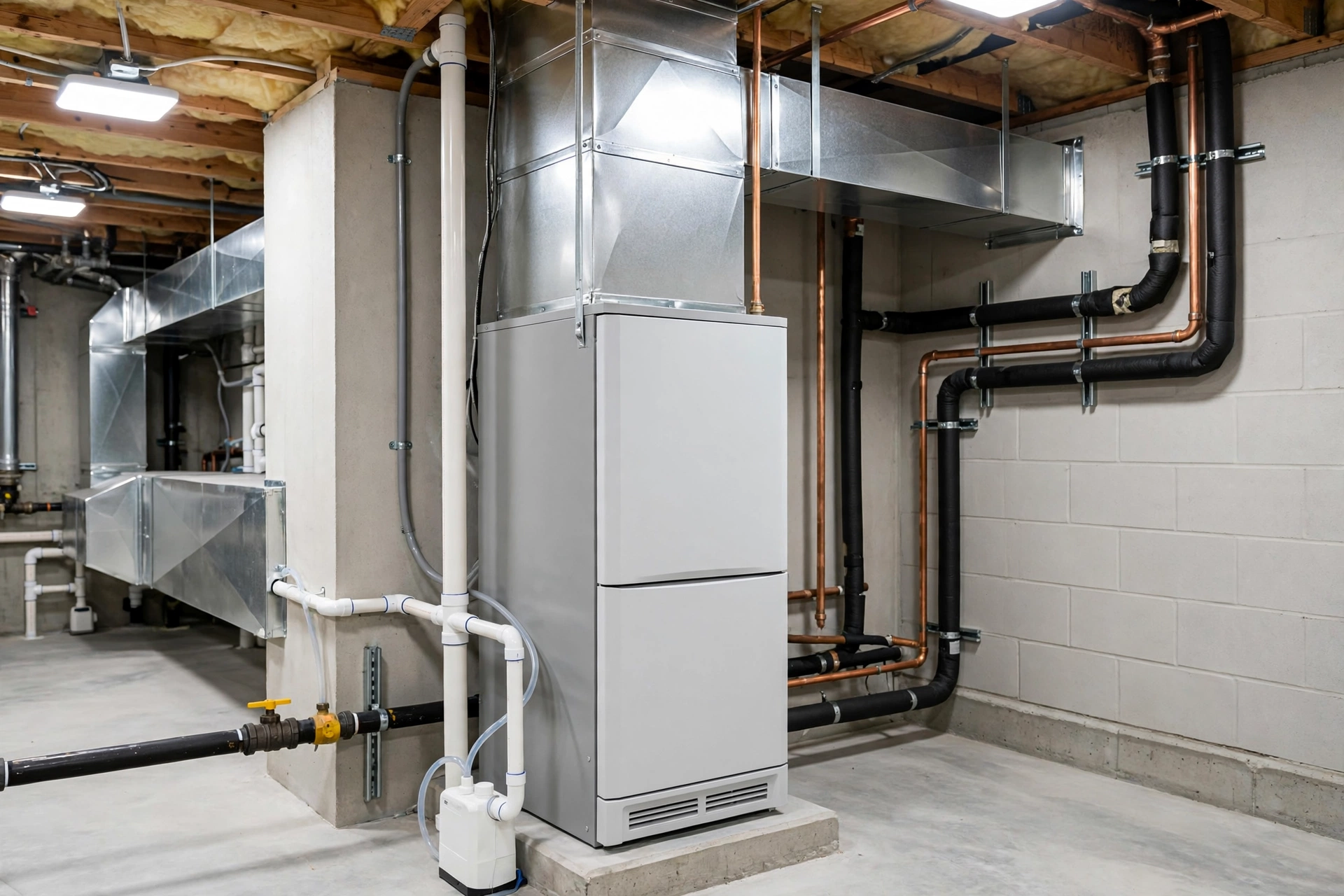
For a typical furnace + AC replacement in a 2,000 sq ft home with reusable ductwork:
| Cost component | Typical range |
|---|---|
| Equipment (furnace + condenser + coil) | $4,500–$8,500 |
| Installation labor (2–3 techs, 1–2 days) | $2,000–$4,500 |
| Refrigerant line set & electrical | $500–$1,500 |
| New thermostat (smart/wifi) | $100–$400 |
| Permits & inspection | $100–$500 |
| Ductwork modifications (minor) | $0–$2,000 |
| Full duct replacement (if needed) | $3,000–$7,000 |
| Condensate drain / pad / minor materials | $200–$600 |
| Old equipment removal & disposal | $200–$500 |
Labor is 30–50% of the total. That’s why getting multiple quotes matters so much: two contractors quoting the same Carrier or Trane equipment can differ by $3,000 on labor alone.
9 Cost Drivers That Move Your Quote Up or Down
- System size (tonnage). Each extra ton of capacity adds roughly $1,000–$2,000 in equipment.
- Efficiency ratings. Jumping from 14.3 to 18+ SEER2 typically adds $2,000–$5,000 — worth it in hot climates, marginal in mild ones.
- System type. Heat pumps and mini-splits cost more upfront than furnace + AC; they can pay back in energy savings.
- Ductwork condition. Leaky, undersized, or asbestos-lined ducts can add thousands — or make a ductless system the smarter buy.
- Electrical panel. Older 100-amp panels may need a $1,000–$2,500 upgrade to support a heat pump or variable-speed blower.
- Refrigerant transition. Post-2025 equipment uses newer low-GWP refrigerants (A2L); some contractors price them higher as the supply chain settles.
- Permits & code upgrades. Some jurisdictions now require load calculations, duct leakage testing, or carbon-monoxide alarms with replacement.
- Home layout. Attic or crawl-space installs cost more than a clean basement mechanical room — tight access = more labor hours.
- Season & demand. Quotes in peak summer (AC failures) and deep winter (furnace failures) run 10–20% higher than spring/fall shoulder seasons.
Efficiency Ratings, Translated
Ratings are where contractors justify price jumps. Here’s the plain-English version:
| Rating | What it measures | Standard 2026 | Premium |
|---|---|---|---|
| SEER2 | Cooling efficiency | 14.3–15.2 | 17–22 |
| AFUE | Furnace fuel efficiency | 80–92% | 95–98% |
| HSPF2 | Heat pump heating efficiency | 7.5–8.8 | 9.5–11 |
Every extra SEER2 point saves roughly 7% on cooling costs; every AFUE point saves about 1% on heating fuel. On a $200/month combined bill, a high-efficiency system can save $400–$700 a year — real money over a 15–20 year lifespan, but it rarely pays to buy the most efficient unit money can buy unless your utility rates are high.
DIY vs Professional HVAC Installation
| Task | DIY? | Typical pro cost |
|---|---|---|
| Replace thermostat | Yes — 30-minute job | $100–$300 |
| Change filters, clean condenser coils | Yes — routine maintenance | $150–$300/service visit |
| Run new refrigerant lines | No — illegal without EPA Section 608 certification | Included in install |
| Install full furnace + AC system | No | $9,000–$14,000 total |
| Duct sealing with mastic | Yes, if accessible | $1,000–$3,000 pro |
Federal law requires EPA certification to handle refrigerants — this is not a suggestion, and it’s the hard line between HVAC and truly DIY-able trades. Beyond the law, sizing, gas lines, and electrical work all need licensed pros. Where DIY genuinely saves money: replacing your own filters ($30–$60/year vs $150+ service calls), keeping the outdoor unit clear, and programming a smart thermostat.
7 Ways to Save Money on a New HVAC System
- Schedule in spring or fall. Shoulder-season installs avoid emergency pricing and contractors have crews available — 10–20% savings are common.
- Get 3–5 written quotes. Same equipment, wildly different labor bids. Quotes should itemize equipment model numbers, not just “new 4-ton system.”
- Claim federal tax credits. The 25C energy-efficiency credit covers up to 30% (capped at $2,000/year) for qualifying heat pumps — and $600 for qualifying furnaces/AC. Check current IRS rules for 2026 before you buy.
- Replace furnace + AC together. Doing both at once saves $1,000–$3,000 versus two separate installs — shared labor, one permit, one crew visit.
- Keep good ductwork. If a duct-blaster test shows your ducts are sound, sealing beats replacing — $500–$1,500 vs $3,000–$7,000.
- Right-size with a Manual J. A smaller, correctly sized system costs less to buy AND less to run than the oversized unit a lazy quote might recommend.
- Ask about utility rebates. Many utilities offer $200–$1,000 rebates for high-efficiency installs — stack them with federal credits. Browse all our cost calculators to sanity-check any quote.
Frequently Asked Questions
What size HVAC system do I need for a 2,000 sq ft house?
Most 2,000 sq ft homes need 3.5–4 tons of cooling and a 60,000–80,000 BTU furnace, but insulation, windows, and climate shift that a full ton in either direction. Insist on a Manual J load calculation rather than a square-footage rule of thumb — it’s the difference between a system that lasts 18 years and one that struggles for 10.
Is it cheaper to replace the furnace and AC at the same time?
Yes — typically $1,000–$3,000 cheaper than two separate projects. The crew, permit, and much of the labor overlap, and matched equipment (same brand, designed to work together) runs more efficiently than a new furnace bolted onto a 12-year-old condenser.
How long does it take to install a new HVAC system?
A straightforward furnace + AC replacement takes 1–2 days. Add a day for ductwork modifications, another for electrical panel upgrades, and 1–3 days for a multi-zone mini-split. Full duct replacement can stretch the project to a week.
What time of year is the cheapest to replace an HVAC system?
Spring (March–May) and fall (September–November). Contractors are between peak seasons, equipment promotions run, and you’re not paying emergency rates because your AC died in a July heatwave. Planning a replacement? Start getting quotes 4–6 weeks before you want the work done.
Can I install an HVAC system myself to save money?
No — not the real work. Federal law requires EPA Section 608 certification to handle refrigerants, and gas lines, high-voltage electrical, and combustion venting all need licensed trades. DIY the thermostat, filters, and coil cleaning; leave the system to the pros.
The Bottom Line
For a 2,000 sq ft house in 2026, budget $9,000–$14,000 installed for a standard furnace + AC system, $11,000–$18,000 for a heat pump, and $10,000–$16,000 for a ductless multi-zone setup. Get a Manual J sizing, collect 3–5 itemized quotes in spring or fall, and check federal credits and utility rebates before signing. The equipment brand matters far less than correct sizing and a quality install — a mid-tier system installed perfectly will outlast a premium system installed badly.
Prices are 2026 US averages based on typical contractor quotes; your local market, home condition, and code requirements will shift the final number. Always get written, itemized quotes from licensed, insured contractors before committing.
6 thoughts on “New HVAC System Cost for 2000 Sq Ft House: 2026 Price Guide”