
What Does HVAC Replacement Cost for a 1,200 Sq Ft House in 2026?
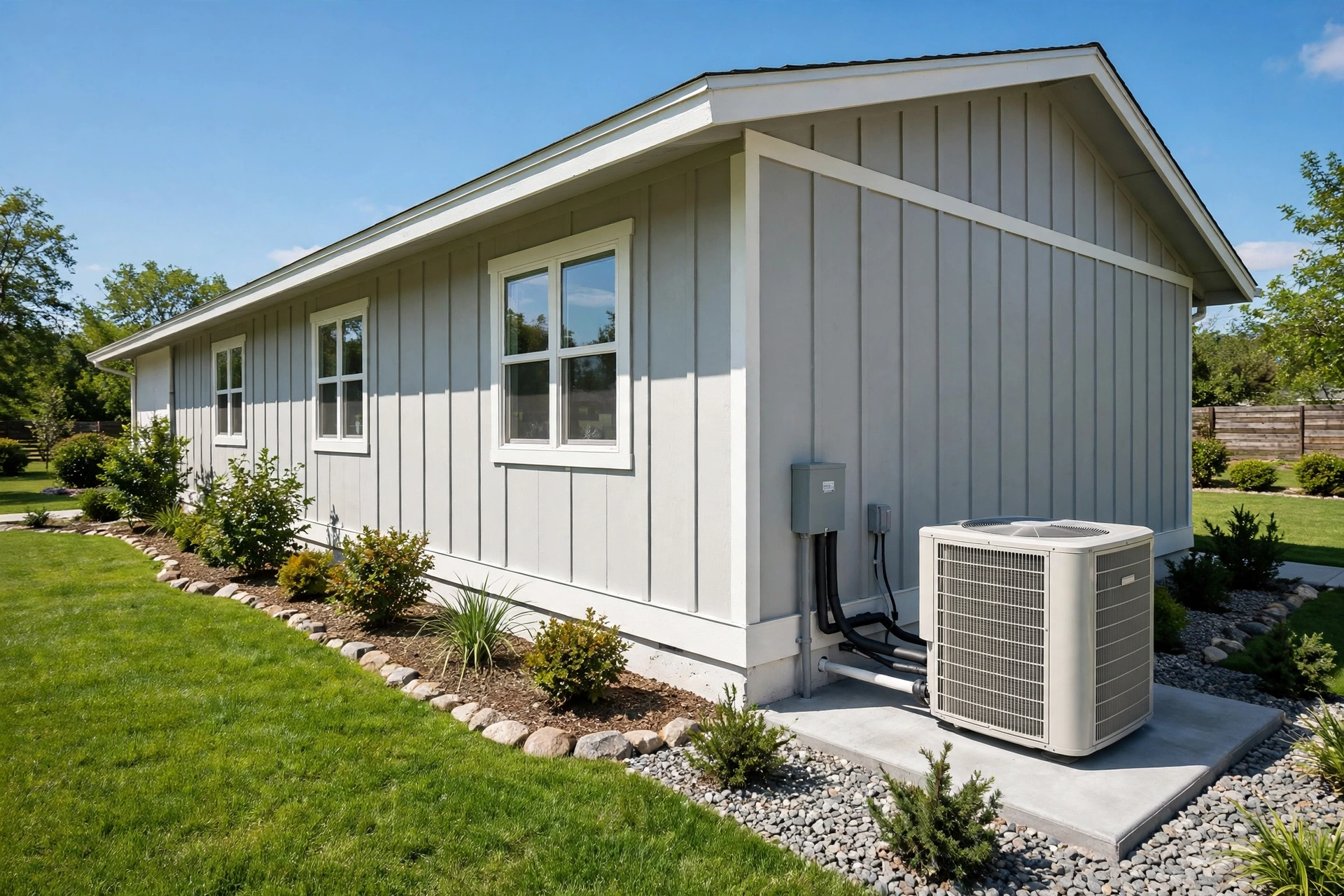
HVAC replacement for a 1,200 sq ft house costs $6,000 to $11,000 installed in 2026 for the standard setup — a new gas furnace paired with a central air conditioner reusing your existing ductwork. Budget single-stage systems land around $5,000–$7,500, mid-range two-stage equipment runs $8,000–$12,000, and premium variable-speed or heat-pump replacements reach $12,000–$17,000. “Replacement” specifically means swapping old equipment for new while keeping what’s still good (ducts, wiring, gas line) — which is why it costs less than a from-scratch new installation.
Quick-answer table (replacement, equipment + labor, 1,200 sq ft home):
| System type | Typical replacement cost | Note |
|---|---|---|
| Gas furnace + central AC | $6,000–$11,000 | Most common; assumes reusable ducts |
| Air-source heat pump (swap) | $8,000–$14,000 | Heating + cooling in one unit |
| Ductless mini-split (2–3 zones) | $7,000–$12,000 | No ducts needed |
| AC-only replacement (keep furnace) | $3,500–$7,500 | Cheaper short-term; mixed-age system |
| Furnace-only replacement (keep AC) | $3,000–$7,000 | Common when AC is under 10 years old |
Living in a bigger or smaller home? See our guides to the new HVAC system cost for a 2,000 sq ft house and the new HVAC system cost for a 1,000 sq ft house. Get a personalized ballpark from our HVAC replacement cost calculator.
Replacement vs New Install: What’s Actually Different
Contractors use “replacement” and “installation” loosely, but the price difference is real:
| Replacement | New installation | |
|---|---|---|
| Ductwork | Reused if sound | Built from scratch: +$3,000–$7,000 |
| Electrical | Usually existing | May need panel work: +$1,000–$2,500 |
| Gas line | Usually existing | New run: +$500–$2,000 |
| Permits | Simpler, faster | More inspections |
| Typical 1,200 sq ft total | $6,000–$11,000 | $9,000–$16,000+ |
A replacement quote should itemize: equipment model numbers, labor, refrigerant, thermostat, permit fees, old-equipment disposal, and any ductwork or electrical extras. If a quote just says “replace HVAC — $8,500,” you’re looking at a guess, not a bid.
What Size System Does a 1,200 Sq Ft House Need?
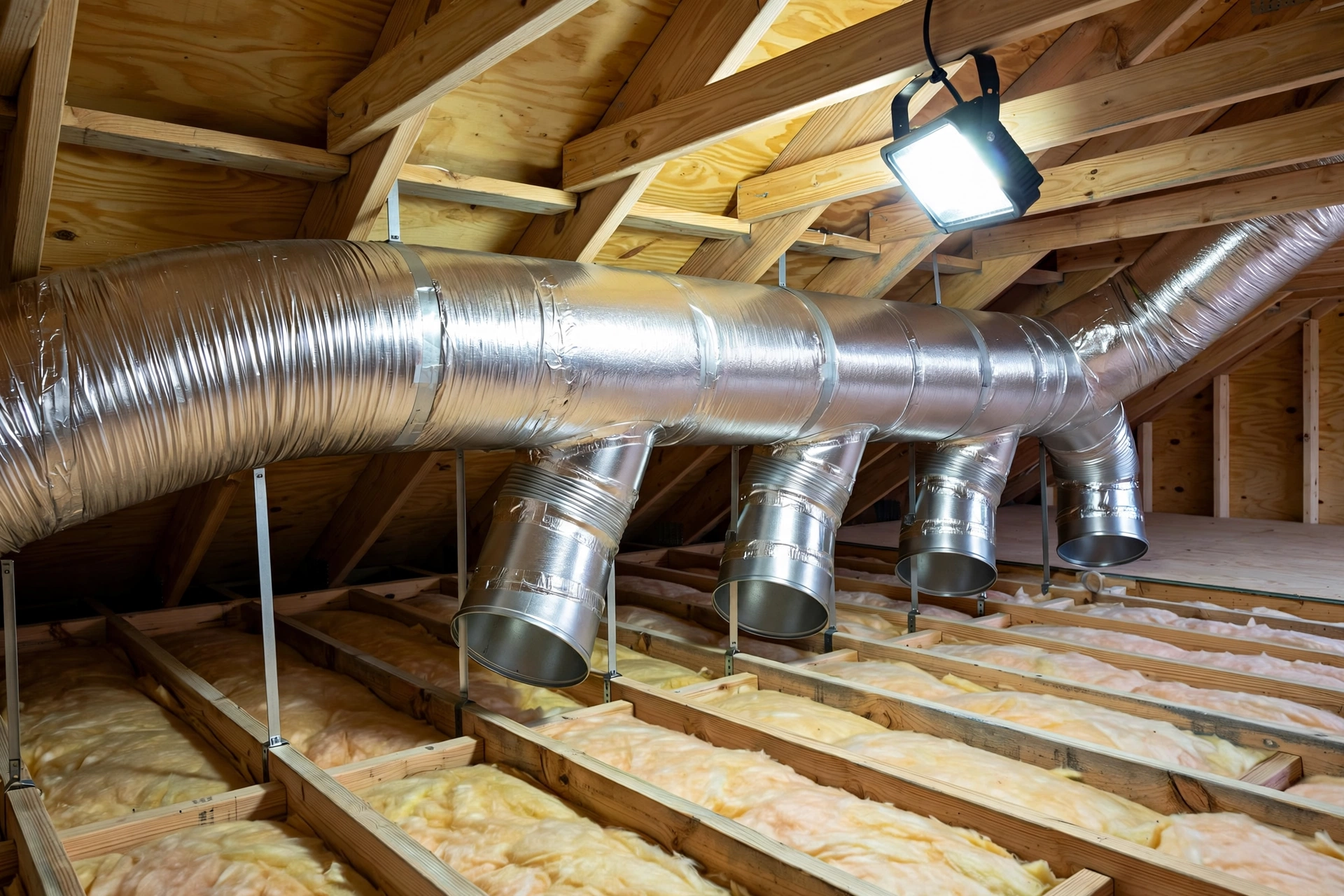
A 1,200 sq ft house typically needs 2 to 2.5 tons of cooling (24,000–30,000 BTU) and a 40,000–60,000 BTU furnace. Smaller homes are more sensitive to oversizing — a 3-ton unit in a 1,200 sq ft house will short-cycle relentlessly, never dehumidify properly, and die young.
| Home profile | Cooling size | Heating size |
|---|---|---|
| Well-insulated, moderate climate | 1.5–2 tons | 40,000 BTU |
| Average 1,200 sq ft home | 2–2.5 tons | 40,000–60,000 BTU |
| Older home, poor insulation | 2.5–3 tons | 60,000–80,000 BTU |
Small-home sizing trap: some contractors quote the next size up “to be safe.” In a 1,200 sq ft home, that safety margin is exactly what causes humidity problems and short equipment life. A Manual J calculation is cheap insurance — many good contractors include it free with a quote.
Repair vs Replace: The Math That Decides
With a 1,200 sq ft home, replacement quotes are lower — which changes the repair-or-replace math. Use the $5,000 rule: multiply the repair cost by the system’s age in years. If the result exceeds $5,000, replacement usually wins.
| Scenario | Repair cost | System age | Age × cost | Verdict |
|---|---|---|---|---|
| Blown capacitor | $250 | 14 years | $3,500 | Repair |
| Failed compressor | $1,800 | 12 years | $21,600 | Replace |
| Cracked heat exchanger | $1,200 | 16 years | $19,200 | Replace |
| Bad contactor + refrigerant top-off | $600 | 9 years | $5,400 | Borderline — get a replacement quote too |
Three more replace signals: your system uses R-22 refrigerant (phased out; refills are brutally expensive), energy bills have climbed 20%+ with no rate change, or you’ve had 2+ repairs in the last two years. A 15-year-old system at 10 SEER replaced with a 15.2 SEER2 unit can cut cooling costs roughly 30% — real money in hot climates.
Where the Money Goes: 1,200 Sq Ft Replacement Breakdown
| Cost component | Typical range |
|---|---|
| Equipment (furnace + condenser + coil) | $3,000–$6,000 |
| Installation labor (1–2 days) | $1,500–$3,500 |
| Refrigerant & line set | $400–$1,200 |
| Thermostat upgrade | $100–$400 |
| Permits & inspection | $100–$500 |
| Minor duct sealing/modifications | $0–$1,500 |
| Old equipment removal & disposal | $200–$500 |
| Electrical or gas-line tweaks | $0–$1,000 |
What’s typically NOT in a replacement quote: full duct replacement, electrical panel upgrades, drywall repair around new registers, or asbestos abatement if your old ducts are wrapped in it. Ask explicitly — surprise change orders are where “replacement” budgets die.
7 Cost Drivers for a 1,200 Sq Ft Replacement
- Efficiency tier. Base 14.3 SEER2 / 80% AFUE vs premium 18+ SEER2 / 96% AFUE is a $2,000–$4,000 gap on equipment alone.
- System type. A straight furnace + AC swap is cheapest; switching to a heat pump adds $2,000–$4,000 (often offset by the 25C federal tax credit — up to $2,000/year for qualifying heat pumps).
- Ductwork reality. A duct-blaster test ($200–$400) beats guessing: sealing good ducts costs $500–$1,500, replacing bad ones costs $2,500–$5,000 even in a small home.
- Refrigerant generation. New systems use low-GWP A2L refrigerants; if your quote mentions R-410A equipment at a “discount,” know it’s older-stock tech.
- Access. Basement mechanical rooms are cheap to work in; attic or crawl-space swaps add labor hours.
- Brand tier vs installer quality. Equipment brands matter less than the install — a perfectly installed mid-tier Goodman or Rheem outlasts a sloppy Trane or Carrier job. Spend your energy vetting the contractor, not the logo.
- Timing. Emergency midsummer replacements cost 10–20% more than planned spring/fall work. If your system is limping, get quotes while it’s still running.
Efficiency Ratings That Affect Your Quote
| Rating | Measures | Base 2026 | Premium |
|---|---|---|---|
| SEER2 | Cooling efficiency | 14.3–15.2 | 17–22 |
| AFUE | Furnace fuel efficiency | 80–92% | 95–98% |
| HSPF2 | Heat pump heating efficiency | 7.5–8.8 | 9.5–11 |
Rule of thumb: each SEER2 point saves ~7% on cooling; each AFUE point saves ~1% on heating fuel. In a 1,200 sq ft home with a $150/month average bill, high efficiency saves $300–$500/year. The DOE’s residential furnace efficiency data shows the lifetime math favors premium equipment most when you heat 4+ months a year. Comparing heat pumps? The DOE’s heat pump guide covers the types and when they make sense.
DIY vs Pro: Where’s the Line?
| Task | DIY? | Pro cost |
|---|---|---|
| Swap thermostat, change filters | Yes | $100–$300 |
| Clean condenser coils, clear drain line | Yes | $150–$300/visit |
| Seal accessible ducts with mastic | Yes, if reachable | $500–$1,500 |
| Handle refrigerant, braze lines | No — EPA Section 608 certification required by federal law | Included in replacement |
| Full system replacement | No | $6,000–$11,000 |
The honest DIY savings on a replacement: $0 on the install itself — this is licensed-trade work involving refrigerant, gas, and high voltage. Where you save: doing your own filter changes, keeping the outdoor unit clear of debris, and choosing (not installing) the right contractor. Get 3–5 itemized quotes and check licenses and insurance; that’s the highest-ROI “DIY” step in the whole project.
6 Ways to Save on a 1,200 Sq Ft HVAC Replacement
- Replace both halves together. Furnace + AC in one project saves $1,000–$2,500 over doing them separately — one crew, one permit, matched equipment.
- Get quotes in spring or fall. Shoulder-season pricing routinely runs 10–20% below emergency summer/winter rates.
- Stack incentives. Federal 25C credits (up to $2,000/year for heat pumps) plus utility rebates ($200–$1,000) can take thousands off. Verify 2026 IRS rules before purchase.
- Test ducts before replacing them. A $200–$400 duct-blaster test can save you from a $3,000+ replacement you didn’t need.
- Don’t overbuy capacity. In a 1,200 sq ft home, the correctly sized 2-ton system costs less to buy, less to run, and lasts longer than the “safe” 3-ton quote.
- Ask about 0% financing. Many contractors and manufacturers offer 12–60 month promotional financing — but read the deferred-interest terms carefully. Compare any financed quote against our cost calculators to keep the numbers honest.
Frequently Asked Questions
How much does it cost to replace HVAC in a 1,200 sq ft house?
$6,000–$11,000 installed for a standard furnace + AC replacement reusing existing ductwork in 2026. Heat pump swaps run $8,000–$14,000; ductless mini-splits $7,000–$12,000. Add $2,500–$5,000 if your ducts need full replacement.
Should I repair or replace my 15-year-old HVAC system?
Replace, in most cases. At 15 years you’re past the typical 12–15 year lifespan of budget equipment, R-22-era systems are expensive to service, and a modern 15.2 SEER2 system can cut cooling costs ~30% versus a 10 SEER unit. Run the $5,000 rule (repair cost × age): over $5,000 means replace.
How long does an HVAC replacement take?
One to two days for a straight equipment swap in a 1,200 sq ft home. Ductwork modifications add a day; electrical upgrades add another. Most homeowners have heat/cool back the same day the crew starts.
Will a new HVAC system lower my energy bills?
Usually, yes — especially if your old system is 12+ years old. Expect 20–40% lower heating/cooling costs moving from an old 10 SEER / 80% AFUE system to modern equipment. The savings are biggest in extreme climates and with heat pumps replacing electric resistance heat.
What time of year is cheapest for HVAC replacement?
Spring and fall. Contractors discount between peak seasons, and you’re not paying emergency rates. If your system is aging, get quotes while it still runs — negotiating from a working system beats negotiating from a 95°F house.
The Bottom Line
HVAC replacement for a 1,200 sq ft house runs $6,000–$11,000 installed in 2026 for a standard furnace + AC swap — one of the more affordable full-system replacements because the equipment is smaller and the job is usually 1–2 days. Use the $5,000 rule to settle repair-vs-replace, insist on a Manual J so you don’t get an oversized unit, collect 3–5 itemized quotes in the shoulder season, and stack federal credits with utility rebates. The installer matters more than the brand — vet the contractor, and the equipment will take care of itself.
Prices are 2026 US averages based on typical contractor quotes; local labor rates, home condition, and code requirements will shift your final number. Always get written, itemized quotes from licensed, insured contractors.

5 thoughts on “HVAC Replacement Cost for 1200 Sq Ft House: 2026 Guide”