
How Much Does an Electrician Cost to Fix an Outlet in 2026?
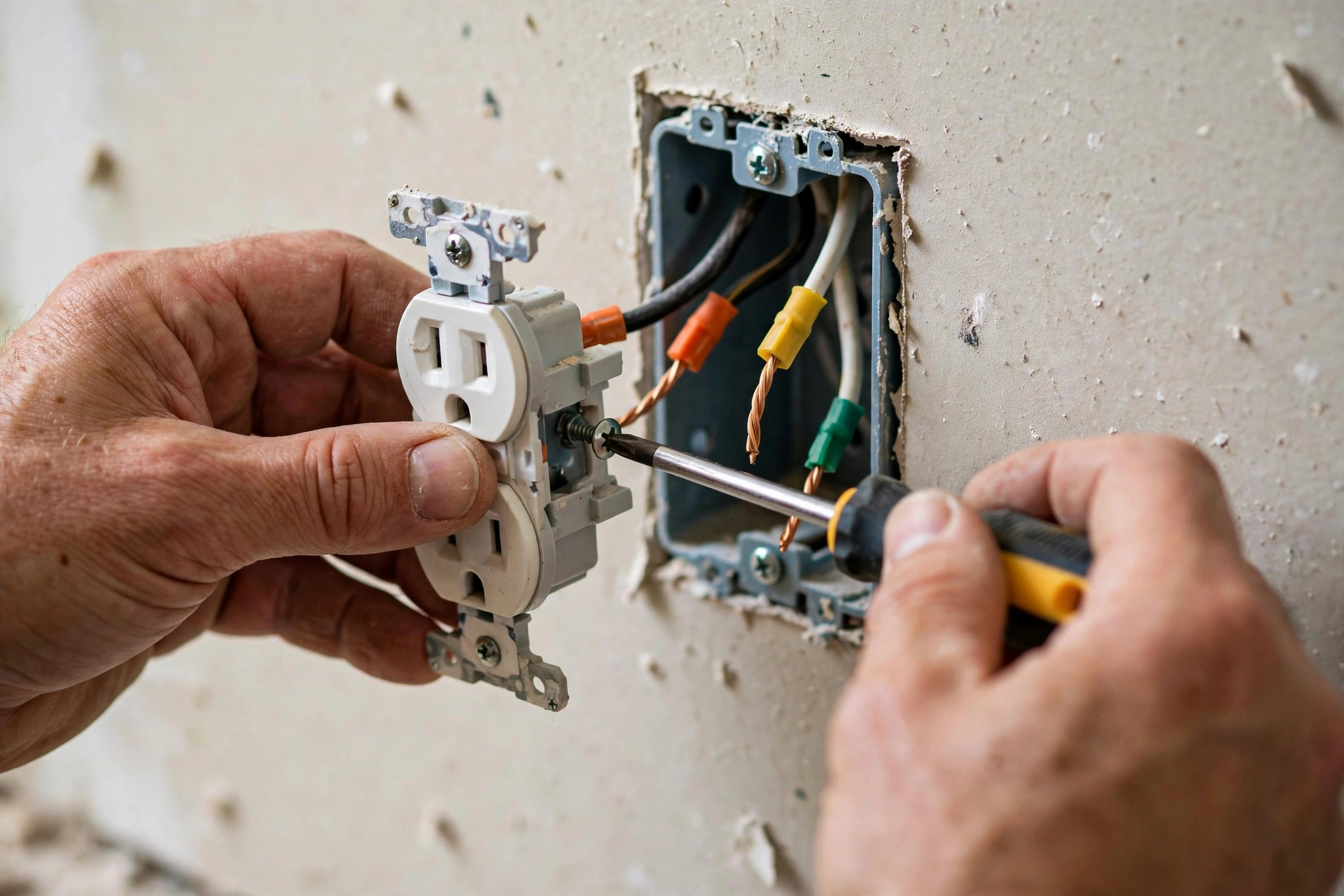
How much does an electrician cost to fix an outlet? In 2026, expect $80–$200 to repair or replace an existing outlet, $150–$350 to install a brand-new outlet with new wiring, and $80–$200 for a GFCI outlet. Here’s the catch that surprises most homeowners: the $100–$200 service-call minimum usually sets the floor, so even a 20-minute fix rarely bills below $100. This guide covers every outlet job’s real cost, why the minimum exists, and when a cheap fix becomes a bigger project.
Quick-answer table (typical outlet costs, 2026):
| Outlet job | Typical total cost |
|---|---|
| Repair or replace existing outlet | $80–$200 |
| GFCI outlet installation | $80–$200 |
| New outlet (new wiring run) | $150–$350 |
| USB / smart outlet | $120–$250 |
| 240V outlet (dryer, EV, shop) | $200–$400+ |
Outlet work is usually billed against the standard residential electrician cost per hour — here’s how that rate works and why the minimum dominates small jobs.
Repair vs. Replace: Making the Call
Not every bad outlet needs replacing, and not every bad outlet should merely be repaired:
- Repair (tighten, re-seat, replace the device in the same box): $80–$200. Loose outlets that won’t grip plugs, worn devices, or a single dead outlet on a live circuit. The box, wiring, and breaker are fine — only the $3–$15 device gets swapped.
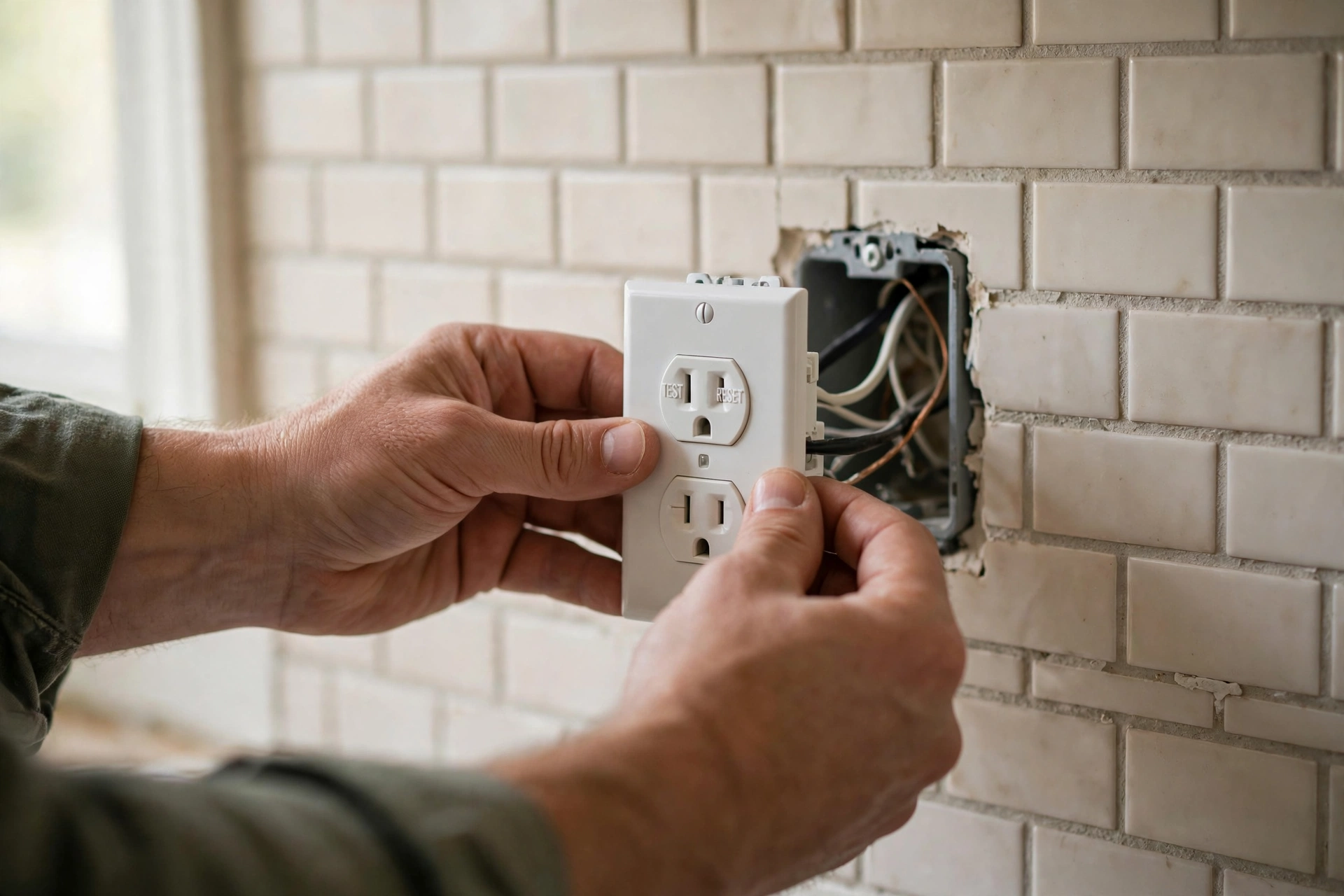
- Replace with GFCI protection: $80–$200. Any outlet in a kitchen, bathroom, garage, basement, or outdoor location should be GFCI-protected under current code. If yours isn’t, replacement isn’t optional — it’s a safety upgrade.
- Full replacement with new wiring: $150–$350. The outlet works, but the wiring behind it is the problem — aluminum branch wiring, no ground wire, or a circuit that needs extending to a new location.
Warning signs that mean “replace, don’t ignore”: outlets that feel warm, scorch marks, a burning smell, plugs that fall out, or breakers that trip when you plug something in. Those are the symptoms electricians take seriously — and so should you.
Outlet Job Costs: The Full 2026 Menu
| Job | Typical cost | Time | Notes |
|---|---|---|---|
| Replace standard duplex outlet | $80–$200 | 30–60 min | Device itself is $3–$15; you’re paying for the visit |
| GFCI outlet install | $80–$200 | 30–60 min | Required in kitchens, baths, garages, outdoors |
| AFCI-protected outlet | $100–$225 | 30–60 min | Required by code in most living areas for new work |
| USB-combo outlet | $120–$250 | 30–60 min | Device costs $20–$50 vs. $3 for standard |
| Smart outlet | $130–$250 | 45–90 min | Plus app setup; needs neutral wire in the box |
| New outlet, new wiring (same room) | $150–$350 | 1–2 hrs | Fishing cable through finished walls is the labor |
| New outlet, long wire run | $250–$500+ | 2–4 hrs | Attic/crawlspace runs and drywall repair add up |
| 240V outlet (dryer/EV/shop) | $200–$400+ | 1–3 hrs | Dedicated circuit and double-pole breaker required |
| Whole outlet + switch refresh (per room) | $300–$800 | Half day | Bundling is where the per-device cost collapses |
Adding an outlet in a new location means cutting into finished walls — budget the patch work with our drywall repair cost per square foot guide so the total project number is honest.
Why a 20-Minute Job Still Costs $150
The math of a small electrical call, from the electrician’s side:
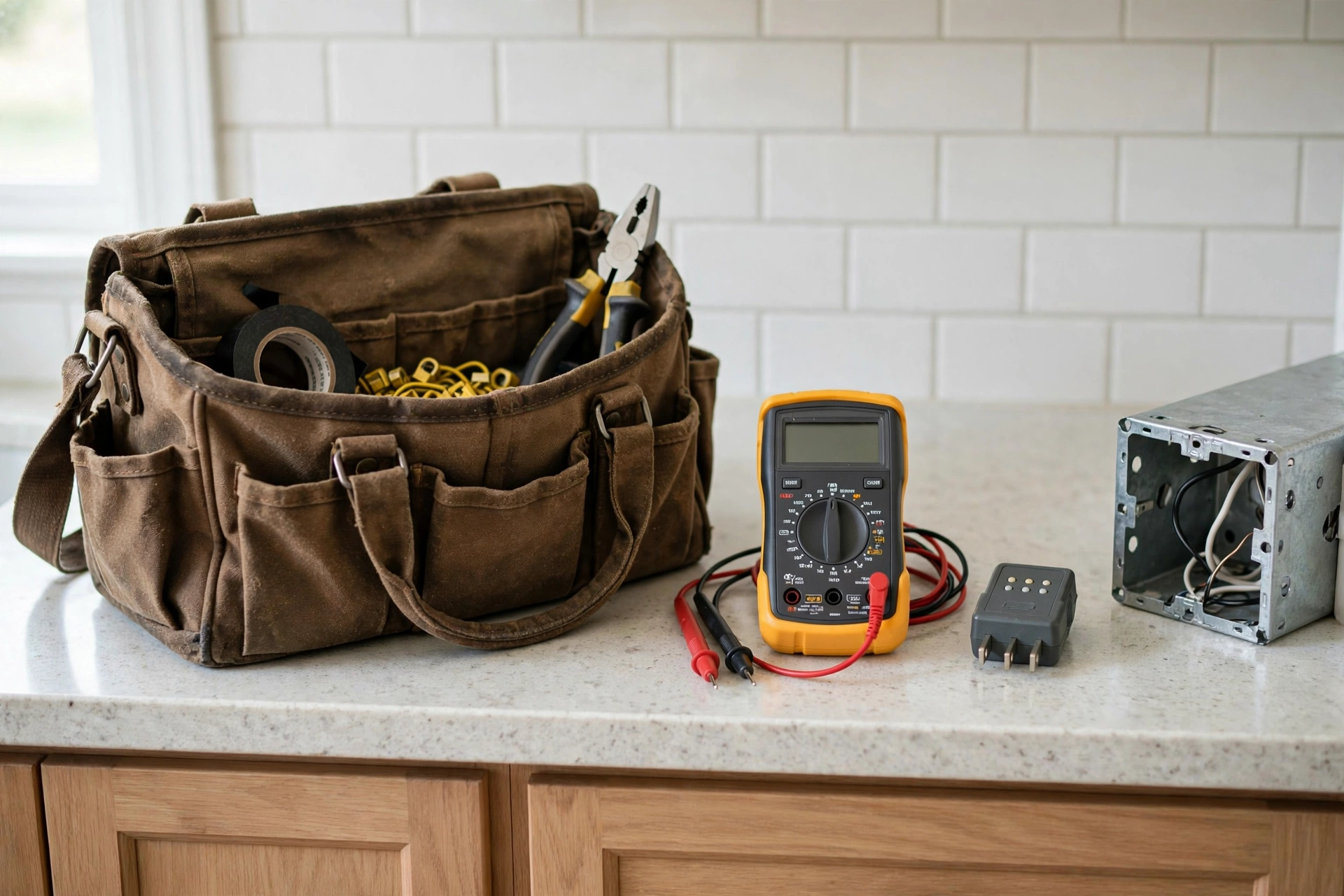
1. Drive time — 20–40 minutes each way, van stocked with thousands in parts and tools 2. Diagnosis — verifying the breaker, the wiring, the box, and the ground before touching anything 3. The actual fix — often the shortest part of the visit 4. Testing and cleanup — verifying the repair under load and leaving the space clean
The $100–$200 service-call fee exists because steps 1, 2, and 4 cost the same whether the fix takes 10 minutes or 50. This is also why bundling is the single best money move in electrical work: the second, third, and fourth outlet on the same visit cost little more than parts plus a few minutes each.
What Pushes an Outlet Job Above the Minimum
| Factor | Cost impact | Details |
|---|---|---|
| New wiring through finished walls | +$100–$300 | Fishing cable takes 2–3× longer than open-stud work |
| GFCI/AFCI code requirements | +$30–$80 per device | Specialty devices cost more than standard receptacles |
| Aluminum wiring | +$100–$250 | Requires special connectors and pigtailing — not a standard swap |
| No ground wire | +$100–$300 | Options: GFCI protection, new grounded run, or panel work |
| Long run from the panel | +$100–$200+ | More cable, more labor, possible attic/crawlspace work |
| 240V / dedicated circuit | $200–$400+ | New double-pole breaker and heavier cable |
| Permit required | Added fee + time | Some jurisdictions require permits for new circuits |
Two-prong ungrounded outlets deserve a note: you can’t just swap in a three-prong outlet and call it grounded — that’s a code violation and a shock hazard. The legitimate fixes are a GFCI outlet (labeled “no equipment ground”) or a new grounded run.
DIY vs. Pro: The Outlet Question
Outlets are the classic DIY boundary — simple enough to tempt, consequential enough to respect:
| DIY | Pro | |
|---|---|---|
| Swapping a standard outlet (copper wiring, grounded metal box, breaker verified off) | ⚠️ Possible — turn off the breaker, verify dead with a non-contact tester, match wire positions exactly | $80–$200 — the safe default |
| GFCI outlet (unsure about line vs. load) | ❌ Get a pro if you’re unsure — miswired GFCI protects nothing | $80–$200 |
| Aluminum wiring | ❌ No — special connectors and technique required | Yes — this is a known fire-risk scenario |
| No ground wire / two-prong box | ❌ No — needs GFCI or new grounded run | $100–$300 |
| Adding an outlet in a new location | ❌ No — new circuit work needs permits | $150–$350+ |
| Anything warm, scorched, or smelling of burning | ❌ No — call immediately | Emergency rates $100–$250/hr |
If you DIY the simple swap: breaker OFF (not just the switch), test every wire with a non-contact voltage tester before touching, take a photo of the old wiring first, and never backstab — use the side screw terminals. When in doubt, the Electrical Safety Foundation International says what we say: the cost of a pro is far less than the cost of a mistake.
Money-Saving Tips
- Bundle every outlet and switch fix into one call. The $100–$200 minimum is per visit, not per device — five fixes on one visit can cost barely more than one.
- Buy nothing in advance unless the electrician specifies the device — pros carry standard outlets and GFCIs on the van, and markup on a $5 part isn’t where your money goes.
- Ask for flat-rate pricing on outlet work; it’s a defined job and flat quotes make comparison easy.
- Group outlet adds with other wall work. If you’re already opening walls for plumbing or drywall repair, that’s the cheapest possible moment to add outlets.
- Don’t cheap out on GFCI locations. Kitchens, bathrooms, garages, and outdoors need the protection — skipping it to save $30 is a false economy and a code issue.
- Get the per-device price for multi-outlet jobs. Once the minimum is covered, each additional outlet should price close to parts + 15–30 minutes.
Frequently Asked Questions
How much does an electrician charge to replace an outlet?
$80–$200 in 2026 for a standard replacement, including the service-call minimum. The device itself costs $3–$15 — nearly all of what you pay is the visit, diagnosis, and safe installation.
Why does fixing one outlet cost $150?
The $100–$200 service-call fee covers travel, diagnosis, testing, and the first hour. The 20-minute fix is the cheapest part of the visit; getting a licensed, insured electrician to your door safely is what the minimum pays for.
How much more is a GFCI outlet?
Installed cost is $80–$200 — roughly the same labor as a standard outlet, with the device costing $15–$30 instead of $3–$15. Required by code in kitchens, bathrooms, garages, basements, and outdoor locations.
Can I replace an outlet myself?
A straightforward swap with copper wiring and a grounded box is doable with strict safety protocol (breaker off, tester-verified dead). Aluminum wiring, no ground, GFCI line/load confusion, or new locations all need a pro.
How much does it cost to install a brand-new outlet?
$150–$350 for a new outlet with new wiring in the same room, $250–$500+ for long runs through attics or crawlspaces. The wiring run — not the $5 device — is the cost.
The Bottom Line
An electrician costs $80–$200 to fix an outlet in 2026 — $150–$350 for a new outlet with new wiring, $80–$200 for GFCI, and $200–$400+ for 240V dedicated circuits. The $100–$200 service-call minimum sets the floor on every visit, which makes bundling multiple fixes into one call the highest-value move in small electrical work. Warm outlets, scorch marks, aluminum wiring, and ungrounded boxes are automatic pro calls. For the hourly economics behind the minimum and the full rate picture, see our residential electrician cost per hour guide.
Prices are typical 2026 US planning benchmarks gathered from contractor pricing data and industry sources; your actual cost depends on region, wiring type and condition, GFCI/code requirements, wire-run length, permits, and the electrician’s pricing model. Always get at least three written, itemized quotes — including one from a licensed, insured electrician — before committing. For outlet and home electrical safety guidance, see the Electrical Safety Foundation International.

4 thoughts on “How Much Does an Electrician Cost to Fix an Outlet? 2026 Guide”