
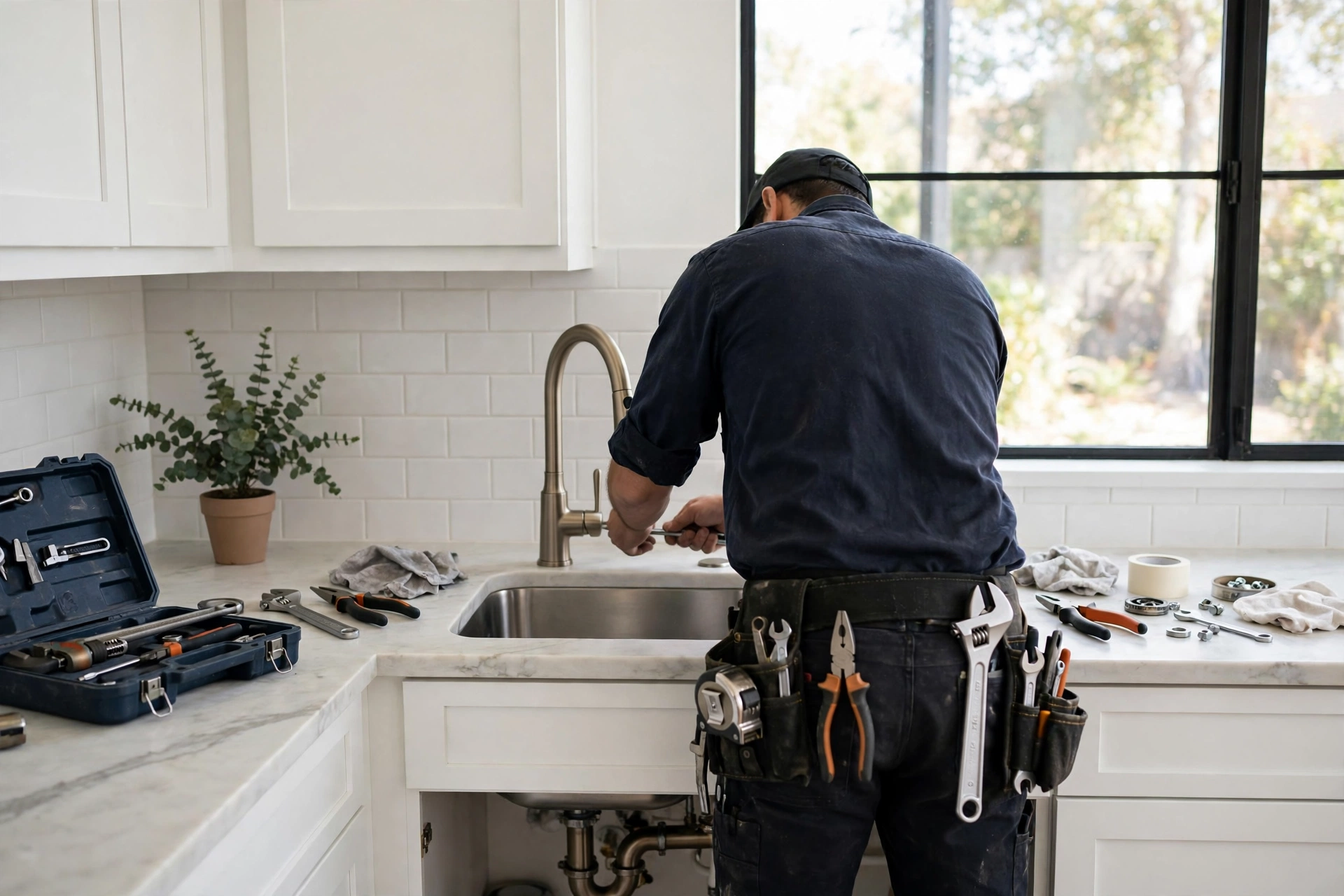
How Much Does Lowes Charge to Install a Faucet in 2026
How much does Lowes charge to install a faucet in 2026? Lowe’s charges from $92 for a basic faucet installation — a straightforward swap of a kitchen or bathroom sink faucet where the plumbing, the shut-off valves, and the sink holes already match the new faucet. Most jobs land at $150–$400 total including the faucet itself, depending on the faucet you choose and what the installer finds underthe sink. The work is done by a licensed local contractor, not by store employees, and the price includes removal and disposal of the old faucet, connection of the new one, leak testing, and a 1-year labor warranty. For comparison, Home Depot‘s basic faucet installation starts at $119, so Lowe’s is the cheaper of the two big-box options at the entry level.
The reason the total range is wider than the starting price is that the $92 figure is the labor-only starting point for the simplest job, and the faucet itself is bought separately. A budget faucet costs $50–$100, a mid-range faucet $100–$350, and a premium faucet $350–$500+, so the same $92 installation can be a $150 job with a basic faucet or a $400+ job with a high-end pull-down model. On top of that, the condition of the plumbing underneath the sink matters: new supply lines, replacement shut-off valves, or a corroded connection can each add to the bill, and those extras are priced separately rather than folded into the base installation charge. This guide breaks down the Lowe’s faucet installation price by faucet type, by faucet price tier, and by region, compares Lowe’s with a plumber, a handyman, and Home Depot, explains exactly what is included and what costs extra, and shows how to keep the total down without ending up with a faucet that drips or wobbles on day one.
If you are comparing Lowe’s with other ways to get a faucet installed, the difference is mostly about who does the work and what the warranty covers. A licensed plumber typically charges $100–$200 in labor for the same swap, a handyman $100–$300 all-in, and Home Depot $119 and up for its basic installation — so Lowe’s $92 starting price is competitive, and its 1-year labor warranty is the strongest warranty of the three routes. Our guide to plumber cost per hour shows what plumbers charge across other jobs, so you can judge whether the local plumber’s faucet quote is fair. And if the faucet is part of a bigger project, our guide to Lowe’s garbage disposal installation shows how the same big-box installation program works for another under-sink job, and our guide to toilet installation cost at Lowe’s covers the same program in the bathroom. If the faucet is part of a full kitchen overhaul, our kitchen remodel cost calculator shows how a fixture swap like this fits into a complete kitchen remodel budget.
Quick-answer table (typical 2026 Lowe’s faucet installation cost):
| Item | Typical cost |
|---|---|
| Lowe’s basic faucet installation (labor, from) | $92 |
| Total with a budget faucet ($50–$100) | $150–$200 |
| Total with a mid-range faucet ($100–$350) | $200–$400 |
| Total, most common jobs including faucet | $150–$400 |
| Home Depot basic faucet installation (from) | $119 |
| Plumber, faucet installation labor | $100–$200 |
| Handyman, faucet installation all-in | $100–$300 |
| Kitchen faucet, labor | $92–$250 |
| Bathroom faucet, labor | $92–$200 |
| Widespread faucet, labor | $150–$300 |
| Pull-down kitchen faucet, labor | $150–$350 |
| Touchless faucet, labor | $250–$450 |
| Time on site, standard swap | 1–2 hours |
| Faucet unit, budget | $50–$100 |
| Faucet unit, mid-range | $100–$350 |
| Faucet unit, premium | $350–$500+ |
| New supply lines, parts and labor | $25–$75 |
| New shut-off valves, parts and labor | $50–$150 |
| Labor warranty, Lowe’s | 1 year |
How Lowe’s Faucet Installation Works
Lowe’s faucet installation is a purchase-and-book service: you buy the faucet, add installation at checkout, and a licensed local contractor contacts you to schedule the work. The store itself does not install the faucet — Lowe’s contracts the job out to independent, licensed and insured installers in your area, and those installers do the work in your home. The process is the same for a kitchen faucet and a bathroom faucet, and it works like this:
Step 1: Choose and buy the faucet. Pick a faucet at Lowes.com or in the store. Installation is available on most kitchen and bathroom sink faucets sold by Lowe’s, and eligible products show an installation option on the product page. The faucet is bought separately — the $92 starting price is labor only — and the price you pay for the faucet is whatever the product costs: $50–$100 for a budget model, $100–$350 for a mid-range model, and $350–$500+ for a premium model. Buy the faucet you actually want, because the labor is the same for a budget faucet and a mid-range one, and the faucet is the part you will touch every day. Check the hole configuration before you buy: a faucet with a different number of holes than your sink needs a deck plate or a new sink, and that changes the job.
Step 2: Add installation at checkout. When you buy the faucet, add installation to the order. This is the step where the service is priced: the basic installation starts at $92, and the final labor price depends on your location and the faucet type. If you are buying in the store, an associate can add installation to the order for you. If you already bought the faucet and forgot to add installation, you can usually still arrange it through Lowe’s installation services — but adding it at checkout is the smoothest route, because the faucet and the service are tied to the same order.
Step 3: The contractor contacts you. After the order, a local licensed contractor contacts you — usually within a few business days — to confirm the details, check the faucet type and the sink setup, and schedule the visit. This is the step where surprises get priced: if you can describe the sink, the number of holes, the age of the shut-off valves, and whether the old faucet is corroded in place, the contractor can tell you whether the job stays at the $92 base price or needs extras. A photo of the plumbing under the sink sent before the visit gets you the tightest number, because the contractor can see the supply lines and the valves before arriving.
Step 4: Scheduling takes a few days. Expect the installation to be scheduled a few days to a week after the order, depending on the contractor’s availability in your area. This is not the route for a faucet that is spraying water across the kitchen and needs to come out today — a local plumber who can come tomorrow is the faster option for an emergency. For a planned replacement, the few days’ wait is the trade for the set price and the 1-year warranty. The contractor confirms the appointment window, and the job itself takes 1–2 hours on site for a standard swap.
Step 5: Installation day. The contractor arrives, shuts off the water at the valves under the sink, removes the old faucet, and carries it away — removal and disposal of the old faucet are included in the installation price. The new faucet is mounted, the supply lines are connected, the water is turned back on, and every connection is checked for leaks. The installer runs the faucet, checks the hot and cold lines, tests the sprayer or pull-down head if there is one, and cleans up the work area before leaving. The whole visit is typically 1–2 hours, including the leak test.
What Lowe’s installs — and what it does not. Lowe’s installs kitchen and bathroom sink faucets only. That covers single-handle and two-handle kitchen faucets, pull-down and pull-out kitchen faucets, centerset and widespread bathroom faucets, and most touchless models. Wall-mounted faucets are usually not installed by Lowe’s, because a wall-mounted faucet requires in-wall plumbing work that falls outside the standard sink-faucet installation package — if your faucet mounts to the wall behind the sink rather than to the sink or countertop, ask before you buy, because the job will likely need a licensed plumber rather than the big-box program. The same applies to tub and shower faucets, outdoor faucets, and laundry-room faucets: those are different installation categories, and the $92 faucet installation price does not cover them.
The 1-year labor warranty. Every Lowe’s installation comes with a 1-year labor warranty covering defects in the installation work. If the faucet leaks at a connection, wobbles, or was mounted incorrectly, the warranty covers the fix. The faucet itself is covered separately by the manufacturer’s warranty — most major brands such as Moen and Delta carry a limited lifetime warranty on the faucet — so a defect in the faucet goes to the manufacturer, while a defect in the installation goes to Lowe’s. Get the warranty terms in writing before the work starts, and keep the order number: it is the record the warranty is tied to. Lowe’s own sink and faucet installation page describes the service and the warranty in the store’s own words, and it is the page to check for the current availability in your area.
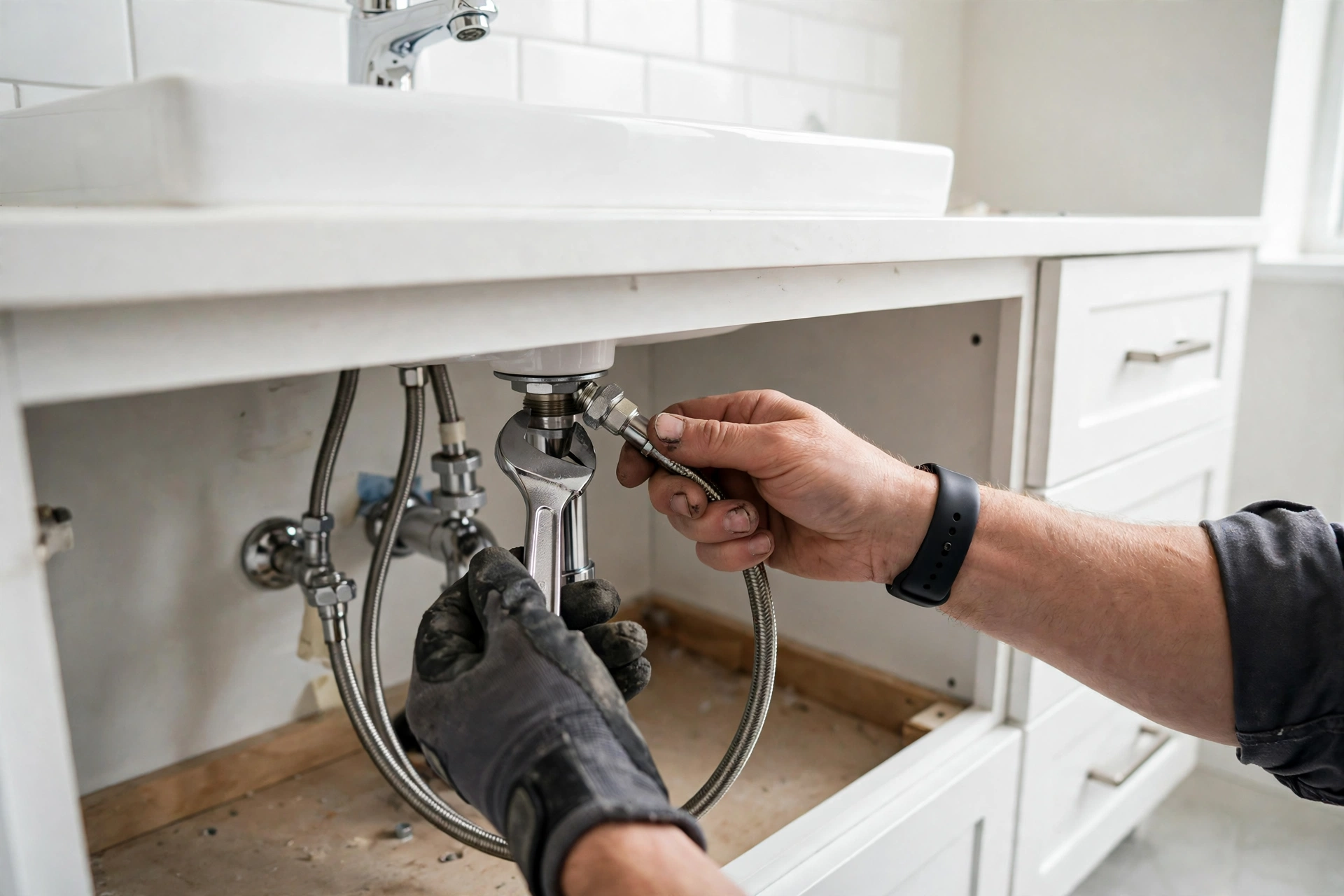
What’s Included in Lowe’s Faucet Installation
The basic installation starting at $92 covers the core work of swapping one sink faucet for another on existing plumbing. The trouble starts at the edges of that price, where the items most likely to be needed are priced as extras. Before you book, know exactly where the line falls:
| Task | Included in the $92 basic installation? | Notes |
|---|---|---|
| Shut off water at the valves | Included | Water shut off at the sink’s own valves before work starts |
| Removal of the old faucet | Included | Old faucet unmounted from the sink or countertop |
| Haul-away / disposal of the old faucet | Included | Old faucet carried away by the installer |
| Mounting the new faucet | Included | New faucet fitted to the existing sink holes |
| Connecting the supply lines | Included | Connection to the existing supply lines where they are in good shape |
| Connecting a pull-down or pull-out sprayer | Included | Sprayer hose routed and tested where the faucet has one |
| Leak testing | Included | Water run and every connection checked before the installer leaves |
| Testing hot and cold lines | Included | Both lines checked for correct temperature and flow |
| Cleanup of the work area | Included | Sink and cabinet wiped down, old parts removed |
| 1-year labor warranty | Included | Covers defects in the installation work |
| The faucet itself | Not included | Purchased separately, $50–$500+ by tier |
| New supply lines | Not included | $25–$75 extra if the old lines are corroded or the wrong length |
| New shut-off valves | Not included | $50–$150 extra if the old valves leak or will not turn |
| Deck plate / hole cover | Not included | $15–$50 extra if the new faucet has fewer holes than the sink |
| Corroded or seized old faucet, extra labor | Not included | Extra labor if the old faucet is rusted in place |
| Drain or sink work | Not included | A different installation category — priced separately |
| Wall-mounted faucet installation | Not included | Usually not installed by Lowe’s at all |
| Touchless sensor setup (beyond standard) | Sometimes included | Battery or electrical connection may be an extra on some models |
Removal and haul-away. Removing the old faucet is part of the installation price: the installer shuts off the water, disconnects the supply lines, unmounts the old faucet from the sink or countertop, and carries the old faucet away. Haul-away is included, so you do not need to deal with a dripping, corroded faucet yourself. Removal is real work on an old faucet: a faucet that has been leaking slowly for years rusts its mounting nuts to the sink, and a nut that should twist off in minutes can take real effort — or it can seize so badly that the installer has to cut it out. That is the most common reason a job goes past the $92 base price.
Mounting and connections. The core of the installation is mounting the new faucet on the sink, connecting the supply lines, and connecting the sprayer hose if the faucet has one. On a like-for-like swap this is straightforward and takes under an hour; on a faucet with a different hole pattern from the old one, a deck plate is needed to cover the extra holes, and that plate is a $15–$50 extra in parts. The supply lines are the detail most likely to cause an extra charge: if the old lines are corroded, stiff, or the wrong length for the new faucet, new lines cost $25–$75 in parts and labor. Ask the contractor to check the lines before the visit — a photo of the plumbing under the sink shows whether the lines and valves look sound.
Testing — the step that separates a pro install from a rushed job. A proper installation includes leak testing and a test run: the installer turns the water back on, runs the faucet, checks the supply-line connections, the mounting, and the sprayer hose for drips, and confirms the hot and cold lines are correct. That test takes ten minutes and it is the reason the installation price buys peace of mind: a slow drip at a supply-line connection rots a cabinet floor over months, and it is only caught by testing before the installer leaves. If the installer packs up without running water and checking every joint, the job is not finished — say so before they leave.
What the installation never includes. The faucet itself is never included in the $92 installation price — it is bought separately at $50–$500+ — and neither are new supply lines, new shut-off valves, or a deck plate. That is not a hidden charge; it is how the service is priced. The surprise comes only when the order does not say so. A written order that lists removal, mounting, connections, testing, and haul-away as included, and the faucet, the supply lines, the valves, and the deck plate as separate lines, is an order you can trust.
Faucet Installation Cost by Faucet Type
Lowe’s charges from $92 for a basic faucet installation, but the labor rises with the complexity of the faucet. A simple bathroom faucet is a quick swap; a pull-down kitchen faucet with a sprayer hose and a heavy spring takes longer; a touchless faucet with a sensor and a battery or power connection takes longer still. Here is how the labor and the typical total compare by faucet type:
| Faucet type | Labor | Faucet unit | Typical total installed |
|---|---|---|---|
| Bathroom faucet, centerset (single hole or 4-inch) | $92–$200 | $50–$150 | $150–$300 |
| Bathroom faucet, widespread (8-inch, three pieces) | $150–$300 | $100–$350 | $250–$550 |
| Kitchen faucet, single-handle | $92–$250 | $75–$250 | $150–$400 |
| Kitchen faucet, two-handle | $92–$250 | $75–$300 | $150–$400 |
| Pull-down / pull-out kitchen faucet | $150–$350 | $150–$400 | $300–$600 |
| Touchless / sensor faucet | $250–$450 | $200–$500+ | $450–$900 |
| Bar / prep sink faucet | $92–$200 | $75–$250 | $150–$400 |
| Wall-mounted faucet | Not installed by Lowe’s | $150–$500+ | Hire a licensed plumber |
Bathroom faucet, centerset ($150–$300 total). A centerset bathroom faucet — one piece, one or two handles, fitting a single hole or a 4-inch spread — is the simplest installation Lowe’s does, and it is the job the $92 starting price was built for. The faucet itself costs $50–$150 for a budget or mid-range model, the labor runs $92–$200, and the total lands at $150–$300 in most cases. The job takes about an hour, because the faucet is small, the connections are accessible, and there is no sprayer hose to route. If you are replacing a bathroom faucet and the sink has the standard 4-inch hole spread, this is the cheapest possible Lowe’s installation — and it is the job where the $92 base price is most likely to be the actual price.
Bathroom faucet, widespread ($250–$550 total). A widespread bathroom faucet has three separate pieces — a spout and two handles — spread across an 8-inch hole pattern, and the labor runs $150–$300 because each piece has to be mounted, sealed, and connected separately, and the connections under the sink are tighter. The faucet itself costs $100–$350, so the total lands at $250–$550. A widespread faucet is a good fit for a wider vanity or a vessel sink, but it is not a like-for-like swap for a centerset faucet: if your sink has a 4-inch spread and you buy an 8-inch widespread faucet, the holes will not match, and the job becomes a sink or countertop change instead of a faucet swap. Check the hole spread — 4-inch or 8-inch — before you buy.
Kitchen faucet, single-handle or two-handle ($150–$400 total). A standard kitchen faucet is the most common Lowe’s installation, with labor at $92–$250 and a faucet at $75–$250 for a budget or mid-range model, for a total of $150–$400. The labor range is wider than a bathroom faucet because kitchen faucets are bigger, the cabinet is deeper, and the installer is working in a tighter space under a sink that is usually full of cleaning products. A single-handle faucet is the quicker install; a two-handle faucet takes a little longer because each handle is a separate connection. Either way, most kitchen faucet jobs land inside the $150–$400 total range, which is why that range is the one to budget for.
Pull-down / pull-out kitchen faucet ($300–$600 total). A pull-down or pull-out kitchen faucet — the kind with a sprayer head that pulls out of the spout on a hose — costs more to install, with labor at $150–$350 and a faucet at $150–$400, for a total of $300–$600. The extra labor is the sprayer hose: it has to be routed through the spout, connected to the water supply, weighted so it retracts properly, and tested so it does not snag or leak inside the cabinet. A pull-down faucet that is not weighted correctly will not retract, and a hose that is routed badly will leak where it bends — so this is the faucet type where the installer’s care matters most, and where the 1-year labor warranty earns its keep. If you are choosing between a standard kitchen faucet and a pull-down model, the pull-down costs roughly $150–$200 more all-in, and most of that difference is in the faucet itself.
Touchless / sensor faucet ($450–$900 total). A touchless faucet — one that turns on when your hands pass under a sensor — is the most expensive faucet Lowe’s installs, with labor at $250–$450 and a faucet at $200–$500+, for a total of $450–$900. The labor is higher because the sensor, the battery pack or power connection, and the control box all have to be mounted and connected under the sink, and the sensor has to be calibrated so it does not turn on by itself or fail to turn on when it should. Some touchless models need a power outlet under the sink, and if there is no outlet there, that is a separate electrical job on top of the installation. A touchless faucet is a luxury choice, not a budget one — and if the price surprises you, a standard pull-down faucet at $300–$600 gives you most of the convenience for far less money.
Wall-mounted faucet (not installed by Lowe’s). A wall-mounted faucet — one that mounts to the wall behind the sink rather than to the sink or the countertop — is usually not installed by Lowe’s, because the plumbing runs inside the wall and the job falls outside the standard sink-faucet installation package. The faucet itself costs $150–$500+, and the installation needs a licensed plumber who can open the wall, set the rough-in valve at the right depth, and close the wall back up. If you have your heart set on a wall-mounted faucet, get a plumber’s quote before you buy the faucet: the installation alone can cost more than the faucet, and the total is a plumber’s job, not a big-box one.
Cost by Faucet Price Tier
The faucet is the part of the bill you control completely, and the tier you choose sets the total more than the labor does — because the labor starts at $92 whatever faucet you buy. Here is how the total breaks down by faucet price tier for a standard kitchen or bathroom installation:
| Faucet tier | Faucet unit | Labor | Typical total installed |
|---|---|---|---|
| Budget | $50–$100 | $92–$200 | $150–$250 |
| Mid-range | $100–$350 | $92–$250 | $200–$400 |
| Premium | $350–$500+ | $92–$350 | $450–$800+ |
| Touchless / smart | $200–$500+ | $250–$450 | $450–$900 |
Budget faucet, $50–$100 ($150–$250 total). A budget faucet — a basic chrome or brushed-nickel model from a store brand or a value line — costs $50–$100 for the unit, plus $92–$200 in labor. It works fine and it looks fine, but the finish is thinner, the cartridge is simpler, and the warranty is shorter than a mid-range faucet. If your only goal is a working faucet at the lowest possible all-in price, this is it — and for a rental property or a bathroom that is rarely used, a budget faucet is a sensible buy. For a kitchen faucet that gets used dozens of times a day, the mid-range model is usually the better buy for the extra $50–$100, because the labor is the same either way and the better cartridge is the only difference in the bill.
Mid-range faucet, $100–$350 ($200–$400 total). A mid-range faucet — a Moen, Delta, or Kohler model with a solid brass body, a ceramic disc cartridge, and a limited lifetime warranty — costs $100–$350 for the unit, plus $92–$250 in labor. This is the tier where most homeowners land, and it is the sweet spot for most kitchens and bathrooms: the cartridge lasts far longer than a budget faucet’s, the finish resists water spots and corrosion, and the manufacturer’s warranty covers the faucet for as long as you own the home. Most Lowe’s faucet installations fall in this tier, and the $150–$400 typical total for the whole job is built around it. Moen’s own DIY installation guides show how straightforward a mid-range faucet swap is — and they are also a useful check on whether your faucet is a fair DIY candidate if you decide to skip the installation service.
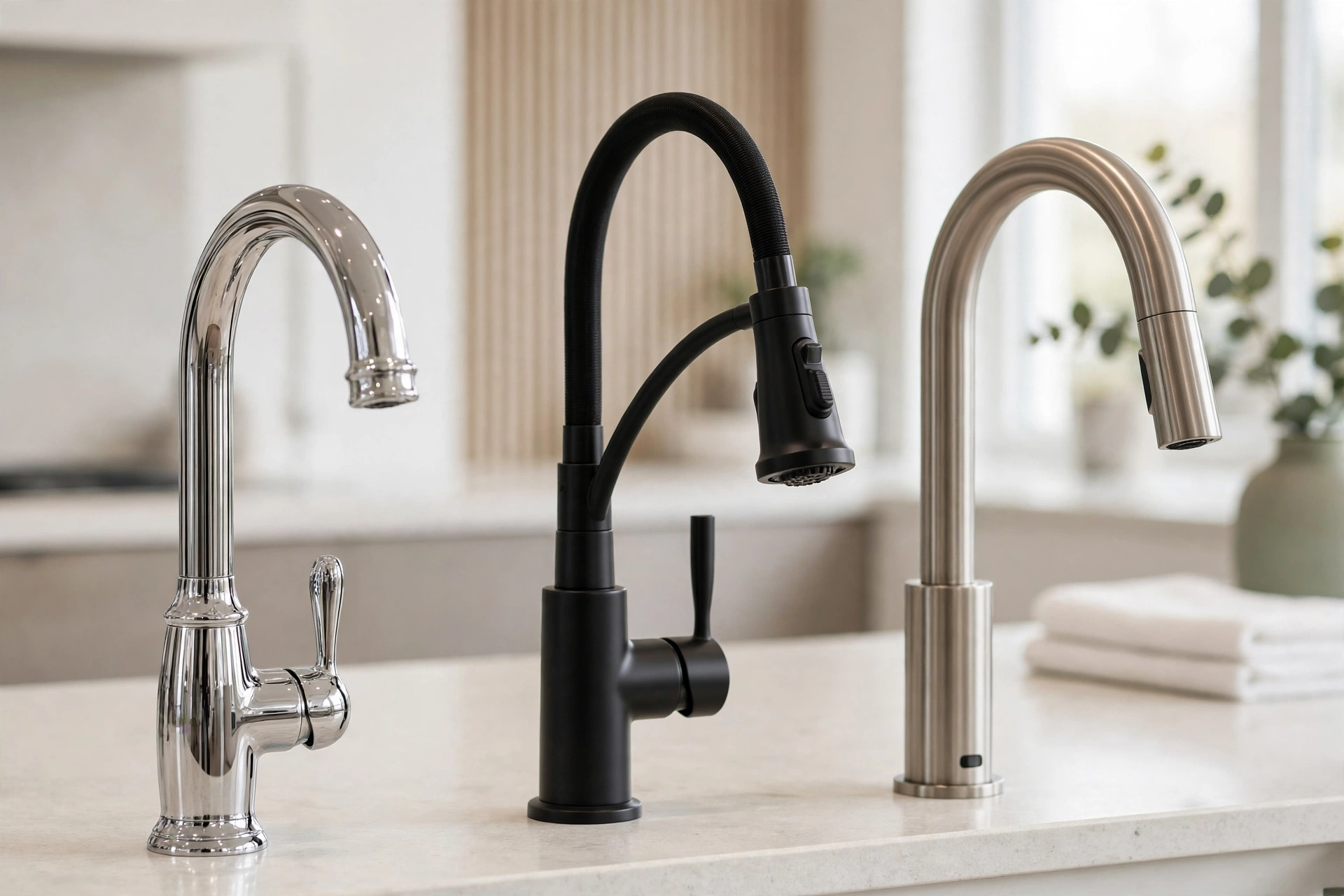
Premium faucet, $350–$500+ ($450–$800+ total). A premium faucet — a high-end pull-down, a designer finish such as matte black or unlacquered brass, or a commercial-style spring faucet — costs $350–$500+ for the unit, plus $92–$350 in labor. These are the best-looking and best-built faucets, with the smoothest handles, the quietest sprayers, and the most durable finishes — and they are built for a kitchen where the faucet is a design feature, not just a tap. The price premium over a mid-range faucet is real, but so is the difference in feel and in how long the finish lasts. If the kitchen is recently remodeled and the faucet is the finishing touch, the premium tier is the reason to spend the extra money — and remember that the labor is roughly the same, so the whole premium is in the faucet.
The labor share of the bill. On a budget installation the labor is the bigger share — $92–$200 of labor against a $50–$100 faucet — while on a premium installation the faucet dominates. That is why the labor figure matters most on a cheap faucet: a $100 labor difference is half the total on a budget job and a quarter of it on a premium one. It is also why buying the faucet yourself, on sale, is the most effective way to cut the total: the labor is what it is, but the faucet price is entirely your choice.
Lowe’s vs. a Plumber vs. a Handyman: Faucet Installation Compared
Lowe’s is one of four ways to get a faucet installed, and the cheapest quote is not always the best deal. Here is the full comparison for a standard kitchen or bathroom faucet swap:
| Option | Labor | Total with a mid-range faucet | Warranty | Scheduling | Best for |
|---|---|---|---|---|---|
| Lowe’s (licensed contractor) | From $92 | $200–$400 | 1-year labor warranty | A few days to a week | One-stop purchase with a warranty |
| Home Depot (licensed contractor) | From $119 | $220–$450 | 1-year labor warranty | A few days to a week | Same as Lowe’s, slightly higher base price |
| Licensed plumber | $100–$200 | $200–$450 | Usually 90 days to 1 year | A day or two | Urgent jobs, corroded plumbing, unusual setups |
| Handyman | $100–$300 all-in | $150–$400 | Varies, often 30–90 days | A day or two | Simple like-for-like swaps on a tight budget |
Lowe’s — from $92 labor, 1-year warranty. Hiring through Lowe’s means the work is done by a licensed local third-party contractor, not by store employees, and the labor is a flat rate starting at $92 for a basic installation. The price is narrower than a plumber’s range because it is a set package price rather than an hourly rate, and it comes with a 1-year labor warranty — the strongest warranty of the four routes. Scheduling takes a few days to a week, because the contractor contacts you after you buy the faucet and add installation at checkout, so this is not the route for a faucet that is spraying water and needs to come out today. The faucet is bought separately at $50–$500+, and the same extras apply as with any pro: new supply lines at $25–$75, new shut-off valves at $50–$150, a deck plate at $15–$50.
Home Depot — from $119 labor, 1-year warranty. Home Depot’s installation program works the same way as Lowe’s — buy the faucet, add installation at checkout, a licensed local contractor does the work — but the basic installation starts at $119, which is $27 more than Lowe’s $92 starting price. The 1-year labor warranty is the same, the scheduling time is the same, and the extras are the same. For a basic faucet swap, Lowe’s is the cheaper big-box option by that $27; for a more complex job the two prices converge, because the extras are priced by the contractor either way. If you already shop at Home Depot, or the faucet you want is only sold there, the difference is small — but if the price is the deciding factor, Lowe’s wins at the entry level.
Licensed plumber — $100–$200 labor. A local licensed plumber is the most common choice, and the labor range is wider because it depends on the plumber’s hourly rate — typically $50–$100 per hour — and on whether the job is billed hourly or as a flat rate. At $50 per hour for a one-hour swap, the labor lands near $100; at $100 per hour for a two-hour job with a corroded faucet, it lands near $200. The plumber is the fastest option for an urgent job — a faucet that is leaking into the cabinet and needs to come out today — and the best option when the plumbing under the sink is unusual, corroded, or needs reconfiguration, because the plumber can price and fix the whole job in one visit. The trade-off is that the warranty is whatever the plumber offers, usually 90 days to 1 year, so get it in writing before the work starts. For context on what plumbers charge across other jobs, see our guide to plumber cost per hour.
Handyman — $100–$300 all-in. A handyman is the cheapest labor option for a straightforward swap, typically charging $100–$300 all-in for a job that takes 1–2 hours. That saving is real, but it comes with limits. A handyman is a good fit when the old faucet comes off cleanly, the new one has the same hole pattern, the supply lines are sound, and the valves turn freely — in other words, a true like-for-like swap with no surprises. A handyman is not the right hire when the mounting nuts are seized, the valves leak, or the supply lines need replacing: most handymen are not licensed plumbers, and in many jurisdictions they are not permitted to do plumbing work beyond the simplest swaps. The warranty is also thinner — often 30 to 90 days, if one is offered in writing at all. If the job turns out to be more than a simple swap, a handyman may have to stop halfway and call a plumber anyway, and you will have paid for two visits. Use a handyman only for a clean, simple replacement, and only if the handyman is insured.
Which option is cheapest? For a clean, simple swap, a handyman at $100–$300 all-in or Lowe’s at $92 and up can each be cheapest, depending on the faucet and the market — and a plumber at $100–$200 in labor can be cheapest or most expensive depending on the hourly rate and how long the job takes. The right question is not only which quote is lowest, but which quote covers the job you actually have. A $92 Lowe’s installation that does not include new supply lines is not cheaper than a $200 plumber quote that does — it is just incomplete. Get each quote in writing, with the removal, the supply lines, the valves, the mounting, and the leak test each listed, and compare like with like.
Faucet Installation Cost by Region
Labor is local, and the same one-hour faucet swap costs noticeably more in a high-cost metro area than in a smaller market, because the installer’s rate follows local wages, fuel, insurance, and overhead. The national typical range of $150–$400 total for a standard job with a mid-range faucet breaks down roughly like this by region:
| Region | Typical labor, basic installation | Total with a mid-range faucet |
|---|---|---|
| Northeast (New York, Boston, Washington DC) | $150–$250 | $300–$500 |
| West Coast (California, Seattle, Portland) | $140–$250 | $280–$500 |
| Midwest (Chicago, Minneapolis, Cleveland) | $92–$200 | $200–$400 |
| South (Atlanta, Dallas, Charlotte, Nashville) | $92–$180 | $180–$400 |
| Southeast / Gulf Coast | $92–$160 | $180–$350 |
| Mountain West (Denver, Phoenix, Salt Lake City) | $100–$220 | $200–$450 |
| Rural / small-town markets | $92–$150 | $150–$350 |
High-cost metros ($300–$500 total). In the Northeast and on the West Coast, installers commonly charge more for the same job, so even a straightforward faucet swap lands at $150–$250 in labor, and a job with corroded valves or new supply lines can push the total toward $500 with a mid-range faucet. Trip charges are also more common in these markets — a $50–$100 service-call or trip fee that is sometimes folded into the labor and sometimes listed separately, so ask whether the quote includes it. The total installed price with a mid-range faucet in these markets typically runs $280–$500.
Mid-cost markets ($200–$450 total). In the Midwest and the Mountain West, labor rates put a standard installation at $92–$220 in labor, with a total installed price of $200–$450 for a mid-range faucet. These are the markets where the national typical range of $150–$400 fits most neatly, and where the $92 Lowe’s base price is most likely to be the actual price for a clean swap.
Lower-cost markets ($150–$400 total). In much of the South and in rural and small-town markets, installers charge less, so a standard installation lands at $92–$180 in labor and $150–$400 installed with a mid-range faucet. A handyman in these markets can be cheaper still, because lower local rates go further where the cost of living is lower. Even here, though, the extras are the same: corroded valves can add $50–$150, and new supply lines add $25–$75 wherever you live, because parts cost the same everywhere and the extra time is the same.
How to use these numbers. Regional ranges are a starting point, not a quote. The only number that matters for your kitchen or bathroom is the written quote for your address, and the cheapest way to know whether it is fair is to get two: one from Lowe’s and one from a local plumber or handyman. If both land inside the range for your region, the price is fair; if one is far outside it, ask what it includes that the other does not.
Extra Charges: Supply Lines, Valves, and Corroded Connections
Extras are where a $92 installation becomes a $250 installation — or a $200 total becomes a $400 one. Here is what each extra typically costs, and when you are likely to face it:
| Extra | Typical added cost | When it comes up |
|---|---|---|
| New supply lines, parts and labor | $25–$75 | Old lines corroded, stiff, or the wrong length for the new faucet |
| New shut-off valves, parts and labor | $50–$150 | Old valves leak, will not turn, or are the wrong type |
| Deck plate / hole cover | $15–$50 | New faucet has fewer holes than the sink |
| Corroded or seized old faucet, extra labor | $25–$100 | Mounting nuts rusted in place, faucet corroded to the sink |
| Drain or sink work | $50–$200+ | Drain needs reconfiguring for a different faucet height or sink |
| Touchless sensor power / outlet | $50–$150 | Touchless faucet needs a power outlet under the sink |
| Escutcheon or trim kit | $15–$40 | Faucet needs a trim piece to cover a larger old hole |
| Faucet hole drilling (new holes) | $50–$150 | New faucet needs more holes than the sink has |
| Trip or service-call fee | $50–$100 | Charged separately in some markets or for a second visit |
New supply lines ($25–$75). This is the most common extra, and the one most likely to be invisible until the work starts. Supply lines are the flexible hoses that carry hot and cold water from the shut-off valves to the faucet, and on an old faucet they are often corroded, stiff, or the wrong length for the new faucet. New lines cost $25–$75 in parts and labor, and a good installer replaces them as a matter of course on a faucet that is more than ten years old — because a supply line that bursts floods a kitchen in minutes. If the lines under your sink look green, crusty, or swollen, budget the $25–$75 from the start.
New shut-off valves ($50–$150). The shut-off valves under the sink are the second most common extra. If the old valves leak when they are turned, or will not turn at all, they have to be replaced before the new faucet can be installed — and replacing a valve means shutting off the water to the house, draining the line, and fitting a new valve, which is a $50–$150 job in parts and labor per valve. Test the valves before you book: turn each one off and on, and if it drips, sticks, or spins without stopping the water, mention it when you call so the contractor brings the parts and prices the extra honestly instead of discovering it mid-job.
A corroded or seized old faucet ($25–$100 extra labor). A faucet that has been leaking slowly for years rusts its mounting nuts to the sink, and a nut that should twist off in minutes can take real effort — penetrating oil, heat, and careful force — or it can seize so badly that the installer has to cut it out. The extra labor for a corroded or seized faucet is typically $25–$100, which is roughly an extra half-hour to an hour on site. If the faucet is more than fifteen years old, or the cabinet shows water stains, mention it when you call so the contractor prices the extra honestly.
A real-world example. One homeowner’s standard kitchen faucet replacement cost $92 for the installation plus a $150 mid-range faucet, for a $242 total — and the total reached $317 once corroded supply lines and a leaking shut-off valve were found, adding $50 for the lines and $25 for the valve work. That is the most common story in customer reports: the base installation price is real, and one small extra on top of it is normal. Budget the base installation plus $75 for the most likely extra, and you will rarely be surprised.
What Drives the Price of a Lowe’s Faucet Installation
Five things set the price of a Lowe’s faucet installation more than anything else, and knowing them before you buy is the difference between a $92 job and a $400 one:
1. The faucet type. A simple centerset bathroom faucet is a one-hour job at $92–$200 in labor; a pull-down kitchen faucet is a $150–$350 job because of the sprayer hose; a touchless faucet is a $250–$450 job because of the sensor and the power connection. The faucet type is the single biggest driver of the labor price, and it is set the moment you choose the faucet.
2. The faucet price tier. The labor starts at $92 whatever faucet you buy, but the total is set by the faucet: $50–$100 for a budget faucet, $100–$350 for a mid-range faucet, and $350–$500+ for a premium faucet. A premium faucet can triple the total without changing the labor at all.
3. The condition of the plumbing under the sink. Corroded supply lines, leaking shut-off valves, and a seized old faucet are the three extras that push a job past the base price, and they are all invisible until the installer looks under the sink. A faucet that is twenty years old with green, crusty supply lines is a $25–$150 extras job before the new faucet is even mounted.
4. The hole pattern. A faucet with a different number of holes than the sink needs a deck plate at $15–$50, or new holes drilled at $50–$150, or a different faucet altogether. The hole pattern — single hole, 4-inch centerset, or 8-inch widespread — is the detail most often missed when buying a faucet, and it is the easiest one to check: measure the distance between the holes on your sink before you buy.
5. Where you live. Labor rates follow local wages, so the same installation costs more in New York or San Francisco than in a small town in the South. The $92 starting price is a national floor, and in a high-cost metro the actual labor for a basic installation can be $150–$250 — which is why a written quote for your address is the only number that counts.
DIY vs. Lowe’s Faucet Installation
| DIY | Lowe’s installation | |
|---|---|---|
| Faucet cost | $50–$500+ by tier | Same — you buy the faucet either way |
| Installation labor | $0 | From $92 |
| Supply lines | $10–$25 in parts, if you can do it | $25–$75, done by the installer |
| Shut-off valves | $10–$30 in parts, if you can do it | $50–$150, done by the installer |
| All-in total, standard swap with a mid-range faucet | $100–$350 in parts | $200–$400 |
| All-in total, pull-down faucet | $150–$400 in parts | $300–$600 |
| Time required | 1–3 hours for a first-timer on a swap | 1–2 hours on site |
| Tools needed | Basin wrench, adjustable wrench, plumber’s putty, bucket, flashlight | Included in the installation price |
| Plumbing safety | A bad seal leaks slowly into the cabinet — check for drips for a week | Installer leak-tests before leaving |
| Warranty | None — mistakes are on you | 1-year labor warranty |
| Best for | A confident DIYer doing a like-for-like swap | Corroded faucets, bad valves, or anyone who wants a warranty |
A like-for-like replacement is a fair DIY job. If a faucet already exists, the new faucet has the same hole pattern, the supply lines are sound, and the valves turn freely, a confident DIYer can swap a faucet in 1–3 hours with basic tools: a basin wrench for the mounting nuts, an adjustable wrench for the supply lines, and a bucket for the water in the lines. The saving is the whole installation charge — from $92 at Lowe’s, or $100–$200 for a plumber — and the risk is a slow leak at a supply-line connection, so check under the sink for drips every day for a week after the job. Moen’s own DIY installation guides walk through the steps for its faucets, and they are a good check on whether your faucet is a fair DIY candidate: if the guide looks straightforward for your model, the job probably is.
A corroded faucet is not a DIY job. The line between a fair DIY swap and a job for a pro is corrosion. A mounting nut that twists off cleanly is a DIY job; a nut that is rusted to the sink is a pro job, because the force needed to free it can crack the sink, and the valve underneath is often corroded too. The extra labor for a corroded or seized faucet is $25–$100 — a small price against a cracked sink. If the old faucet is more than fifteen years old, or the cabinet shows water stains, get a pro quote before you start, even if you plan to do the work yourself.
Bad valves are not a DIY job. If the shut-off valves under the sink leak or will not turn, the job stops being a faucet swap and becomes a valve replacement — which means shutting off the water to the house and fitting a new valve, a $50–$150 job that most homeowners should leave to a pro. A valve that fails while you are working on it floods the cabinet in seconds, and there is no way to stop the water without the main shut-off. Test the valves before you decide: turn each one off and on, and if it drips or sticks, book the installation instead of doing it yourself.
The prep work you can do yourself. There are still useful ways to cut the installation bill without touching a wrench. Clear out the sink cabinet so the installer can work without moving cleaning products — on hourly pricing, every minute of clearing is a minute you pay for. Buy the faucet yourself, on sale, so the installer charges labor only with no markup on the fixture. Check whether the valves turn and photograph the plumbing under the sink — a photo sent before the visit gets you a tighter number. And measure the hole pattern on your sink before you buy, so the faucet you order fits the holes you have.
Money-Saving Tips for Lowe’s Faucet Installation
1. Buy the faucet yourself, on sale. The faucet is the most controllable cost, and a mid-range faucet at $100–$350 goes on sale regularly at Lowe’s. A $50 saving on the faucet is a $50 saving on the total — and buying it yourself means the installer charges labor only, with no markup on the fixture. A budget faucet at $50–$100 is the cheapest way to keep a replacement near $150–$250 all-in. 2. Check the valves and the supply lines before you book. If the valves turn freely and the supply lines look sound, say so when you call — the contractor can quote the $92 basic installation instead of pricing for the worst case, and the job stays near the bottom of the $150–$400 range. A photo of the plumbing under the sink sent before the visit gets you a tighter number. 3. Get three quotes: Lowe’s, a plumber, and a handyman. Lowe’s starts at $92, a plumber runs $100–$200 in labor, and a handyman runs $100–$300 all-in, so quotes for the same job can differ by $50–$150 between providers — especially on a job with unknown conditions, where different pros price the risk differently. A five-minute phone call to one more pro is the cheapest way to know whether the first price is fair. Compare the written quotes line by line: removal, supply lines, valves, mounting, and testing should each be named. 4. Pick the mid-range faucet, not the premium one, unless you need it. A mid-range faucet at $100–$350 handles daily use for most households, and the premium faucet at $350–$500+ costs roughly $150–$250 more for a finish and a feel most kitchens never need — while the labor is roughly the same. Spend the difference on new supply lines or a better sprayer instead. 5. Measure the hole pattern before you buy. A faucet with the wrong hole pattern needs a deck plate at $15–$50, or new holes drilled at $50–$150, or a different faucet altogether — and a return trip to exchange the faucet costs a day. Measure the distance between the holes on your sink — single hole, 4-inch, or 8-inch — and buy the faucet that matches. 6. Bundle the faucet with other under-sink work. If the installer is already under the sink — replacing a garbage disposal, fitting a new trap, or connecting a dishwasher — adding a faucet to the same visit costs far less in labor than a separate trip, because the trip and the cabinet setup are paid for once. Ask for a bundled price when you call. Our guide to Lowe’s garbage disposal installation shows how the same program prices a second under-sink job. 7. Replace the supply lines only if they need it. New supply lines cost $25–$75, and on a faucet that is less than ten years old the old lines are often fine. Ask the installer to check them before ordering new ones — and if they are corroded, replace them, because a burst supply line floods a kitchen in minutes. 8. Do not pay for a touchless faucet you do not need. A touchless faucet costs $450–$900 installed against $150–$400 for a standard faucet, and most of the difference is the sensor and the power connection. A standard pull-down faucet at $300–$600 gives you most of the convenience for far less money — and it has no sensor to calibrate and no battery to replace. 9. Time the job outside the busy season. Installers are busiest in spring and early summer, when renovation season peaks. A fall or winter booking can mean a faster start date and occasionally a better price, especially for a faucet replacement that fills a half-day slot. 10. Ask whether the quote is a flat rate — and what it covers. Lowe’s installation is a flat rate starting at $92, which means the price is fixed even if the job takes two hours instead of one — but only for the work listed in the order. Ask for the order in writing with the removal, the supply lines, the valves, the mounting, and the leak test each listed, so you know what is included before the installer arrives. The wrong assumption on a single line can cost you $25–$150 either way.
Frequently Asked Questions
How much does Lowes charge to install a faucet?
In 2026, Lowe’s charges from $92 for a basic faucet installation — a straightforward swap of a kitchen or bathroom sink faucet where the plumbing, the shut-off valves, and the sink holes already match the new faucet. Most jobs land at $150–$400 total including the faucet, depending on the faucet you choose: a budget faucet at $50–$100 keeps the total near $150–$250, a mid-range faucet at $100–$350 puts it at $200–$400, and a premium faucet at $350–$500+ pushes it to $450–$800+. The price includes removal and disposal of the old faucet, mounting and connecting the new one, leak testing, and a 1-year labor warranty. The work is done by a licensed local contractor, and scheduling takes a few days to a week.
Does Lowe’s faucet installation include the faucet?
No — the faucet is not included in the installation price. You buy it separately, typically $50–$100 for a budget faucet, $100–$350 for a mid-range faucet, and $350–$500+ for a premium faucet. The $92 starting price covers the labor only: removing the old faucet, mounting the new one, connecting the supply lines, testing for leaks, and hauling the old faucet away. Some orders bundle the faucet and the installation into one all-in price of $150–$400 — always ask whether the quote includes the faucet, because a quote that looks expensive may simply include a better faucet.
What is included in Lowe’s faucet installation?
The basic installation starting at $92 includes shutting off the water, removing the old faucet, hauling the old faucet away, mounting the new faucet to the existing sink holes, connecting the supply lines, connecting the pull-down sprayer hose if there is one, leak testing, testing the hot and cold lines, cleanup of the work area, and a 1-year labor warranty. It does not include the faucet itself ($50–$500+), new supply lines ($25–$75), new shut-off valves ($50–$150), a deck plate ($15–$50), or drain and sink work. Get the order in writing with each of these items listed, so you know what is included before the installer arrives.
Does Lowe’s install wall-mounted faucets?
Usually not. Lowe’s installs kitchen and bathroom sink faucets only — single-handle and two-handle kitchen faucets, pull-down and pull-out kitchen faucets, centerset and widespread bathroom faucets, and most touchless models. Wall-mounted faucets are usually not installed by Lowe’s, because a wall-mounted faucet requires in-wall plumbing work that falls outside the standard sink-faucet installation package. If your faucet mounts to the wall behind the sink, you will likely need a licensed plumber instead — get a plumber’s quote before you buy the faucet, because the installation alone can cost more than the faucet.
How long does Lowe’s faucet installation take?
The installation itself takes 1–2 hours on site for a standard swap, including removal of the old faucet, mounting the new one, connecting the supply lines, and leak testing. A pull-down faucet takes a little longer because of the sprayer hose, and a touchless faucet takes longer still because of the sensor and the power connection. Scheduling takes a few days to a week after you buy the faucet and add installation at checkout, because the contractor contacts you to confirm the details and book the visit. If the faucet is spraying water and needs to come out today, a local plumber who can come tomorrow is the faster option — Lowe’s is the route for a planned replacement, not an emergency.
The Bottom Line
For how much Lowe’s charges to install a faucet in 2026, budget from $92 for a basic installation — a straightforward kitchen or bathroom sink faucet swap — and $150–$400 total including the faucet for most jobs, with a mid-range faucet at $100–$350 and a 1-year labor warranty on the work. A budget faucet keeps the total near $150–$250, a premium faucet pushes it to $450–$800+, and a touchless faucet runs $450–$900 installed. Home Depot’s basic installation starts at $119, which is $27 more than Lowe’s $92, and a licensed plumber charges $100–$200 in labor for the same swap — so Lowe’s is competitive at the entry level, and its 1-year labor warranty is the strongest warranty of the routes compared here. The two things that set the price more than anything else are the faucet you choose and what the installer finds under the sink: a clean swap in a low-cost market lands near $92 in labor, while corroded supply lines or leaking valves can add $25–$150 on top. The cheapest way to keep the bill down is to buy the faucet yourself on sale, check the valves and the supply lines before you book, measure the hole pattern before you buy, and get three written quotes — Lowe’s, a plumber, and a handyman — with the removal, the supply lines, the valves, the mounting, and the leak test each listed as its own line. And remember that Lowe’s installs kitchen and bathroom sink faucets only: if your faucet mounts to the wall, you need a plumber, not the big-box program.
Prices are typical 2026 US ranges for planning purposes and vary by region, faucet choice, and site condition; get itemized local quotes for an exact project price.
7 thoughts on “How Much Does Lowes Charge to Install a Faucet in 2026”