
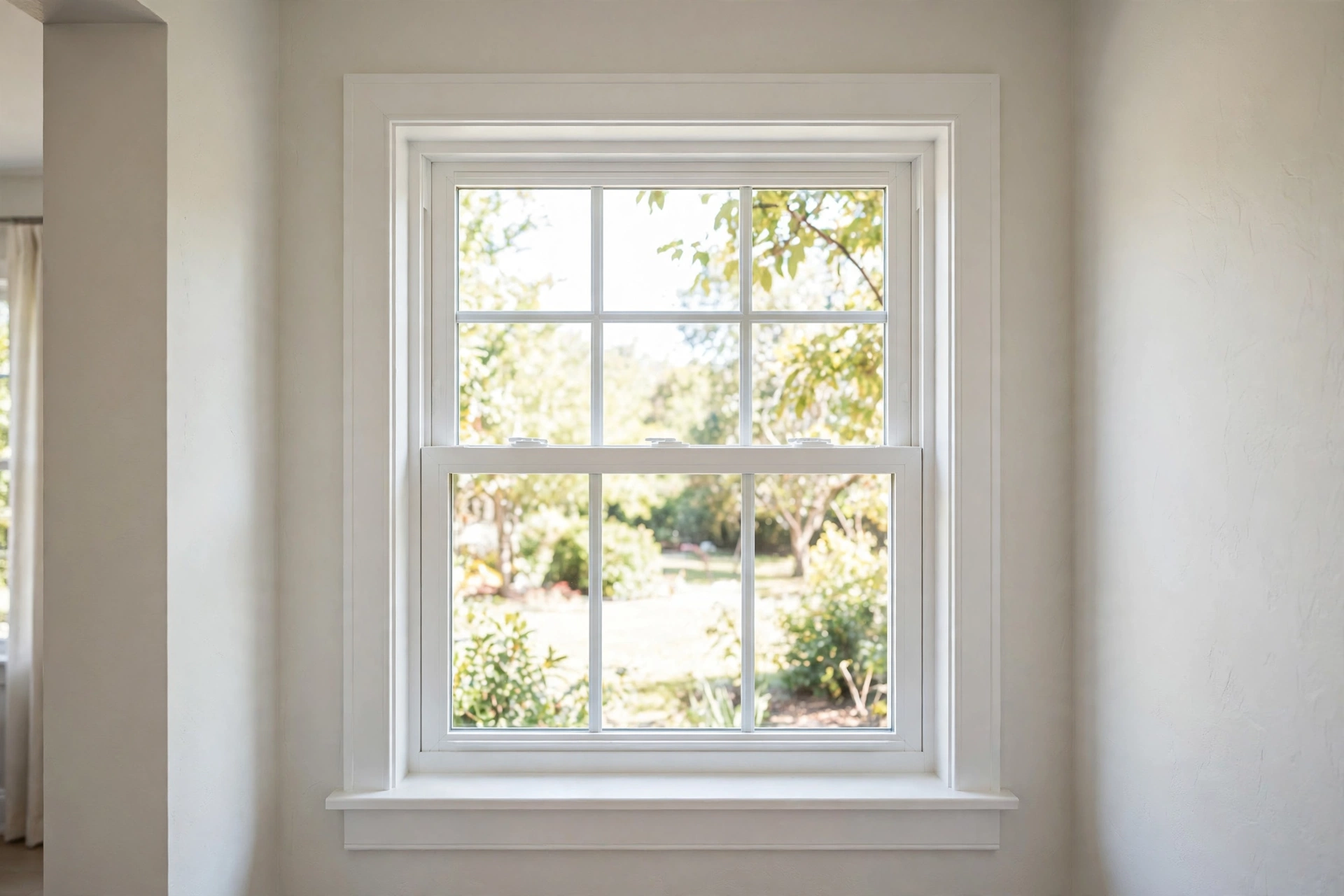
Window Replacement Cost for One Window in 2026
What is the window replacement cost for one window in 2026? A single installed replacement window typically costs $300–$900, with a standard vinyl double-hung with double-pane glass at $300–$800 fully installed. Most homeowners pay $500–$900 once labor, trim work, and disposal of the old unit are in. And a 2026 survey of 1,000 homeowners put the national average at $517 per installed window — right in the middle of that range.
But a single window is a special case: it’s the smallest possible job, so it often carries the highest per-unit cost — minimum charges and trip fees don’t get spread across a whole house. This guide breaks down what one window really costs by material, window type, and installation method, why replacing one costs more per unit than doing several, and when to repair instead of replace.
Quick-answer table (typical single-window costs, 2026):
| Single window | Typical installed cost |
|---|---|
| Standard vinyl double-hung (double-pane) | $300–$800 |
| Typical single window, most homeowners | $500–$900 |
| Overall range, one window installed | $300–$900 |
| 3-sash / large specialty window | $900–$2,800 |
| Average per window (2026 homeowner survey) | $517 |
If you’re comparing installer quotes, our how much does Home Depot charge to replace a window guide breaks down big-box pricing against independent contractors.
Single Window Cost by Frame Material
Frame material is the biggest cost lever after window size:
| Frame material | Typical installed cost (one window) | Profile |
|---|---|---|
| Aluminum | Cheapest option | Lightweight and slim, but the least energy-efficient — best for mild climates and tight budgets |
| Vinyl | $300–$800 | The value king: low maintenance, decent insulation, most common choice for replacements |
| Fiberglass | $500–$1,500 | Stronger and more stable than vinyl, paintable, longer lifespan — a mid-to-premium pick |
| Wood | $800–$2,000 | Classic look, excellent insulation, but needs painting/staining and costs the most to maintain |
| Composite / clad wood | $700–$1,800 | Wood interior with vinyl or aluminum cladding outside — the premium compromise |
Vinyl dominates single-window jobs: at $300–$800 installed, it delivers double-pane efficiency for the lowest outlay. Wood and clad-wood jump to $800–$2,000 because of both the frame and the extra trim/finishing labor. Fiberglass at $500–$1,500 sits in between — it expands and contracts less than vinyl, which matters for large openings and extreme climates.
Glass upgrades add cost regardless of material: triple-pane adds roughly $100–$300 per window, and low-E coatings or argon gas fills add $50–$150. For most US climates, double-pane with low-E is the sweet spot — and it’s what the ENERGY STAR Version 7.0 criteria are built around. New double-pane windows typically cut heating and cooling costs by about 10–25% versus old single-pane units, so efficiency pays back fastest on the leakiest windows.
Cost by Window Type
The style of window matters almost as much as the material. Standard operable windows cost the least; anything big, fixed, or fancy costs multiples:
| Window type | Typical installed cost (one window) |
|---|---|
| Fixed / picture window (standard) | $350–$900 |
| Single-hung | $300–$800 |
| Double-hung (standard vinyl, double-pane) | $300–$800 |
| Sliding | $350–$900 |
| Casement | $400–$1,000 |
| Awning | $400–$1,000 |
| 3-sash / triple window | $900–$2,800 |
| Bay or bow window | 2.5–3× a single double-hung |
| Large custom / specialty shapes | 2.5–3× a single double-hung |
The pattern is straightforward: moving parts and complex hardware cost more, and size multiplies everything. A standard double-hung at $300–$800 is the baseline; a casement adds crank hardware and a tighter seal (+$100–$200); bay/bow or large specialty windows run 2.5–3× that baseline because they combine multiple units, structural framing, and longer labor.
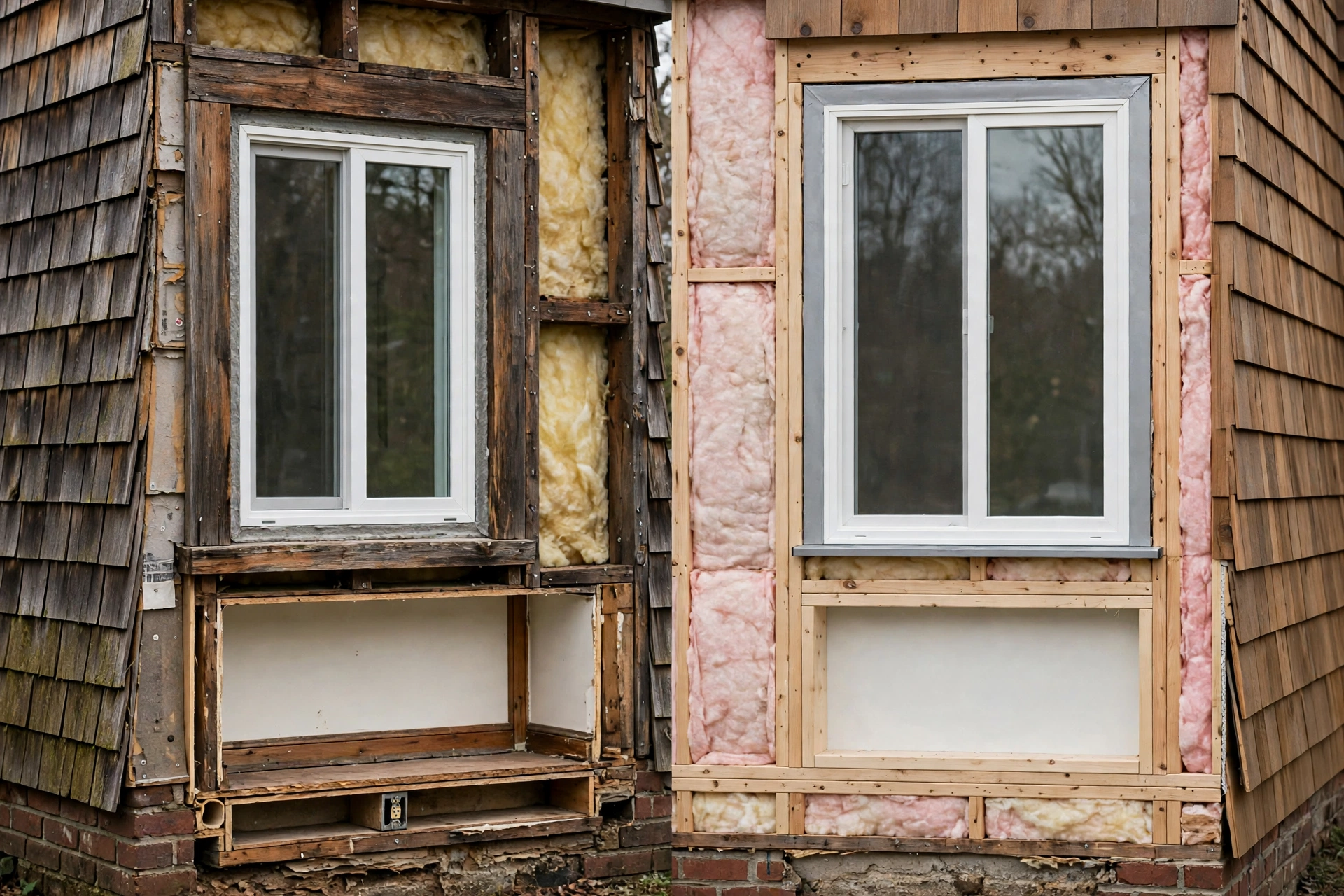
Insert (Retrofit) vs. Full-Frame Replacement
For a single window, this is the most important fork in the road — it changes the price, the disruption, and who should do the work:
| Insert (retrofit) replacement | Full-frame replacement | |
|---|---|---|
| What happens | New window slides into the existing frame; only the sashes and tracks are replaced | Entire old window — frame, sashes, and trim — is removed down to the rough opening |
| Typical cost (one window) | $300–$800 | $500–$1,200+ |
| Time per window | 1–2 hours | 3–4+ hours |
| When to use it | Existing frame is square, level, and rot-free; you just want better glass and sashes | Frame is rotted, warped, or out of square; you want to change the size or style; water damage around the opening |
| Disruption | Minimal — interior and exterior trim stay | Interior/exterior trim replaced; siding, drywall, or stucco may need patching |
| DIY possible? | Yes — the most DIY-able window job | No — structural and weatherproofing work; hire a pro |
Choose insert replacement when your existing frame is solid and the opening is square — it’s cheaper ($300–$800), faster, and leaves your trim intact. Choose full-frame when there’s rot, water damage, or warping, because an insert window sealed into a failing frame just hides the problem. If full-frame work exposes damaged wall framing, budget repair work too — our drywall repair cost per square foot guide covers the patch-and-paint side of the job.
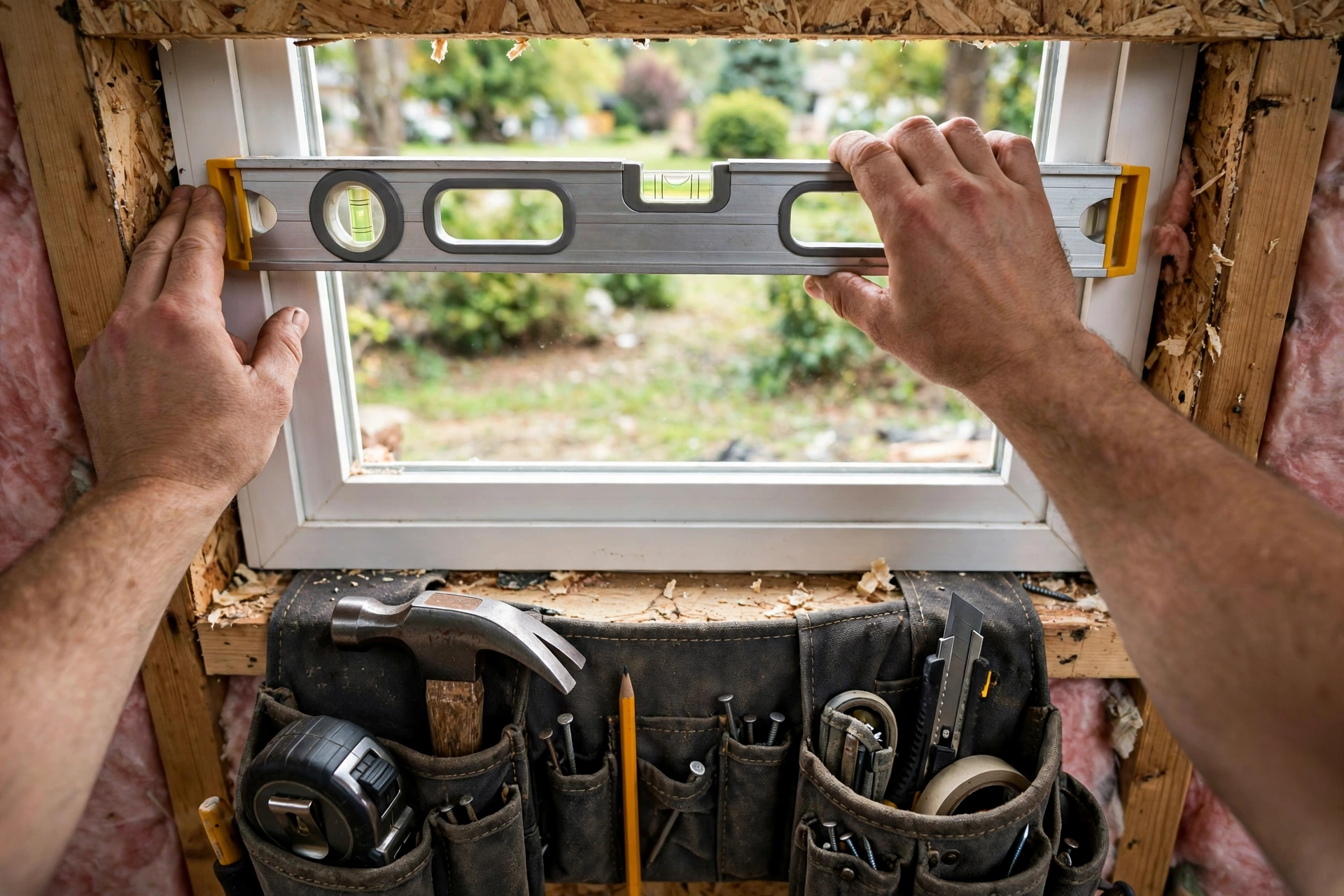
Labor Costs: What Installation Really Costs
For a standard insert replacement in an existing frame, labor alone runs $150–$300 per window in 2026. Here’s what that covers — and why a single window’s labor stings more than you’d expect:
1. Trip and setup — travel to your home, unloading, protecting floors and furniture, setting up dust containment 2. Removal — cutting out old sashes, removing stops and parting beads, scraping out old caulk and glazing 3. Prep and fit — checking the opening for square and level, shimming the new unit, foam insulation in gaps 4. Install and finish — setting the window, fastening, exterior caulking, interior trim reinstallation or replacement, cleanup and haul-away of the old unit
A single window installs in 1–2 hours, but the installer’s day doesn’t start at your door — steps 1 and 4 cost nearly the same whether it’s one window or six. That’s why installers apply minimum charges (often $150–$300 just to show up) and trip fees to one-window jobs.
Watch for these labor add-ons: second-story windows (+$50–$150 each for ladder/scaffold work), full-frame removal (+$150–$300 per window), custom or non-standard sizes, and lead-paint remediation on pre-1978 homes (regulated work — adds cost, requires a certified firm).
Why One Window Costs More Per Unit Than a Whole-House Job
Here’s the counterintuitive economics: the lone window is usually the most expensive window you can buy, per unit. Multi-window projects reduce per-unit labor by roughly 10–20%, because:
- The trip fee and minimum charge get divided. One visit, one setup, one cleanup — spread across 5, 10, or 20 windows instead of one.
- Crews work faster in rhythm. The second through tenth windows of the same model go in quicker than the first; jigs are set, trim stock is cut, the process is dialed in.
- Contractors discount volume. A 10-window job is worth competing for; a one-window job is worth a minimum-charge premium.
So if three or four windows show the same problems — fogged seals, drafty frames, stuck sashes — doing them together usually beats one-at-a-time. The survey’s $517 average reflects mostly multi-window projects; a true single-window job often lands above it. For the full economics, see our window replacement cost for 20 windows guide.
When to Repair vs. Replace a Window
Not every failing window needs a $300–$900 replacement. Use this test:
Repair it when:
- The glass is cracked but the frame is sound — glass-only replacement runs $100–$300
- Weatherstripping is worn or the sash just needs re-caulking — $20–$75 in materials, often DIY
- The window sticks or the balances/springs failed — balance replacement runs $75–$200 professionally
- Hardware (locks, cranks, latches) is broken — usually under $100 installed
Replace it when:
- The insulated glass unit is fogged or has condensation between the panes — the seal failed, and the window’s insulation value is gone
- The frame is rotted, warped, or won’t hold square — structural failure, no repair fixes this
- Single-pane glass in a climate you heat or cool heavily — replacement typically cuts heating/cooling 10–25%
- Drafts persist after re-caulking and weatherstripping — air leakage around a worn frame
The honest rule: a $100–$300 repair that restores full function wins. If you’re repairing the same window twice, or the frame itself is failing, replacement is the cheaper long-term move.
DIY vs. Pro: Installing a Single Window
A single insert window is the most DIY-able window job in the industry — but “most DIY-able” still comes with conditions:
| DIY | Pro | |
|---|---|---|
| Insert vinyl window, ground floor, square opening | ⚠️ Doable — measure the opening in three places (top, middle, bottom), order the window 1/4″ smaller, shim level, foam the gaps, caulk the exterior | $300–$800 installed — guaranteed level, plumb, and watertight |
| Insert window, second story | ❌ Ladder work with a 50+ lb window is a drop hazard | $400–$1,000+ with second-story premium |
| Full-frame replacement | ❌ Structural opening, flashing, and weather barrier work | $500–$1,200+ — this is pro territory |
| Window with rot or water damage around it | ❌ Hidden framing damage needs assessment | Pro — repairs behind the opening can run into the hundreds |
| Warranty matters to you | ⚠️ DIY voids most manufacturer warranties on the unit | Pro installs usually carry both manufacturer and workmanship warranties |
The real DIY risk isn’t the technique — it’s measurement and waterproofing. A window 1/2″ too big doesn’t fit; 1/2″ too small and you’re bridging gaps that leak air and water. If you DIY: measure width and height at three points each and use the smallest measurement, never install in rain, and caulk the exterior flange completely — water entry behind a new window destroys framing silently.
Money-Saving Tips
- Bundle windows. Doing 2–4 in one visit cuts per-unit labor 10–20% versus separate jobs.
- Choose vinyl for standard sizes. At $300–$800 installed, vinyl double-hung is the best efficiency-per-dollar in the business.
- Keep the same size and style. Custom sizes and style changes push you toward full-frame pricing ($500–$1,200+) — standard sizes stay in insert territory.
- Repair before you replace. Glass-only replacement ($100–$300) and re-caulking ($20–$75) solve many “bad window” complaints without a new unit.
- Get 3 written quotes. One-window jobs vary wildly because minimum charges differ — three quotes reveal who’s padding the minimum.
- Ask about the minimum, not the rate. On a single window, the $150–$300 minimum matters more than the hourly rate.
- Schedule in the off-season. Late fall and winter often bring installer discounts of 5–15% as crews fill slow schedules.
- Check state and utility rebates. The federal 25C window tax credit (up to $600) expired at the end of 2025 — state energy offices and utilities still run rebate programs worth checking first.
- Buy NFRC-rated, ENERGY STAR windows. Compare NFRC ratings (U-factor, SHGC) when shopping — the cheapest window that meets ENERGY STAR Version 7.0 for your climate zone is usually the best buy, not the cheapest window on the shelf.
Frequently Asked Questions
How much does it cost to replace one window?
$300–$900 installed is typical, most homeowners paying $500–$900 including labor. A standard vinyl double-hung with double-pane glass runs $300–$800, and a 2026 survey of 1,000 homeowners found a $517 average per installed window.
How much is labor to install one window?
Labor alone costs $150–$300 for a standard insert replacement in an existing frame — higher for full-frame, which adds removal, framing, and trim work. Minimum charges and trip fees hit single-window jobs hardest.
Is it cheaper to replace one window or several at once?
Several at once, per window. Multi-window projects reduce per-unit labor by roughly 10–20% because the trip fee, setup, and minimum charges are spread across the job. A lone window carries the highest per-unit cost in the industry.
Can I replace just one window, or do I have to do them all?
You can absolutely replace just one — no requirement to do the whole house. It makes sense when only one window is damaged, fogged, or drafty. Just know you’re paying the single-job premium (minimum charges, trip fee), and matching the new unit to your existing windows matters for curb appeal.
Will a new window lower my energy bills?
Upgrading from old single-pane or failed-seal windows to new double-pane units typically cuts heating and cooling costs by about 10–25%. Look for the ENERGY STAR label and compare NFRC ratings (U-factor for insulation, SHGC for solar heat) to pick the right window for your climate zone.
The Bottom Line
Window replacement cost for one window runs $300–$900 installed in 2026 — $300–$800 for a standard vinyl double-hung with double-pane glass, with most homeowners landing at $500–$900 all-in. Labor alone is $150–$300 for a standard insert job, and the $517 national average reflects projects big enough to dodge the single-job minimum premium. Material moves the needle most: vinyl at $300–$800 versus wood at $800–$2,000 for the same opening. Sound frame? Insert replacement is the value play; rotted or out of square? Full-frame at $500–$1,200+. Note: the federal 25C window tax credit (up to $600) expired at the end of 2025 — check state and utility rebates instead. And bundling a second failing window cuts per-unit labor 10–20%.
Prices are typical 2026 US planning benchmarks gathered from contractor pricing data and homeowner survey sources; your actual cost depends on region, window size and style, frame material, glass options, whether the frame is sound enough for an insert, second-story access, and the installer’s minimum-charge policy. Always get at least three written, itemized quotes — including one from a licensed, insured installer — before committing. For efficiency ratings when comparing windows, see the NFRC label directory and ENERGY STAR certified window listings.

8 thoughts on “Window Replacement Cost for One Window: 2026 Guide”