
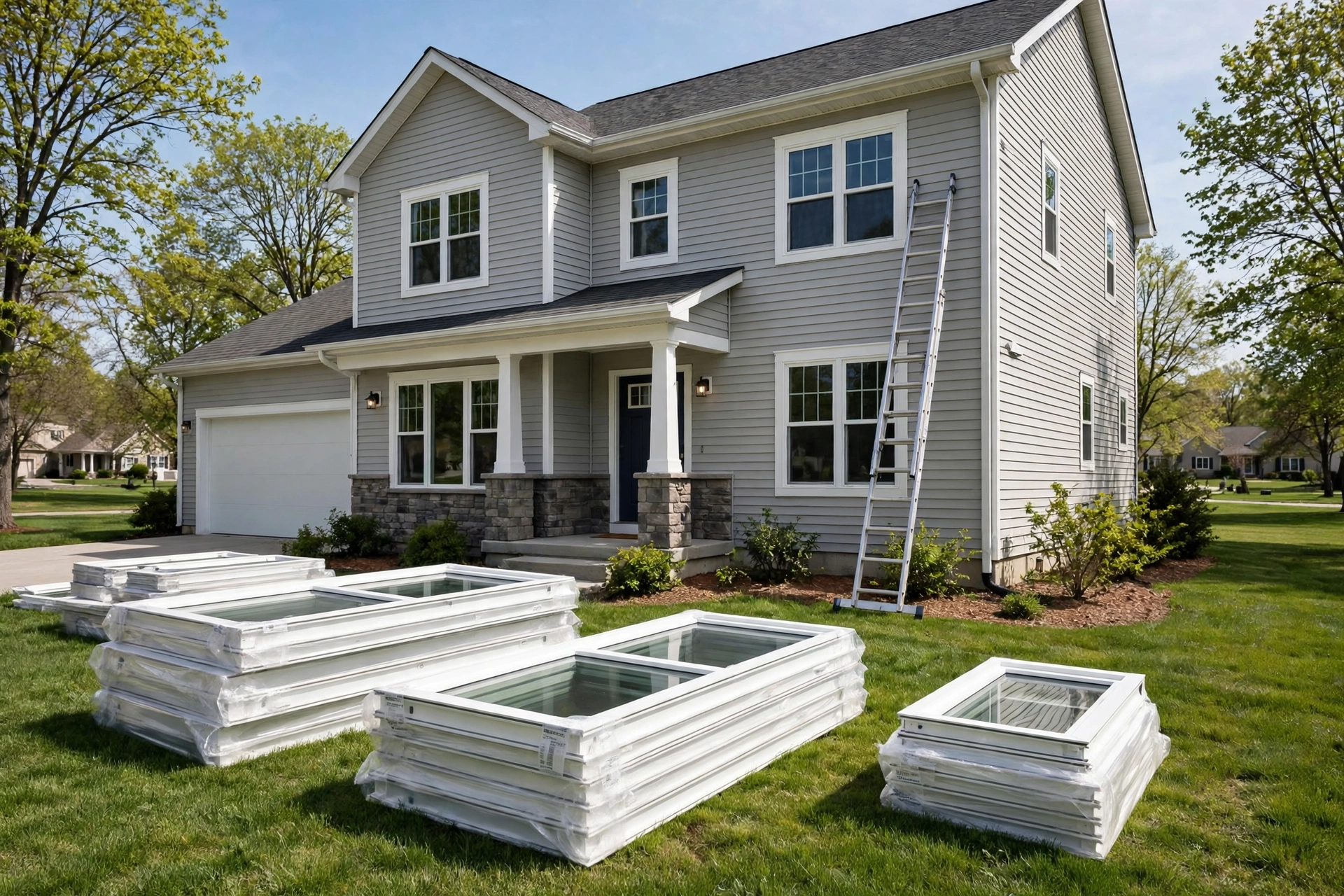
How Much Does It Cost to Replace 10 Windows in 2026
So how much does it cost to replace 10 windows in 2026? For standard vinyl double-hung windows with double-pane glass, a 10-window project typically costs $5,000–$12,000 fully installed. Most homeowners land in the $7,000–$10,000 band once labor, trim work, and disposal of the old units are in. Budget jobs using basic vinyl can start near $4,000, while premium fiberglass or wood windows push the same 10-window job to $18,000–$25,000.
Quick-answer table (typical 10-window project costs, 2026):
| 10-window project | Typical installed total |
|---|---|
| Standard vinyl double-hung (double-pane) | $5,000–$12,000 |
| Most homeowners’ actual spend | $7,000–$10,000 |
| Budget job (basic vinyl, simple openings) | From ~$4,000 |
| Premium fiberglass or wood | $18,000–$25,000 |
| National per-window average (2026 surveys) | $500–$550 installed |
If you’re weighing a smaller job first, our window replacement cost for one window guide explains why a single window carries the highest per-unit cost of all — and why bundling to 10 usually wins.
The Math: Per-Window Cost × 10
Multiply a realistic per-window figure by 10, then sanity-check against what multi-window jobs actually cost:
| Window tier (per window installed) | Per window | Typical 10-window total |
|---|---|---|
| Budget vinyl, simple small openings | $300–$500 | $3,000–$5,000 |
| Standard vinyl double-hung (most common) | $500–$900 | $5,000–$9,000 |
| Typical all-in range, most 10-window jobs | $500–$1,200 | $5,000–$12,000 |
| Fiberglass | $700–$1,200+ | $7,000–$12,000+ |
| Wood or composite/clad wood | $800–$1,500+ | $8,000–$15,000+ |
| Premium wood/fiberglass, large or specialty | $1,800–$2,500+ | $18,000–$25,000 |
Why doesn’t a $300/window quote simply mean $3,000 for 10? It can — the ~$4,000 budget floor exists for basic single-hung vinyl in ground-floor openings. But larger or non-standard windows, second-story labor premiums, and upgrades like triple-pane glass push most totals into the $5,000–$12,000 typical range.
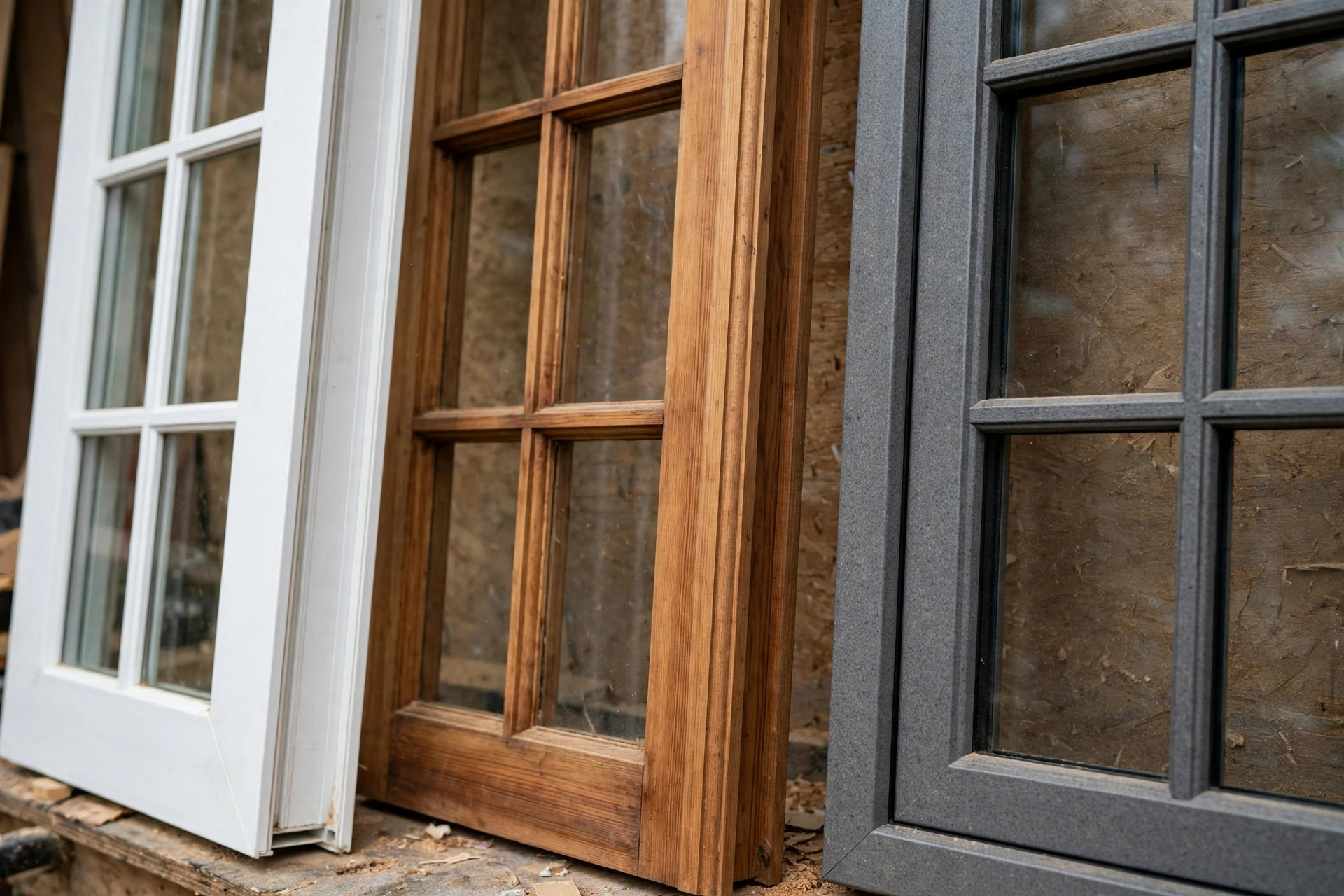
10-Window Cost by Frame Material
Frame material is the single biggest lever on the total. Same 10 openings, wildly different bills:
| Frame material | Typical per window (installed) | Typical 10-window total |
|---|---|---|
| Aluminum | $400–$900 | $4,000–$9,000 |
| Vinyl | $300–$900 | $3,000–$9,000 (typical jobs $5,000–$12,000) |
| Fiberglass | $700–$1,200+ | $7,000–$12,000+ |
| Wood | $800–$1,500+ | $8,000–$15,000+ |
| Composite / clad wood | $800–$1,400 | $8,000–$14,000 |
Vinyl is the default — standard double-hung vinyl double-pane runs $300–$900 per window installed, which is why the typical 10-window total clusters at $5,000–$12,000. Fiberglass ($700–$1,200+) expands far less than vinyl, a real advantage on large openings and in extreme climates, and it’s paintable with a longer lifespan. Wood ($800–$1,500+) is the classic look with the classic price: both the frame and the finishing labor cost more. Aluminum ($400–$900) is the budget frame — slim and cheap, but the poorest insulator.
Glass upgrades stack on any frame: triple-pane adds roughly $100–$300 per window ($1,000–$3,000 across 10), and low-E coatings or argon gas fills add $50–$150. The default smart spec is double-pane low-E with argon — it matches the ENERGY STAR Version 7.0 targets, and upgrading from old single-pane or failed-seal windows typically cuts heating and cooling costs by about 10–25%.
Cost by Window Style
Window style is the second-biggest lever. Standard operable windows are cheapest; anything big, fixed, or fancy multiplies the per-window figure — and × 10, those differences get dramatic:
| Window style | Typical per window (installed) | 10 windows (all the same style) |
|---|---|---|
| Single-hung (vinyl) | $300–$800 | $3,000–$8,000 |
| Double-hung (vinyl, double-pane) | $300–$900 | $5,000–$12,000 |
| Sliding (vinyl) | $350–$900 | $3,500–$9,000 |
| Casement | $400–$1,000 | $4,000–$10,000 |
| Awning | $400–$1,000 | $4,000–$10,000 |
| Fixed / picture (standard) | $350–$900 | $3,500–$9,000 |
| Bay or bow | $900–$2,800 each | 2.5–3× a single double-hung |
Moving parts and complex hardware cost more per unit. Standard double-hungs keep the total in the $5,000–$12,000 band; swapping several for casements adds $1,000–$2,000; one bay window can cost as much as three standard ones. Style changes can also push you from insert to full-frame replacement, adding labor.
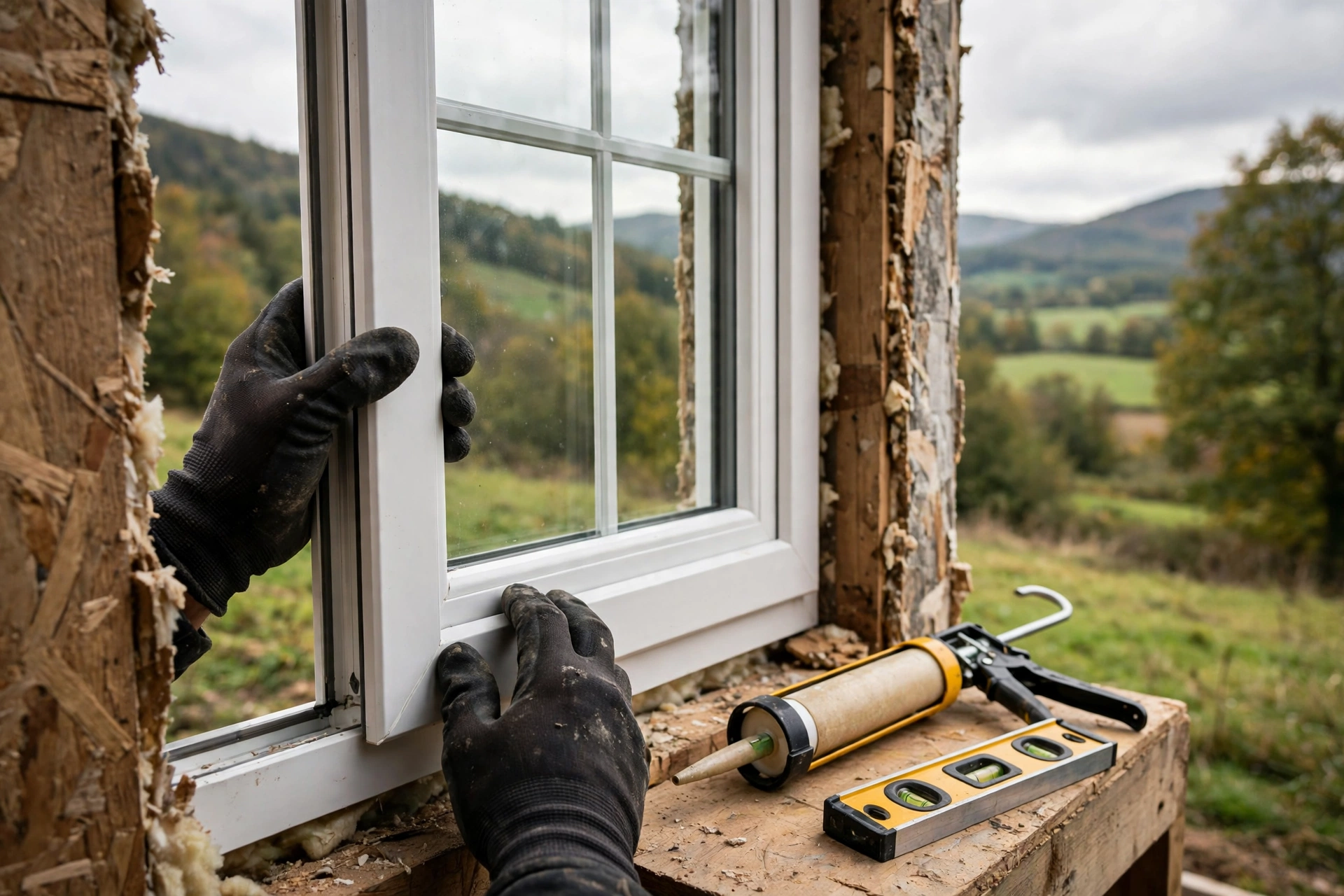
Labor Costs: What Installation Really Costs
For a 10-window project, labor alone runs $75–$300 per window — a standard insert job typically lands around $150–$200 per window in most markets. Across 10 windows, that’s $750–$3,000 in labor, with $1,500–$2,000 a common mid-range figure. Here’s what that labor covers:
1. Trip and setup — travel, unloading 10 units, floor protection, dust containment; one setup for the whole job 2. Removal — cutting out old sashes, removing stops, scraping old caulk, hauling away 10 old units 3. Prep and fit — checking each opening for square and level, shimming, foam insulation in gaps 4. Install and finish — setting, fastening, exterior caulking, trim work, final cleanup and haul-away
This is where the 10-window job wins: per-unit labor falls roughly 10–20% versus single-window jobs. One trip, one setup — divided by 10. Crews get into a rhythm, and the minimum charge and trip fee that punish one-window jobs nearly disappear per unit.
Watch for labor add-ons: second-story windows add roughly $50–$150 each; full-frame replacement adds $150–$300 per window over an insert; lead-paint remediation on pre-1978 homes is regulated work on every affected opening; and custom or non-standard sizes blow up the quote fastest of all.
Cost Drivers Beyond the Windows
- Insert vs. full-frame. Insert replacement (new window into the existing frame) is the value play. Full-frame (everything out to the rough opening) adds trim, siding, and weatherproofing work at $150–$300 more per window — $1,500–$3,000 across 10.
- Window sizes. Ten small bedroom windows cost far less than ten large living-room windows — bigger openings mean more glass and more labor per unit.
- Second-story access. Five upstairs windows can add $500–$1,500 in ladder/scaffold labor.
- Frame condition. Rot, water damage, or out-of-square openings mean repair labor — budget a 10–15% contingency on older homes.
- Geography and season. Urban coastal markets quote 20–40% above rural Midwest pricing; late fall and winter installs often bring 5–15% off-season discounts.
- Energy rebates. The federal 25C window tax credit (up to $600) expired at the end of 2025 — check your state energy office and utility for rebates instead; they can take hundreds off a 10-window project.
DIY vs. Pro: A 10-Window Project
| DIY | Pro | |
|---|---|---|
| Insert vinyl, ground floor, square openings | ⚠️ Possible — but × 10, measurement errors multiply: every window ordered 1/4″ too big is a return, 1/2″ too small is a draft | $5,000–$12,000 installed — 1–2 day crew, level, plumb, watertight, workmanship warranty |
| Any second-story windows | ❌ Ladder work with 50+ lb windows, ten times over | Included in the project quote with proper equipment and insurance |
| Full-frame replacement | ❌ Structural openings, flashing, and weather barriers × 10 — pro territory | Adds $1,500–$3,000 over insert for 10 windows |
| Windows with rot or water damage | ❌ Hidden framing damage needs assessment per opening | Pro — repairs behind openings can run hundreds each |
| Warranty value | ⚠️ DIY voids most manufacturer warranties on the units | Manufacturer + workmanship warranties — and 10 windows is real leverage if something fails |
The honest read: a 10-window job is a pro job for most homeowners. Ten windows at $300 each in materials plus your weekends can look attractive — but one mismeasured window eats the savings, and waterproofing mistakes compound across 10 openings. Where DIY does pay: painting the interior trim yourself after the crew leaves can save several hundred dollars.
Money-Saving Tips
- Confirm the bulk discount. Ask installers to show per-window pricing for 10 vs. fewer windows; the ~10–20% volume cut should be visible. If it isn’t, keep shopping.
- Stick with standard vinyl double-hung. At $300–$900 per window installed, it’s the best efficiency-per-dollar in the business and keeps the total in the $5,000–$12,000 band.
- Keep sizes and styles standard. Custom sizes and style changes push toward full-frame pricing — standard sizes stay in insert territory.
- Schedule off-season. Late fall and winter discounts of 5–15% on an $8,000 job are worth $400–$1,200.
- Get 3–4 written, itemized quotes. 10-window jobs vary by thousands between installers. Our how much does Home Depot charge to replace a window guide helps you benchmark big-box quotes against independent crews.
- Negotiate the per-window rate. The per-unit labor rate ($75–$300) is where margin hides — compare line items.
- Skip upgrades you don’t need. Triple-pane (+$100–$300/window, or $1,000–$3,000 across 10) pays back slowly in mild climates; double-pane low-E with argon is the sweet spot for most US homes.
- Check rebates before you buy. With the federal 25C credit expired after 2025, state and utility rebates are the remaining lever — some pay per window, which adds up × 10.
- Compare efficiency labels. Check NFRC labels (U-factor, SHGC) across quotes and pick the cheapest window that meets ENERGY STAR for your climate zone.
Frequently Asked Questions
How much does it cost to replace 10 windows in 2026?
$5,000–$12,000 installed is typical for 10 standard vinyl double-hung windows with double-pane glass — most homeowners land at $7,000–$10,000. Budget basic-vinyl jobs can start near $4,000, while premium fiberglass or wood runs $18,000–$25,000.
Is it cheaper to replace 10 windows at once instead of one at a time?
Yes — substantially, per window. Multi-window projects cut per-unit labor by roughly 10–20% because the trip fee, setup, and minimum charges are divided across the job, and crews work faster in rhythm. For larger projects, our window replacement cost for 20 windows guide extends the bulk math.
How long does it take to replace 10 windows?
A professional crew typically replaces 10 insert windows in 1–2 days — insert takes 1–2 hours per window once set up; full-frame replacement takes 3–4+ hours per window and can stretch a 10-window job to 3 days.
Does replacing 10 windows increase home value?
New windows improve curb appeal and efficiency, and buyers notice — window replacement recovers a meaningful share of its cost at resale. The bigger win is energy: upgrading from old single-pane or failed-seal windows typically cuts heating and cooling costs by about 10–25%, and × 10 windows the monthly savings are real.
Are there tax credits for replacing windows in 2026?
The federal 25C window tax credit (up to $600) expired at the end of 2025 and does not apply to 2026 projects. Check your state energy office and local utility for rebates — programs still exist in many states and can take hundreds off a 10-window project.
The Bottom Line
How much does it cost to replace 10 windows in 2026? $5,000–$12,000 installed for standard vinyl double-hung with double-pane glass — most homeowners land at $7,000–$10,000 all-in. Budget jobs start near $4,000; premium fiberglass or wood hits $18,000–$25,000. The per-window math is roughly $500–$900 for standard vinyl (survey average near $500–$550), with labor alone $75–$300 per window — and bundling 10 at once shaves roughly 10–20% off per-unit labor versus one-at-a-time replacements. Insert replacement in sound frames is the value play; full-frame adds $150–$300 per window only where rot or warping demands it. Get 3–4 itemized quotes, confirm the per-window volume discount in writing, schedule off-season if you can, and check state/utility rebates now that the federal 25C credit has expired.
Prices are typical 2026 US planning benchmarks gathered from contractor pricing data and homeowner survey sources; your actual cost depends on region, window sizes and styles, frame material, glass options, whether frames are sound enough for insert replacement, second-story access, and the installer’s volume pricing. Always get at least three written, itemized quotes — including one from a licensed, insured installer — before committing. For efficiency ratings when comparing windows, see the NFRC label directory and ENERGY STAR certified window listings.

3 thoughts on “How Much Does It Cost to Replace 10 Windows? 2026 Guide”