
Drywall Repair Cost From Water Damage in 2026
Drywall repair cost from water damage is a different animal from a doorknob hole. A simple stain can be sealed and painted for $150–$400, but a typical cut-and-replace job runs $400–$900, and anything involving mold, a still-active leak, or a ceiling lands between $500 and $2,500+. The biggest mistake homeowners make is treating water damage like cosmetic damage: the stain is the cheapest part of the job, and patching over wet drywall guarantees a repeat repair. This guide breaks down what drives the price — water type, how long it stayed wet, wall vs. ceiling, and whether mold entered the picture — so you can budget the whole job, not just the patch.
Quick-answer table (typical total cost, 2026):
| Scenario | Typical total cost |
|---|---|
| Stain only, board firm and dry — seal + paint | $150–$400 |
| Small cutout (2–8 sq ft), clean water | $400–$750 |
| Medium cutout with insulation replacement | $600–$1,200 |
| Ceiling section with water damage | $500–$1,600 |
| Mold remediation + drywall replacement (10+ sq ft) | $1,200–$3,800 |
| Leak repair on top (plumbing) | $150–$1,000+ |
| Drying out (fans, dehumidifiers, moisture check) | $100–$500 |
Repair or Replace: The Decision That Sets the Price
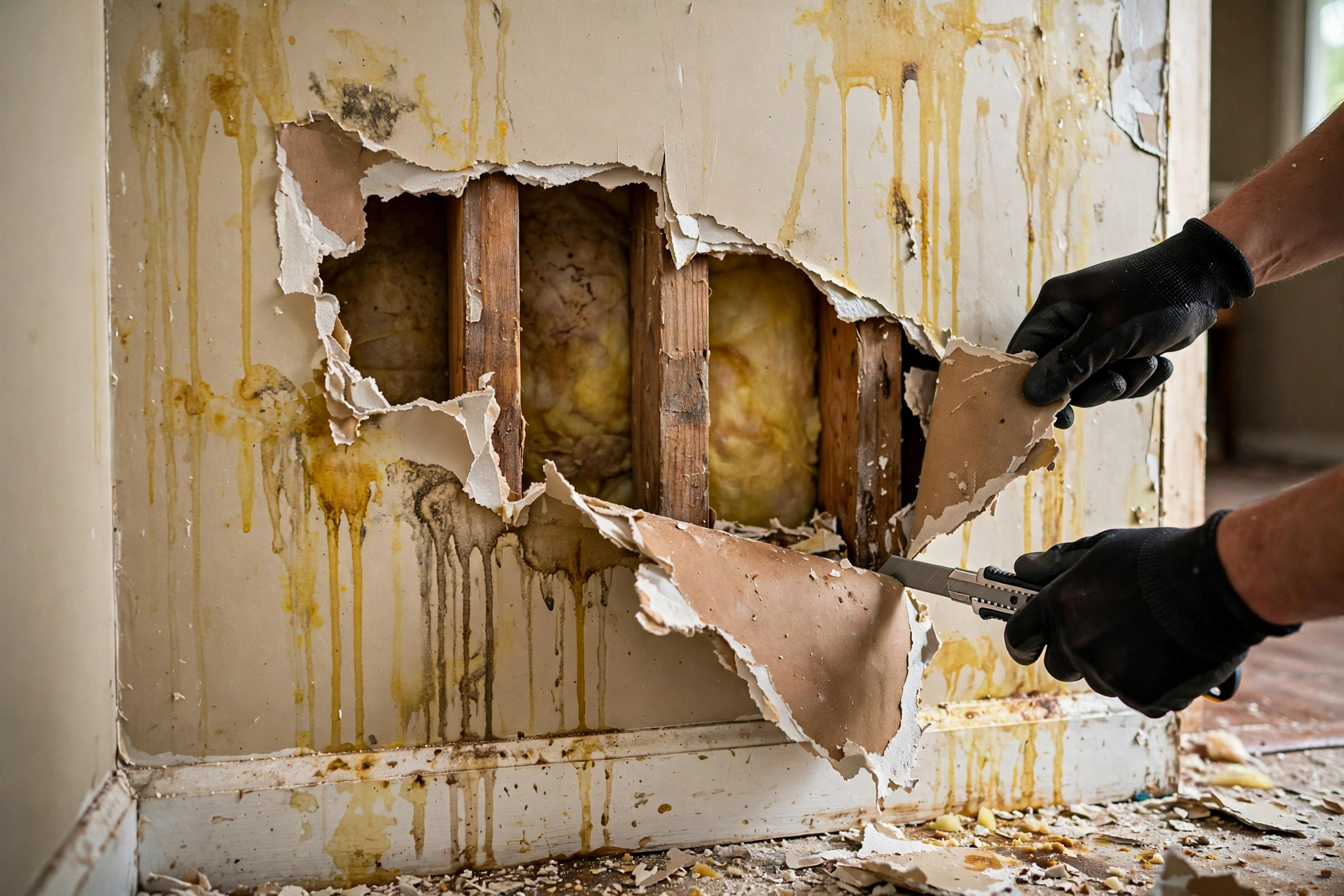
The first question is always whether the drywall gets patched or cut out. The rule of thumb contractors use: if the board is firm and dried within about 24–48 hours after clean-water exposure, it can usually be saved with a stain-blocking primer and paint. If the gypsum core is soft, sagging, crumbling, or still damp after two days, the section gets cut out — patching over it fails within weeks.
Two factors matter more than how bad the stain looks:
- Water type. Clean (Category 1) water — a supply-line leak — gives drywall the best chance of survival. Gray (Category 2) water from appliances or showers is borderline. Black (Category 3) water — sewage or floodwater — almost always means full replacement of the affected drywall, regardless of appearance.
- Time wet. Every day matters. Wet gypsum loses strength, wicks moisture into framing and insulation, and starts growing mold in as little as 24–48 hours. Fast action — shutting off the water, opening the wall, and getting air moving — is the cheapest thing you can do.
Professionals cut 12–24 inches past the last visible sign of damage, because water wicks sideways through the paper facing faster than it shows on the surface. If your ceiling is sagging or bulging, it is judged more strictly than a wall: a waterlogged ceiling section carries collapse risk and gets replaced at an earlier stage.
Drywall Repair Cost From Water Damage: By Scenario
Stain-only repair: $150–$400
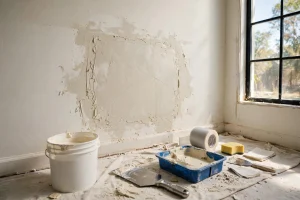
The board is firm, the source is fixed, and everything is bone dry. The repair is a stain-blocking primer (oil- or shellac-based — regular paint bleeds through), skim compound if the surface bubbled, and paint. This is the cheapest outcome and the reward for catching the leak fast.
Small cutout (2–8 sq ft): $400–$750
The wet section gets cut out, the cavity inspected and dried, new board hung, taped, finished, and painted. Expect at least 48 hours of drying between opening the wall and re-hanging — framing must read below roughly 15% moisture before new board goes up. This is the most common water-damage drywall job.
Medium cutout with insulation: $600–$1,200
Once water soaks batt insulation, the insulation is trash — it mats down, holds water against the framing, and breeds mold. Wet insulation, vapor barrier, and debris get removed and disposed of ($0.40–$1.00 per sq ft for removal), then new insulation and board go in. If the job sits between studs in an exterior wall, count on insulation being part of every quote.
Full section / multiple rooms: $1,000–$2,500+
Burst pipes, failed water heaters, and roof leaks can take out whole walls. At this size the drywall work starts pricing like small-scale new installation ($1.50–$3.50 per sq ft installed) plus removal, drying, and the plumbing or roofing repair that caused it. If your water damage came from a plumbing failure, price the source repair separately in our plumber cost per hour guide.
Ceiling Water Damage: The Expensive Case
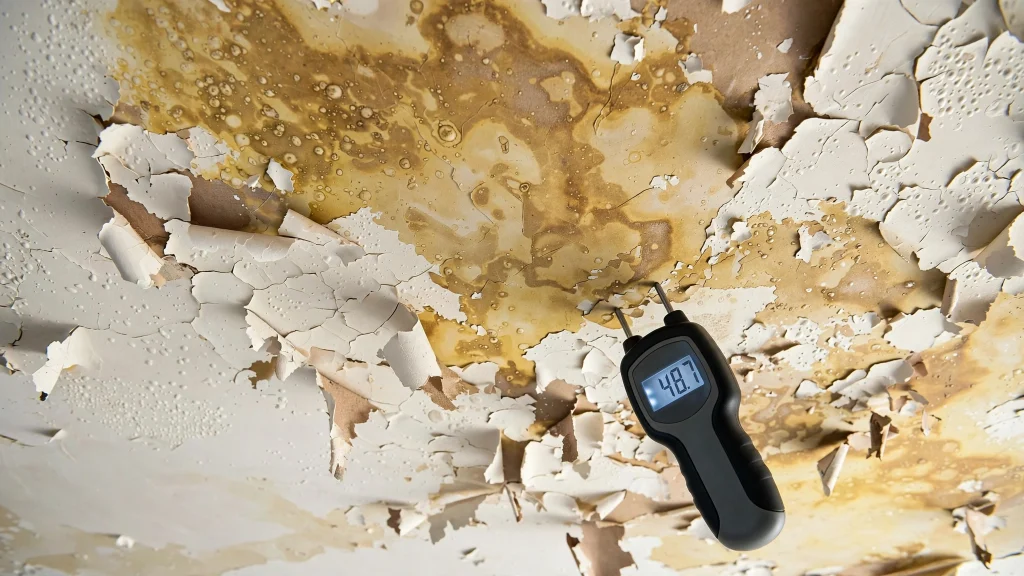
Ceilings cost more than walls at every step, and water makes the gap wider:
| Ceiling scenario | Typical cost |
|---|---|
| Small stain, seal + paint | $200–$450 |
| Ceiling patch (cutout and replace) | $400–$900 |
| Large ceiling section with texture matching | $800–$1,600 |
| Full ceiling replacement (room) | $1,500–$3,500+ |
Overhead work is slower, needs scaffolding or stilts, and texture matching on ceilings is harder because light rakes across them. A sagging ceiling is also a safety issue — saturated drywall is heavy, and pros will often cut it out immediately rather than risk a collapse. For the wall-vs-ceiling comparison in more depth, see our guide to ceiling drywall repair cost.
Mold: When the Bill Gets Bigger
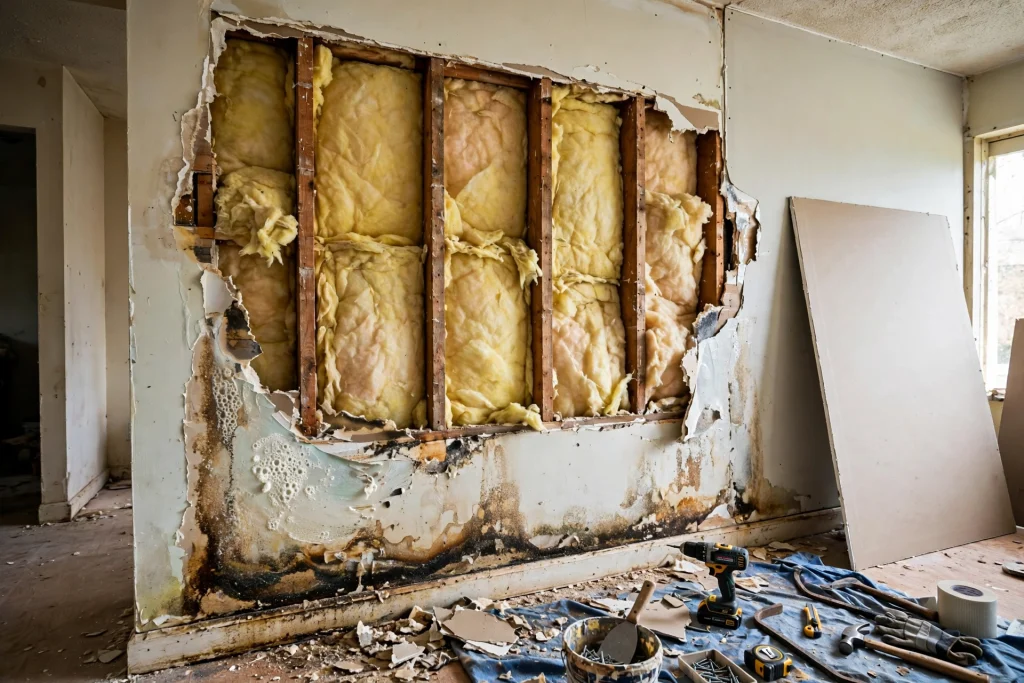
Mold is what turns a $600 drywall job into a $2,500 remediation project. Small areas (under ~10 sq ft) can often be handled as part of the drywall repair; larger areas need professional remediation:
| Mold situation | Typical added cost |
|---|---|
| Small surface mold, treated during repair | $100–$300 |
| Professional remediation (10–25 sq ft) | $500–$1,500 |
| Extensive remediation (whole wall/cavity) | $1,500–$3,800 |
Remediation includes containment, HEPA filtration, removal of contaminated board and insulation, antimicrobial treatment, and clearance testing. The EPA’s mold resources explain when a homeowner can clean a small area and when professional remediation is required. Never just paint over mold — it keeps growing behind the paint, and insurance adjusters can spot a cover-up.
What Actually Drives the Price
| Driver | Effect | Notes |
|---|---|---|
| Water type (clean / gray / black) | Black water = automatic replacement | Sewage/flood contamination can’t be dried in place |
| Time wet | Every day adds cost | Mold starts in 24–48 hours; insulation loss follows |
| Wall vs. ceiling | Ceilings +25–100% | Overhead labor, scaffolding, texture, collapse risk |
| Leak source fixed or not | Adds $150–$1,000+ | Patching over an active leak guarantees a repeat job |
| Insulation behind the board | +$100–$500 | Wet batt insulation must be replaced, not dried |
| Mold involvement | +$200–$3,800 | Under 10 sq ft is a repair line item; over is remediation |
| Texture matching | +$100–$400/job | Ceiling texture (popcorn, knockdown) is hardest to blend |
| Painting scope | +$1–$3 per sq ft | Most quotes exclude paint — confirm in writing |
For the base drywall numbers these add onto, our drywall repair cost per square foot guide covers standard (non-water) repairs.
DIY vs. Pro: Water Damage Edition
| DIY | Pro | |
|---|---|---|
| Stain-only seal + paint | Good DIY — $30–$80 in primer/paint | $150–$400 — worth it for a perfect blend |
| Small clean-water cutout | Possible if you can hang, tape, and finish | $400–$750 — texture matching is the hard part |
| Any gray/black water | No — contamination risk | Yes — proper disposal and treatment |
| Ceiling work | Small stains only | $500–$1,600 — sag risk + overhead finishing |
| Mold over ~10 sq ft | No | Yes — containment and remediation required |
| Active or unknown leak | No — fix the source first | Yes — leak detection + repair |
The DIY line is brighter here than with cosmetic repairs: contamination, hidden moisture, and mold make this one of the worst drywall jobs to get wrong. A moisture meter ($25–$50) is the best DIY investment — if the framing reads wet, you are not done. For typical hourly rates if you hire out, see what drywall contractors charge per hour.
Money-Saving Tips
- Act in the first 24 hours. Shut off the water, open the wall, and get fans on it. Every day you wait converts a $400 stain job into a $900 cutout or a $2,000 mold job.
- Fix the source before the drywall. Every contractor quote assumes the leak is dead. A plumber’s visit ($150–$350 for a typical leak repair) is part of the budget, not an afterthought.
- Bundle with other drywall work. If you are opening walls anyway, patch every nail pop and crack in the same visit — the crew, the compound, and the paint are already there.
- Photograph everything for insurance. Sudden leaks (burst pipes) are usually covered by homeowners insurance; slow leaks often are not. Photos of the source, the damage, and the remediation protect a claim.
- Confirm the paint scope in writing. Most water-damage quotes cover cut, replace, tape, and sand only. Primer, paint, and full-wall blending add $1–$3 per sq ft — know before you compare.
Frequently Asked Questions
How much does it cost to repair water-damaged drywall?
In 2026, water-damaged drywall repair costs $150–$400 for a stain-only seal and paint, $400–$900 for a typical small-to-medium cutout, and $500–$2,500+ when ceilings, insulation, or mold are involved. The leak repair itself ($150–$1,000+) is usually a separate line item.
Can water-damaged drywall be dried instead of replaced?
Sometimes. If the board stayed firm and dried within about 24–48 hours after clean-water exposure, a stain-blocking primer and paint is usually enough. Soft, sagging, crumbling, or still-damp drywall must be cut out — patching over it fails within weeks, and wet board grows mold.
How far past the stain should damaged drywall be cut out?
Professionals cut 12–24 inches beyond the last visible sign of damage. Water wicks sideways through the paper facing faster than it shows on the surface, so cutting exactly at the stain line leaves wet board in the wall.
Does homeowners insurance cover water-damaged drywall?
Usually yes for sudden events (burst pipe, failed water heater) and no for slow leaks or neglect. Document the source and the damage with photos, and check your policy’s water-damage exclusions before filing — the deductible may exceed a small repair.
How long does water-damage drywall repair take?
Plan on 3–7 days: day 1 to open and dry, 48+ hours of active drying with fans/dehumidifiers, then re-hang, tape, and finish (1–3 days with drying between compound coats). Mold remediation adds 1–3 days. The drying step cannot be rushed — framing must read below ~15% moisture before new board goes up.
The Bottom Line
Drywall repair from water damage costs $500–$2,500+ in 2026 for most real jobs — $150–$400 if you caught it as a stain, $400–$900 for a typical cutout, and $1,500+ once mold or a ceiling is involved. The drywall is never the whole bill: budget the leak repair, the drying, the insulation, and the paint. Act within 24 hours, cut well past the stain, and never patch over wet board. If the damage is extensive enough that you are replacing whole walls, compare against the full-room economics in our guide to how much it would cost to drywall a 12×12 room.
Prices are typical 2026 US planning benchmarks gathered from contractor pricing data and industry sources; your actual cost depends on water type and duration, wall vs. ceiling location, mold involvement, leak-source repair, insulation replacement, texture matching, and regional labor rates. Always get at least three written, itemized quotes — including one from a licensed, insured contractor — before committing. For mold guidance, see the EPA; for board products, see USG.
3 thoughts on “Drywall Repair Cost From Water Damage: 2026 Guide”