
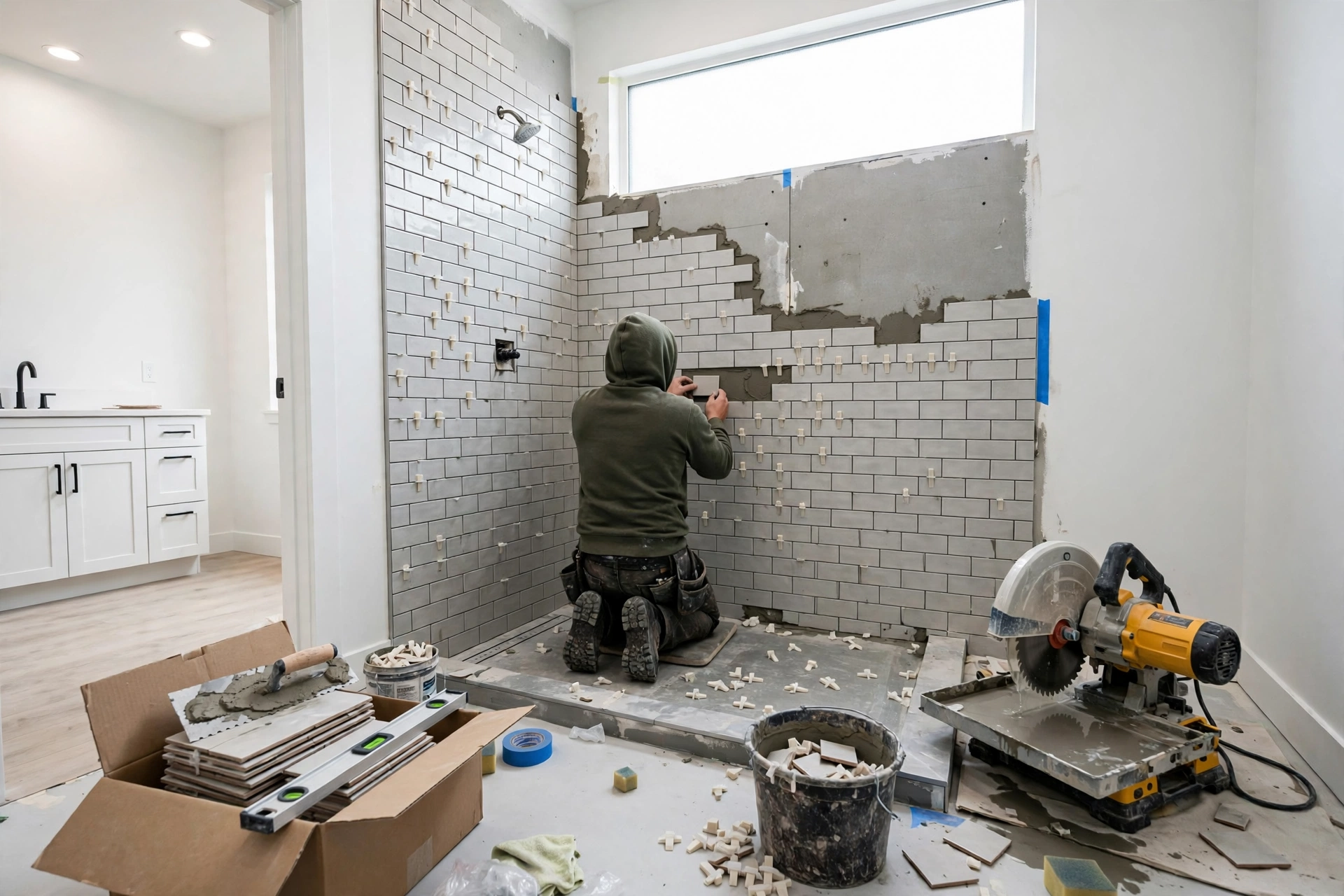
Shower Remodel Cost DIY in 2026?
Shower remodel cost diy is the first question every homeowner asks before tearing out an old shower — and the answer is genuinely encouraging. A full DIY shower remodel for a standard 32×60 or 36×36 shower typically costs $800–$2,500 in materials for a basic job, or $1,000–$3,000 for a fuller DIY remodel with new fixtures and tile. The same job hired out to a professional typically costs $3,100–$10,000, with a national average of about $6,000–$7,500. In other words, doing the work yourself can save 40–65% of the total, because labor makes up 40–60% of a professional job. That saving is real money — but it comes with one non-negotiable condition: the waterproofing has to be right. A leaky DIY shower can cost $10,000+ in hidden water damage, which wipes out every dollar you saved and then some.
This guide breaks down the real 2026 cost of a DIY shower remodel by project scope, lists every material and tool you will need with prices, compares the DIY route with hiring a pro, explains exactly which jobs are safe to do yourself and which ones need a licensed plumber, and walks through a complete step-by-step budget example so you can see where every dollar goes before you buy a single tile.
For the water-saving side of the fixture choice, the EPA’s WaterSense program certifies showerheads that use at least 20 percent less water while performing as well as standard models — a sensible pick when you are replacing fixtures anyway.
Quick-answer table (typical 2026 DIY shower remodel costs):
| Item | Typical cost |
|---|---|
| Full DIY shower remodel, basic (materials only) | $800–$2,500 |
| Full DIY shower remodel, with new fixtures and tile | $1,000–$3,000 |
| Same job hired out to a pro | $3,100–$10,000 |
| National average, pro-installed shower remodel | About $6,000–$7,500 |
| Custom tile walk-in shower, pro-installed | $8,000–$15,000 |
| Prefab acrylic/fiberglass shower kit (materials) | $1,000–$3,000 |
| Prefab kit remodel, installed | $1,500–$3,000 |
| DIY saving vs. hiring a pro | 40–65% of the total |
| Labor share of a pro job | 40–60% |
| Waterproofing materials, DIY | $100–$200 |
| Waterproofing, installed by a pro | $300–$700 |
| Fixtures (showerhead, valve, handles), DIY | $150–$500 |
| Frameless glass enclosure | $1,500–$3,300 |
| DIY timeline, standard shower | 2–3 weekends |
| DIY timeline, full tile shower | 4+ weekends |
| Pro timeline, standard shower | 2–5 days |
Shower Remodel Cost DIY by Project Scope
The scope of the job is the single biggest driver of the price. A cosmetic refresh and a full tiled walk-in are not the same project, and they should not share a budget:
| Project scope | DIY cost (materials) | Pro cost (installed) |
|---|---|---|
| Cosmetic refresh (new fixtures, caulk, paint, showerhead) | $150–$500 | $500–$1,500 |
| Prefab acrylic/fiberglass kit remodel | $1,000–$3,000 | $1,500–$3,000 |
| Full DIY remodel, standard 32×60 or 36×36 shower | $800–$2,500 | $3,100–$10,000 |
| Full DIY remodel with new fixtures and tile | $1,000–$3,000 | $6,000–$7,500 average |
| Custom tile walk-in shower, DIY | $2,000–$4,000 | $8,000–$15,000 |
Cosmetic refresh ($150–$500 DIY). If the shower itself is sound — no leaks, no cracked tile, no soft drywall — a refresh is the best value in bathroom remodeling. A new showerhead and valve trim, new handles, fresh caulk, and a coat of paint on the ceiling can make a ten-year-old shower look new for a few hundred dollars. This is a one-weekend job, it needs no permit, and it carries almost no risk. It is also the right move if you are selling the house soon and just need the bathroom to photograph well.
Prefab kit remodel ($1,000–$3,000 DIY materials). A prefab acrylic or fiberglass shower kit — base, wall panels, and basic fixtures in one box — is the easiest full remodel a DIYer can take on. The kit is made to fit a standard alcove, the walls go up fast, and there is no grout to maintain. A kit remodel installed by a pro runs $1,500–$3,000, so the DIY saving on a kit job is smaller than on a tile job — but so is the risk. If your walls are square and your drain and valve stay in place, a kit is a realistic two-weekend project for a first-time remodeler.
Full DIY remodel ($800–$2,500 basic; $1,000–$3,000 with fixtures and tile). This is the classic DIY shower remodel: the old shower comes out, the walls are rebuilt and waterproofed, new tile or panels go in, and new fixtures finish the job. The basic end of the range uses a prefab base and acrylic or fiberglass walls with a mid-range fixture set; the higher end uses a tiled shower with a nicer valve and showerhead. The same job hired out typically costs $3,100–$10,000, which is why this is the scope where DIY pays best — you are replacing thousands of dollars of labor with your own weekends.
Custom tile walk-in shower ($2,000–$4,000 DIY materials). A large walk-in with floor-to-ceiling tile, a bench, a niche, and a frameless glass enclosure is the most expensive DIY scope, because the materials alone climb fast: tile at $3–$15 per square foot, a glass enclosure at $1,500–$3,300, and a full waterproofing system. The pro price for the same shower is $8,000–$15,000, so the DIY saving is the largest here in absolute dollars — but so is the skill required. A walk-in tile shower is a four-or-more-weekend job, and the waterproofing has to be flawless over a much larger area.
If you are still deciding between a kit and a full tile job, our guide to how much a Costco shower remodel costs shows what a pro-installed acrylic system runs — a useful benchmark before you commit to doing it yourself.
Materials Breakdown for a DIY Shower Remodel
Here is where the money actually goes on a full DIY tile remodel of a standard shower, with new fixtures:
| Material | Typical DIY cost |
|---|---|
| Shower base or pan (acrylic or tile-ready) | $150–$500 |
| Tile ($3–$15 per sq ft, walls and floor) | $200–$600 |
| Thinset, grout, and sealant | $75–$150 |
| Waterproofing membrane (sheet or liquid-applied) | $100–$200 |
| Backer board (cement board or foam board) | $75–$150 |
| Fixtures — showerhead, valve, handles | $150–$500 |
| Shower drain and plumbing fittings | $50–$150 |
| Frameless glass enclosure (if added) | $1,500–$3,300 |
| Framed glass door (if added) | $300–$800 |
| Niche, bench, or shelf | $50–$200 |
| Caulk, screws, fasteners, and miscellaneous | $50–$100 |
| Typical materials total, standard tiled shower | $1,000–$3,000 |
Three items deserve a closer look, because they are where DIY budgets most often go wrong. First, tile: at $3–$15 per square foot for materials, the tile itself is rarely the expensive part — the labor you are avoiding is. A pro charges $800–$2,500 in tile-setting labor on a standard shower, which is exactly the money you keep by setting the tile yourself. Second, fixtures: a showerhead, valve, and handles run $150–$500 for a solid mid-range set, and the full range across the market is $50–$900, so it is easy to spend more here than on the tile. Buy the valve first and build the budget around it, because the valve body is buried in the wall and is expensive to change later. Third, glass: a frameless glass enclosure at $1,500–$3,300 can cost more than everything else in the shower combined. If the budget is tight, a framed glass door at $300–$800 — or even a good shower curtain to start with — is a legitimate saving, and installing a framed door yourself saves another $150–$350 in labor.
For the tile math in detail, see our guide to tile installation cost per square foot, labor only — it shows exactly what the tile-setting labor you are doing yourself would have cost.
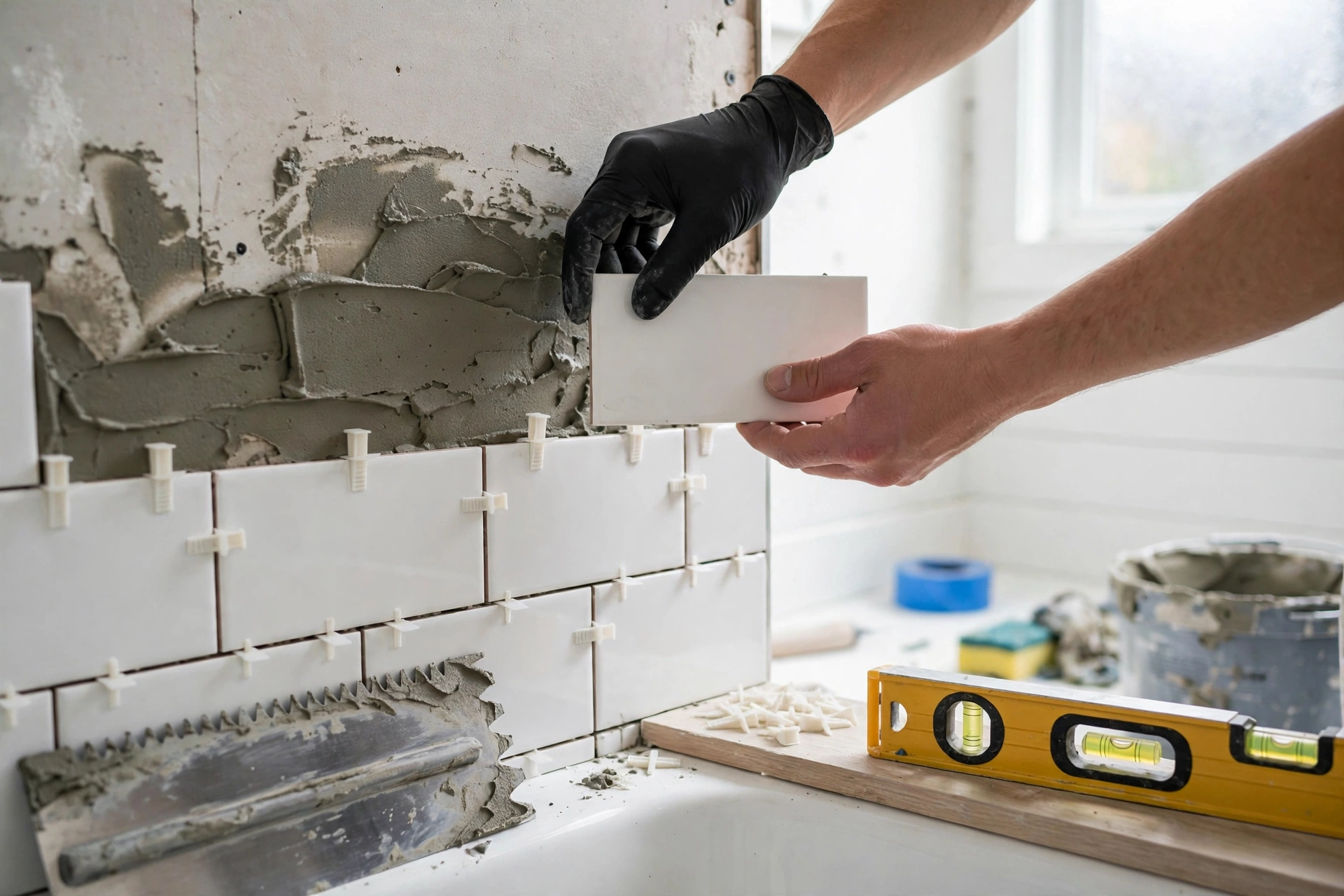
DIY vs. Hiring a Pro for a Shower Remodel
| DIY | Hiring a pro | |
|---|---|---|
| Materials, standard shower | $800–$2,500 | Included in the installed price |
| Materials, with new fixtures and tile | $1,000–$3,000 | Included in the installed price |
| Labor cost | $0 (your time) | $1,200–$3,500 typical, up to 40–60% of the total |
| All-in total, standard shower | $800–$2,500 | $3,100–$10,000 |
| All-in total, average pro job | — | About $6,000–$7,500 |
| All-in total, custom tile walk-in | $2,000–$4,000 materials | $8,000–$15,000 |
| Saving vs. pro | 40–65% of the total | — |
| Time required | 2–3 weekends; 4+ weekends for full tile | 2–5 days standard; a week+ for custom tile |
| Tools needed | $200–$600 to buy or rent (see below) | Included in the labor price |
| Waterproofing | You install it — mistakes are on you | Professional system, installer warranty |
| Plumbing work | Basic valve and drain swaps only | Licensed plumber, permitted work |
| Warranty | Materials warranty only; no labor warranty | Product + labor warranty |
| Permit | You pull it, if required | Contractor pulls it |
| Best for | A standard-size shower, plumbing in place, confident DIYer | Any job with plumbing relocation, structural work, or a tight deadline |
When DIY wins. The job is a like-for-like replacement in a standard-size shower, the drain and valve stay in place, the walls are square, and you have two or three weekends to spare. This is the sweet spot: the saving is 40–65% of the total, and the work is well within reach of a careful homeowner who follows a proper waterproofing system.
When a pro wins. The job involves moving plumbing, opening a concrete slab, or structural changes; the shower is a large custom walk-in; or the bathroom is your household’s only shower and you cannot afford a four-weekend timeline. A pro also wins when the deadline is fixed — a pro crew finishes a standard shower in 2–5 days, while a DIYer needs 2–3 weekends and a full tile job needs 4+ weekends, working around a day job.
What Is Safe to DIY — and What Needs a Pro
Not every part of a shower remodel is equally DIY-friendly. Getting this split right is the difference between a remodel that saves you thousands and one that costs you $10,000+ in water damage repairs.
Safe to DIY. Demolition is the safest saving in the whole project: doing your own demo saves 10–15% of the total job cost, and it is hard to get wrong as long as you shut off the water first and wear eye and dust protection. Removing the old shower, hauling it out, and cleaning up is pure labor, and it is the first thing to do yourself. Also safe: installing backer board, setting tile, grouting, caulking, painting, installing a showerhead and trim, and fitting a framed glass door. A framed door is a two-person job, but it is a straightforward one, and installing it yourself saves $150–$350.
Hire a pro for this. Waterproofing and plumbing are the two jobs where a mistake is expensive and invisible. Waterproofing is the step that protects everything behind the tile: if the membrane has a gap, a missed seam, or a badly sealed corner, water gets into the wall cavity, and you will not see the damage until the subfloor rots or mold appears — a repair that typically costs $10,000+. A sheet membrane system such as Schluter Kerdi, or a liquid-applied membrane, costs only $100–$200 in materials for a DIYer, but it must be installed exactly to the manufacturer’s instructions. Schluter’s own KERDI waterproofing page shows the full system and its installation handbook — read it before you buy the membrane, and if any part of it is unclear, pay a tile pro for the waterproofing step alone. The same rule applies to plumbing: swapping a valve trim is fine, but moving a drain or a supply line is licensed-plumber work. Moving plumbing costs $500–$1,500 per fixture, and moving a drain on a concrete slab costs $500–$2,500 extra because the slab has to be cut open. Get those jobs priced by a plumber and build them into the budget as pro line items, even on an otherwise DIY remodel.
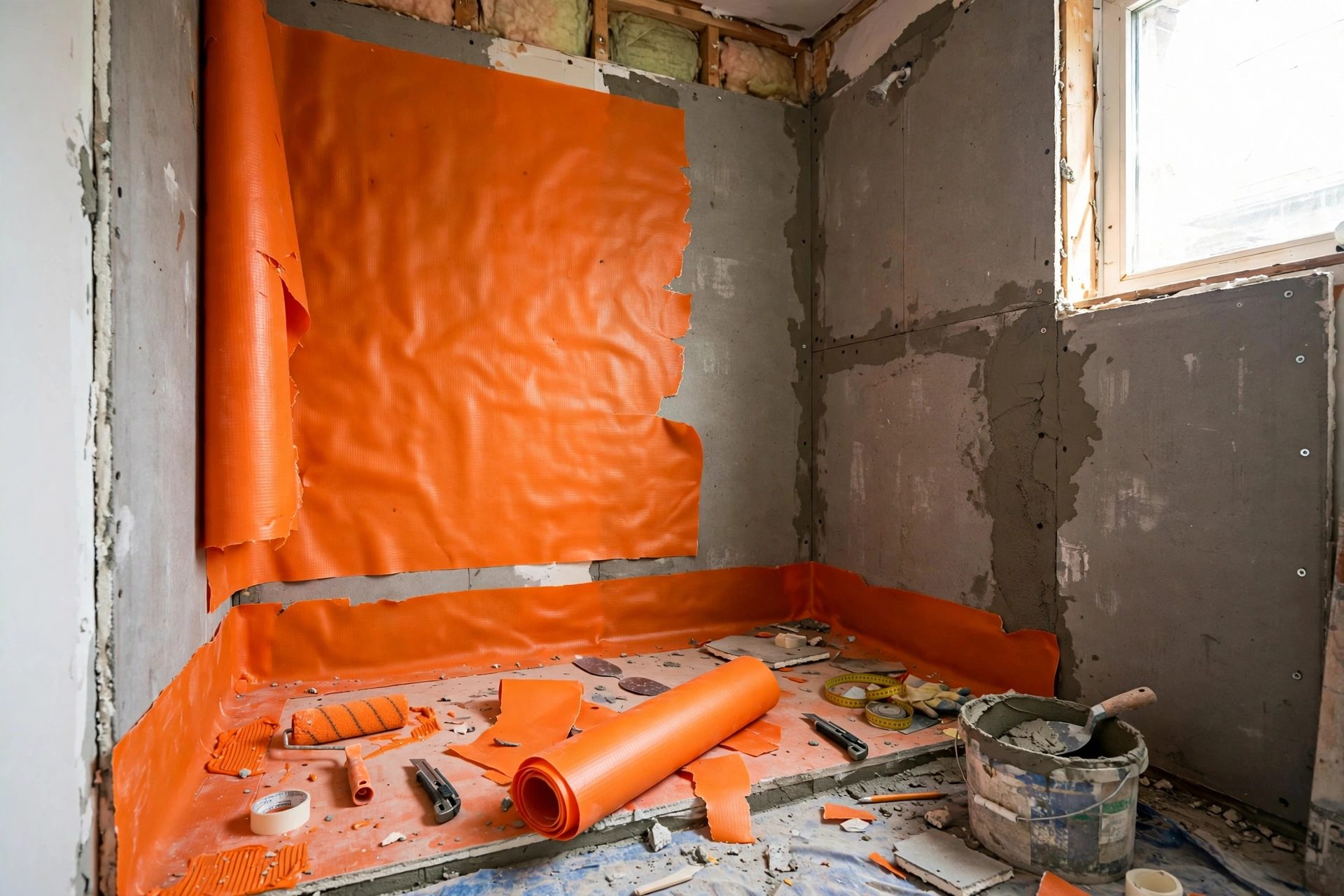
Waterproofing: The Step You Cannot Skip
Waterproofing is the one step in a DIY shower remodel where cutting corners is never worth it. Tile and grout are not waterproof — they slow water down, but water passes through them. The waterproofing membrane underneath is what actually keeps your walls and subfloor dry, and it is the cheapest insurance in the entire project:
| Waterproofing option | DIY materials | Installed by a pro |
|---|---|---|
| Sheet membrane (e.g. Schluter Kerdi) | $100–$200 | $300–$700 |
| Liquid-applied membrane (roll-on or paint-on) | $100–$200 | $300–$700 |
| Foam waterproof backer board system | $150–$300 | $400–$800 |
| Failed waterproofing — hidden water damage repair | $10,000+ | $10,000+ |
A sheet membrane such as Schluter Kerdi is a pliable, sheet-applied bonded membrane that goes on with thinset and is sealed at every seam, corner, and pipe penetration with matching band and preformed corners. A liquid-applied membrane is painted or rolled onto cement board in two or three coats. Either system works when it is installed correctly — and neither works when it is rushed. Budget a full day for the waterproofing step alone, and do not tile over it until every seam is sealed and the membrane has cured. The most common DIY failures are all avoidable: skipping the corners, leaving a gap where the wall meets the floor, cutting the membrane short around the valve or the shower arm, and tiling before the liquid membrane has fully dried. If you hire out exactly one part of this remodel, make it the waterproofing — $300–$700 installed is cheap compared with $10,000+ of hidden damage.
Tools You Need for a DIY Shower Remodel
Most of the tools are common homeowner tools. The expensive one is the wet tile saw, and you should rent it rather than buy it:
| Tool | Buy | Rent |
|---|---|---|
| Wet tile saw | $150–$300 | $60–$150 per day |
| Angle grinder with diamond blade | $50–$100 | $40–$75 per day |
| Oscillating multi-tool | $75–$150 | $30–$50 per day |
| Drill / driver | $75–$150 (or owned) | — |
| Level (4-foot) | $30–$60 | — |
| Tile trowels, spacers, and floats | $30–$60 | — |
| Caulking gun, utility knife, tape measure | $20–$40 | — |
| Pry bar, hammer, and demo tools | $30–$60 | — |
| Safety gear (goggles, respirator, gloves, knee pads) | $30–$50 | — |
| Typical tool total | $200–$600 to buy; $60–$150/day for the tile saw rental |
Buy vs. rent. Buy the tools you will use again — the drill, the level, the multi-tool, and the safety gear. Rent the wet tile saw: at $60–$150 per day, a two-day rental costs far less than a $150–$300 purchase, and a rental saw is usually a larger, better machine than the one you would buy at that price. Rent the saw for the weekend you plan to cut tile, and do all of your cutting in one or two concentrated sessions so you only pay for the days you use. If you already own a drill, a level, and basic hand tools, your tool spend can be as low as the saw rental plus about $50–$100 in tile-setting consumables.
What Affects the Cost of a DIY Shower Remodel
Shower size. A standard 32×60 or 36×36 shower is the cheapest to remodel, because kits, bases, and glass are all made for standard sizes. A larger walk-in needs more tile, more membrane, and more glass, and every extra square foot adds material cost.
Tile choice. Tile materials run $3–$15 per square foot, so the tile itself is rarely the budget-breaker — but a large-format or natural-stone tile costs more, wastes more on cuts, and is harder to set. A simple ceramic subway tile at the low end of the range is the cheapest tile job and the most forgiving to install.
Plumbing relocation. Moving a drain or a valve is the single most expensive change you can make. Moving plumbing costs $500–$1,500 per fixture, and moving a drain on a concrete slab costs $500–$2,500 extra. Keeping the drain and valve in their original positions is the highest-value decision in the whole project.
Glass. A frameless glass enclosure at $1,500–$3,300 can cost more than the rest of the shower combined. A framed door at $300–$800 is a fraction of that, and a curtain costs almost nothing. Choose the glass last, after the rest of the budget is set, so it does not crowd out the waterproofing and the fixtures.
Fixtures. A showerhead, valve, and handles run $150–$500 for a solid mid-range set, with the full market range at $50–$900. A rain head, a handheld sprayer, or a second showerhead each adds cost — and each one also adds a plumbing connection that has to be waterproofed.
Water damage found during demo. The most common budget surprise is what you find behind the old shower: rotted studs, a soft subfloor, or mold from an old slow leak. Budget a 10–15% contingency on top of the materials total for exactly this, and do not skip the inspection step — pull the old shower out and look before you order the new one.
Permits. Some jurisdictions require a permit for a shower remodel, especially if plumbing moves. Permit fees are usually modest, but an unpermitted job can cause problems at resale. Check your local rules before you start, and if plumbing is moving, get the permit — it is cheaper than the fix.
Step-by-Step DIY Shower Remodel Budget Example
Here is a complete budget for a standard 36×36 tiled shower, keeping the drain and valve in place, with a mid-range fixture set and a framed glass door:
| Step | What you buy or do | Typical cost |
|---|---|---|
| 1. Demolition | Remove old shower, haul away debris (DIY) | $0 labor; $50–$100 disposal |
| 2. Inspection and repair | Replace any rotted studs or subfloor found | $0–$200 (contingency) |
| 3. Plumbing | New valve body and drain fittings (valve trim later) | $100–$250 |
| 4. Backer board | Cement board or foam board on walls | $75–$150 |
| 5. Waterproofing | Sheet or liquid membrane, seams and corners sealed | $100–$200 |
| 6. Shower base | Tile-ready pan or acrylic base | $150–$500 |
| 7. Tile | Wall and floor tile at $3–$15 per sq ft | $200–$600 |
| 8. Thinset, grout, and sealant | Setting and finishing materials | $75–$150 |
| 9. Fixtures | Showerhead, valve trim, handles | $150–$500 |
| 10. Glass door | Framed glass door, self-installed | $300–$800 |
| 11. Tools | Tile saw rental ($60–$150/day) plus consumables | $150–$300 |
| 12. Finishing | Caulk, paint touch-up, trim | $50–$100 |
| Total | Full DIY tiled shower, standard size | $1,400–$3,000 |
The worked example lands at $1,400–$3,000, which sits squarely inside the $1,000–$3,000 range for a fuller DIY remodel with new fixtures and tile. The same shower hired out would typically cost $3,100–$10,000, so the DIY route saves roughly $1,700–$7,000 on this scope — about 40–65% — in exchange for two to three weekends of your time. Swap the framed door for a frameless enclosure and the total climbs by roughly $1,200–$2,500; skip the tile and use a prefab kit and it drops toward $1,000–$1,500.
If you are remodeling the whole bathroom rather than just the shower, our guide to the 10×10 bathroom remodel cost puts the shower line in the context of the full room budget, and our bathroom remodel cost calculator will run the numbers for your size and scope before you buy anything.
Money-Saving Tips for a DIY Shower Remodel
1. Do the demolition yourself. Demo is the safest saving in the project — it saves 10–15% of the total job cost, and it is the first thing to do on any DIY remodel. Shut off the water, protect the floor, and haul the debris out yourself. 2. Keep the plumbing where it is. Moving plumbing costs $500–$1,500 per fixture, and moving a drain on a concrete slab costs $500–$2,500 extra. Designing the new shower around the existing drain and valve is the single biggest money decision you will make. 3. Rent the tile saw; do not buy it. A wet tile saw costs $150–$300 to buy and $60–$150 per day to rent. Rent it for the weekend you cut tile and do all of your cutting in one session. 4. Choose a prefab kit if the budget is tight. A prefab acrylic or fiberglass kit at $1,000–$3,000 in materials installs in a weekend, needs no grout, and removes the most expensive risk in the project — the waterproofing and tile work. 5. Buy the valve first, then build the budget around it. The valve body is buried in the wall and expensive to change later. Pick a mid-range valve in the $150–$500 fixture set and do not let a premium showerhead push the fixture budget past $500. 6. Spend the money on waterproofing, not on tile. The membrane costs only $100–$200 in materials, and a failure costs $10,000+ in hidden damage. A cheap tile over a perfect membrane beats an expensive tile over a leaky one every time. 7. Use a framed glass door instead of frameless. A frameless enclosure costs $1,500–$3,300; a framed door costs $300–$800, and installing it yourself saves another $150–$350. You can always upgrade the glass later without redoing the shower. 8. Buy tile at the low end of the range and cut the waste. Tile at $3–$15 per square foot means a simple ceramic tile can save hundreds over natural stone on the same shower, and ordering 10% extra instead of 20% — then returning the unopened boxes — keeps the waste cost down. 9. Do the job in the off-season and buy materials on sale. Bathroom contractors are busiest in spring and early summer, which is when tile and fixture prices are highest. A fall or winter remodel, with materials bought during a holiday sale, can shave 10–15% off the materials bill — and if you do hire a plumber for one step, their schedule is freer too.
Frequently Asked Questions
How much does a DIY shower remodel cost?
A full DIY shower remodel for a standard 32×60 or 36×36 shower typically costs $800–$2,500 in materials for a basic job, or $1,000–$3,000 for a fuller remodel with new fixtures and tile. The same job hired out to a pro typically costs $3,100–$10,000, with a national average of about $6,000–$7,500. Doing it yourself saves 40–65% of the total, because labor is 40–60% of a professional job.
How long does a DIY shower remodel take?
A standard DIY shower remodel takes 2–3 weekends working around a day job. A full tile shower takes 4+ weekends, because the tile setting, grouting, and curing add days of waiting between steps. A pro crew finishes a standard shower in 2–5 days, and a custom tile shower takes a week or more even for a pro. If the bathroom is your household’s only shower, plan the timeline carefully — or hire a pro for the speed.
Is it cheaper to DIY a shower remodel or hire a pro?
DIY is cheaper by a wide margin: a standard shower costs $800–$2,500 in materials DIY versus $3,100–$10,000 hired out, a saving of 40–65%. DIY is the better deal when the plumbing stays in place, the shower is a standard size, and you have the weekends to spare. A pro is the better deal when plumbing has to move, the shower is a large custom walk-in, or the household cannot be without its only shower for several weekends.
Can a beginner DIY a shower remodel?
Yes, for a standard-size shower with the plumbing in place — especially with a prefab acrylic or fiberglass kit, which is the most beginner-friendly option at $1,000–$3,000 in materials. A tiled shower is a bigger step up in skill, and the waterproofing is the part a beginner should study hardest: the membrane costs only $100–$200, but a mistake can cost $10,000+ in hidden damage. If you are unsure about the waterproofing, hire a tile pro for that one step and do the rest yourself.
What is the hardest part of a DIY shower remodel?
Waterproofing, by a wide margin. Setting tile is slow but forgiving — a crooked tile can be pulled and reset. A waterproofing mistake is invisible until the damage is done: a missed seam, an unsealed corner, or a gap around the valve lets water into the wall cavity, where it rots studs and subfloor and grows mold. Take a full day for the waterproofing step, follow the manufacturer’s instructions exactly, and do not tile over it until every seam is sealed and the membrane has cured.
The Bottom Line
For a DIY shower remodel in 2026, budget $800–$2,500 in materials for a basic job on a standard 32×60 or 36×36 shower, or $1,000–$3,000 for a fuller remodel with new fixtures and tile. The same job hired out typically costs $3,100–$10,000, with a national average of about $6,000–$7,500 — so doing it yourself saves 40–65%, because labor is 40–60% of a professional job. A prefab kit at $1,000–$3,000 in materials is the easiest and lowest-risk DIY route; a full tile shower costs more in time — 4+ weekends — but it is where the DIY saving is largest, with tile-setting labor alone worth $800–$2,500. Spend the money where it matters: $100–$200 on waterproofing, done exactly to the manufacturer’s instructions, because a failure costs $10,000+ in hidden damage. Do the demolition yourself, keep the plumbing in place, rent the tile saw, and hire a licensed plumber for anything that moves a drain or a supply line. Done that way, a DIY shower remodel is one of the best returns on a homeowner’s weekends in the whole house.
Prices are typical 2026 US ranges for planning purposes and vary by region, material choice, and site condition; get itemized local quotes for an exact project price.
1 thought on “Shower Remodel Cost DIY in 2026?”